
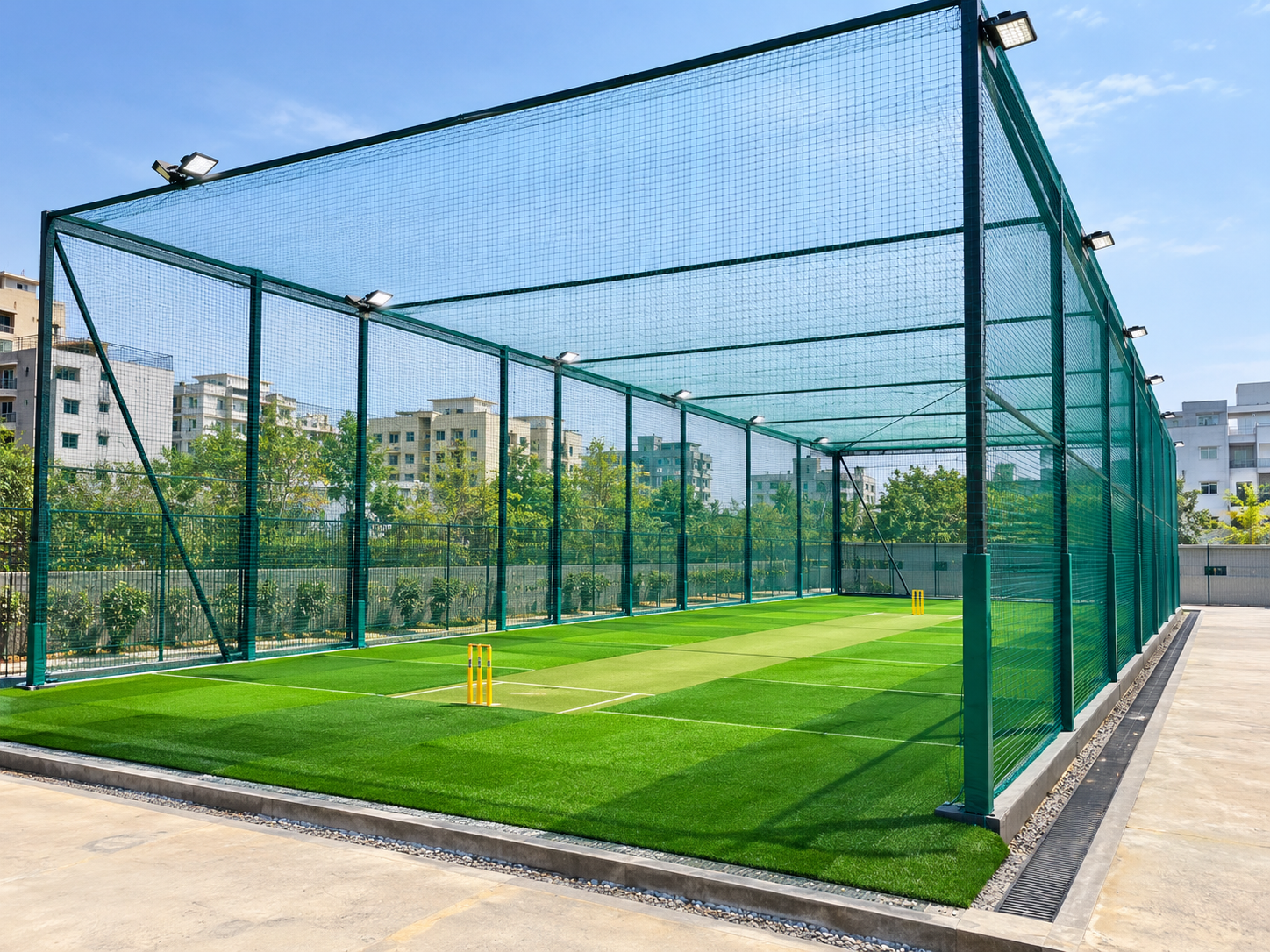
What Is a 360 Degree Box Turf Builder?
A 360 Degree Box Turf Builder is a sports infrastructure contractor or specialist responsible for planning and constructing an enclosed box cricket facility with artificial turf and supporting infrastructure. Depending on the project scope, the work can include site evaluation, layout planning, civil construction, base preparation, drainage arrangements, turf installation, boundary fencing, cricket netting, lighting, and finishing.
Unlike an open cricket field, a box cricket facility uses an enclosed playing area to help contain the ball and make productive use of limited space. Its design can be adapted to different locations, including schools, private training centres, residential developments, warehouses, commercial sports arenas, and outdoor recreational spaces.
A professional builder evaluates the intended use of the facility before recommending a suitable construction system. Factors such as ground conditions, expected playing intensity, rainfall, available space, lighting requirements, and maintenance preferences influence the final design and material selection.
Why Choose Professional 360 Degree Box Turf Construction?
The performance of a box cricket ground depends on more than the quality of its artificial grass. The foundation, surface levelness, drainage, turf joints, boundary structures, and netting installation all contribute to the usability and durability of the completed facility.
Professional 360 Degree Box Turf Construction brings these components together through a planned installation process. Appropriate ground preparation helps create a stable base, while a correctly selected turf system supports the intended playing conditions. Proper drainage design helps manage water, and securely installed fencing and netting help contain cricket balls within the designated area.
A well-planned facility can serve different user groups, from beginners learning cricket fundamentals to experienced players participating in practice games and recreational tournaments.
- Purpose-built cricket playing area for regular practice and matches.
- Artificial turf selected according to usage and project requirements.
- Properly prepared foundation for improved surface stability.
- Suitable drainage arrangements based on site conditions.
- Protective fencing and netting around the playing area.
- Space-efficient layout for recreational and commercial use.
- Options for indoor and outdoor cricket facilities.
- Integrated construction services from groundwork to final inspection.
Applications of 360 Degree Box Cricket Turf
A professionally designed box cricket facility can support a variety of sporting, educational, recreational, and commercial activities. The layout and construction specifications can be adapted to suit the available area and the needs of the intended users.
Cricket Academies and Training Centres
Box cricket turf provides a dedicated space for batting practice, bowling drills, fielding exercises, coaching sessions, and skill development. The enclosed layout can help academies organise training activities within a clearly defined playing area.
Schools and Colleges
Educational institutions can use compact cricket turf facilities for physical education, student recreation, inter-house competitions, and extracurricular sports programmes. The design can be planned around the institution's available space and usage requirements.
Sports Clubs and Recreational Centres
Sports clubs can incorporate box cricket grounds into their existing facilities to support regular practice, friendly matches, group activities, and recreational tournaments.
Residential Societies and Community Spaces
Residential communities can convert suitable open areas into dedicated cricket zones for residents, children, and organised community events. Appropriate planning helps balance playing requirements with available space and surrounding activities.
Corporate Sports Facilities
Corporate campuses and employee recreation centres can develop box cricket areas for team-building events, wellness programmes, and workplace sports activities.
Commercial Box Cricket Arenas
Entrepreneurs and sports facility operators can develop box cricket arenas for hourly bookings, group games, coaching sessions, and recreational competitions. Turf quality, lighting, accessibility, fencing, and maintenance planning should reflect the expected operating schedule.
360 Degree Box Turf Construction Process
Building a durable box cricket ground requires coordinated planning, suitable construction materials, and careful installation. Sports Facility India provides construction solutions covering the essential stages of 360 Degree Box Turf Construction, depending on the selected project scope.
1. Site Inspection and Feasibility Assessment
The process begins with an assessment of the proposed location. Site dimensions, access, existing ground conditions, available utilities, surrounding structures, and drainage requirements are evaluated to determine the appropriate construction approach.
2. Box Cricket Layout and Design Planning
The playing area is planned according to the available footprint, intended playing format, player requirements, and site limitations. The design may include the turf area, entry gate, fencing, netting, lighting positions, circulation space, and other required components.
3. Ground Preparation and Excavation
Existing vegetation, loose material, debris, and unsuitable surface material are removed as required. Excavation, filling, compaction, and preliminary leveling are carried out according to the ground condition and approved construction plan.
4. Base and Sub-Base Construction
A suitable base system is prepared to support the artificial turf. The construction specification depends on the soil condition, drainage strategy, expected loading, and selected surface system. Proper compaction and level control help reduce the risk of unevenness and unwanted surface movement.
5. Drainage System Installation
Drainage provisions are planned according to rainfall, ground permeability, site slope, and the proposed base construction. Suitable drainage channels, outlets, gradients, or other arrangements can help direct water away from the playing surface where required.
6. Surface Preparation and Leveling
Before turf installation, the prepared base is checked for surface consistency, levelness, stability, and suitability for the selected turf system. Any required corrections are completed before the artificial grass is installed.
7. Artificial Cricket Turf Installation
The selected artificial cricket turf is positioned, cut, aligned, joined, and secured according to the installation specification. Careful seam treatment and edge finishing help create a uniform playing surface and support long-term usability.
8. Infill Application and Surface Finishing
Where the selected turf system requires infill, the specified material is distributed and worked into the surface according to the manufacturer's recommendations. The installation is then checked for appropriate coverage and finishing.
9. Structural Framing, Fencing, and Netting
Structural supports, boundary fencing, cricket netting, gates, and other enclosure components are installed according to the approved layout. Their positioning, stability, and secure fixing are important considerations for a functional enclosed cricket facility.
10. Lighting and Electrical Provisions
Where required, suitable lighting can be incorporated to support visibility during evening games and indoor activities. Fixture placement, electrical safety, glare control, and the intended playing conditions should be considered during planning.
11. Final Quality Inspection and Handover
The completed facility is inspected for turf alignment, seam quality, surface condition, boundary security, netting installation, drainage provisions, and overall finishing. Any identified installation issues are addressed according to the project requirements before handover.
Types of Artificial Turf for Box Cricket Construction
Selecting the right artificial cricket turf is an important part of building a box cricket facility. The suitable specification depends on the playing format, usage frequency, surface requirements, site conditions, and available budget.
Standard Artificial Cricket Turf
Standard artificial cricket turf can be considered for schools, residential communities, recreational areas, and facilities used for routine practice. Product specifications should be evaluated for durability, fibre construction, surface consistency, and suitability for cricket activities.
- Suitable for selected recreational and practice applications.
- Available in different pile heights and construction specifications.
- Requires routine cleaning and periodic inspection.
- Can be selected according to project budget and usage requirements.
Premium Artificial Cricket Turf
Premium turf systems may be suitable for training academies, busy recreational arenas, and commercial facilities that experience frequent play. The product should be assessed for wear resistance, fibre quality, backing, installation compatibility, and manufacturer specifications.
- Options designed for frequent-use environments.
- Product specifications suited to the intended cricket format.
- Installation requirements based on the selected turf system.
- Maintenance recommendations provided by the manufacturer.
Indoor Box Cricket Turf
Indoor cricket turf is selected according to the indoor floor, ventilation, lighting, available headroom, and intended playing activities. The surface and installation system should be compatible with the existing structure and the expected level of use.
- Designed for suitable indoor sports environments.
- Can be incorporated into dedicated cricket arenas and training halls.
- Requires appropriate subfloor preparation.
- Should be selected for the specific indoor application.
Outdoor Box Cricket Turf
Outdoor artificial cricket turf must be selected with consideration for sunlight, rainfall, temperature variation, moisture exposure, and the proposed drainage arrangement. UV resistance, backing durability, installation quality, and water management are important factors when evaluating outdoor turf systems.
Key Features of a Professionally Built 360 Degree Box Turf
Durable Playing Surface
A suitable artificial turf system can provide a dedicated surface for repeated cricket activities. Product selection should account for playing intensity, fibre characteristics, backing quality, and installation requirements.
Stable and Even Foundation
Proper base preparation supports surface consistency and helps minimize settlement and unevenness. The foundation must be suitable for the site and the selected turf construction system.
Effective Water Management
Appropriate drainage planning helps manage rainwater and reduce prolonged water accumulation. The drainage arrangement should reflect the local environment and underlying ground conditions.
Protective Netting and Fencing
Properly positioned boundary structures help contain cricket balls and define the playing area. Netting height, mesh specifications, support structures, gates, and clearances should be determined according to the facility design.
Suitable Playing Conditions
Turf selection, base preparation, installation quality, and routine care all influence surface performance. The final specification should match the needs of the intended users and cricket format.
Customizable Facility Design
A box cricket facility can be adapted to the available dimensions, site restrictions, entry requirements, lighting plan, and budget. Custom planning helps make effective use of the available space.
Compare Box Cricket Turf Options
The following table provides a general comparison of artificial turf options. Final product selection should be based on the manufacturer's technical specifications and the requirements of the proposed facility.
| Turf Type | Typical Application | Usage Consideration | Maintenance | Selection Priority |
|---|---|---|---|---|
| Standard Artificial Turf | Schools and recreational grounds | Routine practice and recreational use | Regular cleaning and inspection | Budget and general durability |
| Premium Cricket Turf | Academies and busy sports arenas | Frequent training and playing sessions | Care according to product specifications | Wear resistance and playing requirements |
| Indoor Cricket Turf | Indoor sports halls and cricket arenas | Controlled indoor environment | Cleaning and subfloor inspection | Indoor compatibility and traction |
| Outdoor Cricket Turf | Open-air box cricket facilities | Weather and moisture exposure | Cleaning and drainage inspection | UV resistance and water management |
Indoor and Outdoor 360 Degree Box Turf Construction
Box cricket facilities can be constructed in both indoor and outdoor locations. Although the overall objective is similar, the construction details and material requirements may differ according to environmental exposure and site conditions.
Indoor 360 Degree Box Turf Facilities
Indoor box cricket grounds can be developed in suitable warehouses, sports halls, commercial arenas, and dedicated training centres. Planning should account for floor conditions, available headroom, ventilation, lighting, fire and building requirements, access, and safe installation of the enclosure.
Indoor facilities may offer greater protection from rainfall and direct sunlight. However, ventilation, dust control, moisture management, and appropriate cleaning remain important considerations.
Outdoor 360 Degree Box Turf Facilities
Outdoor box cricket grounds require careful consideration of rainfall, sunlight, surface temperatures, ground movement, and environmental exposure. Suitable turf materials, a properly designed base, effective drainage, and weather-appropriate structural components can support dependable performance.
Site-specific planning is essential to determine the most suitable construction approach for outdoor installations.
How to Choose the Best 360 Degree Box Turf Builder
Selecting a suitable contractor is essential for a successful box cricket construction project. Before making a decision, review the builder's construction capabilities, material specifications, project scope, and approach to quality control.
Experience in Sports Facility Construction
Look for relevant experience in artificial cricket turf installation, sports ground preparation, fencing, netting, and associated civil work. Ask for project photographs, completed-project details, and references where available.
Complete Turnkey Services
A turnkey construction provider can coordinate the agreed stages of the project, including site preparation, base construction, drainage, turf installation, and enclosure work. Confirm exactly which services are included in the quotation.
Quality of Turf and Construction Materials
Review the technical details of the artificial turf, backing, infill where applicable, fencing, netting, structural supports, and other construction materials. Product selection should match the intended application and site conditions.
Customized Design and Accurate Estimation
The contractor should evaluate the site dimensions and ground conditions before finalizing the layout and cost. A detailed quotation should clearly identify the included materials, work scope, exclusions, and additional components.
Safety and Installation Quality
Assess the proposed approach to surface preparation, secure structural installation, netting, fencing, gates, electrical provisions, and access. Applicable building and safety requirements should be considered during planning and construction.
After-Installation Guidance
Choose a contractor who can explain the recommended cleaning schedule, inspection requirements, and maintenance procedures for the selected turf and enclosure systems.
360 Degree Box Turf Construction Cost
The cost of 360 Degree Box Turf Construction depends on the dimensions of the playing area, existing ground conditions, artificial turf specification, base construction, drainage design, fencing, netting, lighting, and additional infrastructure requirements.
Projects involving excavation, extensive ground correction, specialized drainage, structural modifications, or electrical installation may require additional work compared with a site that is already suitable for turf installation.
To prepare a project-specific estimate, consider the following details:
- Available site length, width, and usable height.
- Indoor or outdoor installation location.
- Existing soil, flooring, and ground conditions.
- Artificial turf type and technical specification.
- Base preparation and drainage requirements.
- Fencing, netting, gates, and structural framework.
- Lighting and electrical requirements.
- Transportation, installation, and finishing work.
Sports Facility India can assess the project requirements and help determine an appropriate construction scope. Contact our team with your site dimensions and preferred specifications to request a quotation.
Maintenance Tips for 360 Degree Box Cricket Turf
Routine maintenance helps preserve the appearance, cleanliness, and usability of an artificial cricket turf facility. Although synthetic turf does not require mowing like natural grass, it still needs periodic care and inspection.
- Remove dust, leaves, and other loose debris regularly.
- Inspect turf seams, edges, and secured sections.
- Check infill distribution if the selected turf system uses infill.
- Keep drainage outlets and channels clear of obstructions.
- Inspect netting, fencing, gates, posts, and structural connections.
- Address damaged turf or loose joints promptly.
- Use cleaning products and equipment approved for the turf system.
- Follow the manufacturer's recommended maintenance schedule.
Maintenance frequency depends on playing intensity, environmental conditions, and the installed product. Regular inspections can help identify developing issues before they require extensive repairs.
Benefits of Professional Box Cricket Turf Construction
Better Use of Available Space
An enclosed cricket ground can turn a suitable compact area into a dedicated recreational or training facility. Layout planning helps make effective use of the available footprint.
Dedicated Cricket Practice Environment
A purpose-built box cricket area supports batting practice, bowling drills, fielding activities, coaching sessions, and recreational matches.
Reduced Natural Grass Maintenance
Artificial turf eliminates routine mowing and several other tasks associated with natural grass. Cleaning, inspections, drainage care, and product-specific maintenance are still necessary.
Flexible Facility Design
The playing layout, turf specification, enclosure, lighting, and access points can be planned according to the project's space limitations and intended use.
Potential for Commercial Recreation
A suitably designed box cricket facility can form part of a commercial sports centre offering recreational bookings, group activities, training, and organised events.
Integrated Construction Management
Coordinating the agreed construction stages through one provider can simplify project planning, material coordination, installation, and final inspection.
Why Choose Sports Facility India for 360 Degree Box Turf Construction?
Sports Facility India provides sports infrastructure solutions for projects requiring artificial turf and supporting facility components. Our approach to 360 Degree Box Turf Construction focuses on understanding the site, selecting suitable materials, coordinating installation activities, and completing the agreed construction scope.
Whether the project is intended for an educational institution, cricket academy, residential community, corporate campus, or commercial sports venue, the construction plan should reflect the intended playing activities, available dimensions, site conditions, and operational requirements.
Our box cricket construction scope can be tailored to include the following services, subject to project requirements:
- Site assessment and layout planning.
- Ground preparation and excavation where required.
- Base and sub-base construction.
- Drainage planning and installation.
- Artificial cricket turf supply and installation.
- Infill application where required by the turf system.
- Structural framing, fencing, and cricket netting.
- Lighting provisions and associated finishing work.
- Final inspection and installation guidance.
Contact Sports Facility India to discuss your proposed box cricket facility, understand the available construction options, and request a quotation based on your project specifications.
Frequently Asked Questions About 360 Degree Box Turf Builder
1. What does a 360 Degree Box Turf Builder do?
A 360 Degree Box Turf Builder plans and constructs enclosed box cricket facilities. Depending on the agreed scope, services can include site preparation, base construction, drainage, artificial turf installation, fencing, netting, lighting, and finishing.
2. What is 360 Degree Box Turf?
360 Degree Box Turf generally refers to an enclosed cricket playing facility designed for practice, recreational matches, and other cricket activities. It commonly incorporates artificial turf, boundary structures, and protective netting.
3. Can a box cricket turf be constructed indoors?
Yes. Box cricket turf can be installed in suitable indoor venues, including sports halls, warehouses, and dedicated cricket arenas. The existing floor, headroom, ventilation, lighting, and enclosure requirements must be assessed before installation.
4. Is outdoor box cricket turf construction possible?
Yes. Outdoor box cricket grounds can be developed with appropriate turf, base preparation, drainage, fencing, and netting. Material selection should account for rainfall, sunlight, moisture, and other environmental conditions.
5. How much does it cost to build a box cricket turf?
The cost depends on site dimensions, ground conditions, turf specification, civil work, drainage, fencing, netting, lighting, and installation requirements. A site-specific quotation is recommended for an accurate estimate.
6. How long does artificial cricket turf last?
The service life of artificial cricket turf depends on product quality, installation standards, playing frequency, environmental exposure, and maintenance. Review the manufacturer's product specifications and warranty conditions when selecting a turf system.
7. Which artificial turf is suitable for box cricket?
The appropriate turf depends on the intended playing format, usage frequency, site conditions, and budget. Compare fibre characteristics, backing, durability, drainage compatibility, and manufacturer recommendations before choosing a product.
8. Does box cricket construction include fencing and netting?
Fencing and cricket netting can be included in a turnkey project. Their specifications, dimensions, structural supports, and installation details should be confirmed in the project quotation.
9. How long does box cricket turf construction take?
The construction timeline depends on the facility dimensions, site readiness, civil work, weather conditions, material availability, and installation scope. A realistic schedule can be established after the site assessment and project planning are completed.
10. Can a box cricket facility be customized?
Yes. The layout, turf specification, fencing, netting, entry gates, lighting, drainage, and other components can be planned according to available space and project requirements.
11. Is artificial cricket turf suitable for commercial facilities?
Yes. Artificial cricket turf can be considered for commercial box cricket arenas, subject to selecting a suitable product and construction system for the expected playing frequency and maintenance schedule.
12. How can I get a quotation from Sports Facility India?
Contact Sports Facility India with the proposed site dimensions, location, indoor or outdoor requirements, preferred turf type, and desired facility components. These details help establish the project scope and prepare a suitable quotation.
Build Your 360 Degree Box Turf with Sports Facility India
Planning a new box cricket ground for a school, sports academy, residential community, corporate facility, or commercial arena? Sports Facility India can help you plan the construction scope for your proposed sports facility.
From site preparation and base construction to artificial cricket turf installation, drainage, fencing, netting, and finishing, we offer project-based solutions tailored to the agreed requirements.
Get in touch with Sports Facility India to discuss your site, explore suitable turf options, and request a quotation for your 360 Degree Box Turf Construction project.
Contact Us for a Box Cricket Turf Quote
Visit our website: Sports Facility India