
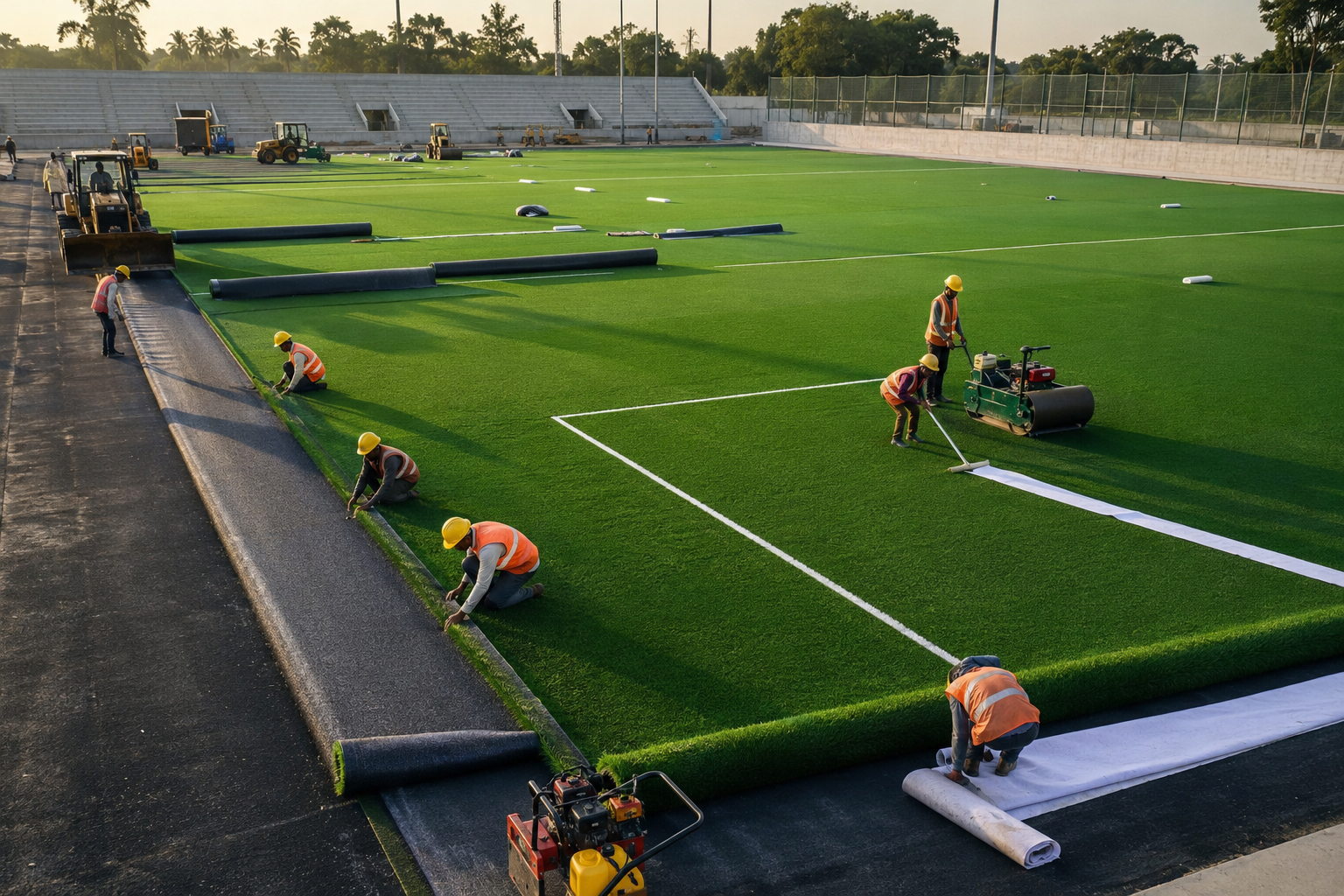
Why Artificial Hockey Turf Matters
High-quality artificial hockey turf plays an important role in creating a consistent and dependable playing environment. Hockey involves quick movements, rapid passing, controlled ball movement and frequent changes in direction. The playing surface must therefore be selected and installed with attention to grip, ball behaviour, drainage and player comfort.
Modern synthetic hockey surfaces are available in different configurations to suit recreational use, institutional training and high-performance competition. The appropriate system depends on the level of play, the intended operating conditions, maintenance resources and the specifications required for the facility.
- Consistent playing conditions: A properly designed surface supports predictable ball movement and gameplay.
- Player comfort: Suitable turf systems and, where required, shock pads can help address impact and surface comfort considerations.
- Effective drainage: A well-designed drainage arrangement helps manage water according to the turf system and site conditions.
- Durability: Appropriate materials and professional installation help the field withstand regular sporting activity.
- Maintenance planning: A suitable turf system and maintenance programme help preserve playing characteristics over time.
- Purpose-built design: Surface selection can be aligned with training, school sports, academy use or competition requirements.
Working with professional artificial hockey turf contractors helps bring these requirements together in one coordinated construction plan.
Professional Artificial Hockey Turf Installation Services
Sports Facility India offers hockey field development solutions based on project requirements, site conditions and the intended level of play. Services can include planning, foundation preparation, drainage, synthetic turf installation and associated sports infrastructure.
Synthetic Artificial Hockey Turf Installation
Synthetic hockey turf installation is suitable for facilities that require a purpose-designed surface for regular practice, skill development and organised hockey activities.
- Assessment of site and playing requirements
- Selection of an appropriate synthetic turf system
- Preparation of the supporting base
- Professional turf laying and joint finishing
- Field marking according to the approved layout
The final turf specification should match the facility's intended use, performance expectations and maintenance capabilities.
Water-Based Artificial Hockey Turf
Water-based hockey turf systems are used in high-performance facilities where the selected playing surface is designed to operate with controlled water application. These systems require appropriate planning for water distribution, drainage and ongoing maintenance.
- Planning for the selected water-based turf system
- Coordination of surface and base specifications
- Integration of suitable irrigation arrangements
- Drainage and water-management planning
- Installation according to project specifications
Suitability for competitive play depends on the complete system specification and the relevant governing-body requirements.
Turnkey Hockey Turf Construction
Turnkey hockey turf construction brings the major stages of a hockey field project together under a coordinated implementation plan. It is suitable for organisations developing new sports facilities or upgrading existing grounds.
- Site evaluation and project planning
- Earthwork and base construction
- Drainage system development
- Synthetic turf installation
- Hockey field marking and finishing
- Coordination of fencing and sports lighting
The exact scope of turnkey work is determined by the agreed project specifications and site requirements.
Hockey Turf Base Construction and Drainage
The foundation beneath artificial hockey turf is essential to the stability and long-term performance of the field. Base construction and drainage should be planned together to address ground conditions, surface levels and the expected movement of water through or away from the playing area.
- Site grading and level preparation
- Construction of the specified supporting layers
- Drainage design and installation
- Surface level and base quality checks
- Preparation for the selected turf system
Types of Artificial Hockey Turf Systems
Choosing the right hockey turf requires consideration of the playing level, expected usage, climate, water availability, maintenance arrangements and project budget. Different turf systems offer different playing characteristics, so specifications should be evaluated before construction begins.
1. Non-Water-Based Synthetic Hockey Turf
Non-water-based synthetic hockey surfaces can be considered for suitable training and sports facilities. Their performance depends on the turf construction, fibre characteristics, backing, infill where applicable and the quality of the supporting base. The selected product should be appropriate for the intended hockey activities.
2. Water-Based Hockey Turf
Water-based systems are designed to operate with water applied to the playing surface. They are often considered for high-performance hockey venues where the specified system, water infrastructure and maintenance resources can support its operating requirements.
3. Hockey Training Turf
Hockey training facilities require a surface suitable for drills, passing practice, ball control and regular player development. The turf system should be chosen according to the intensity of use and the age and skill levels of the intended users.
4. Competition-Grade Hockey Turf
Competition facilities require particular attention to field dimensions, surface performance, construction tolerances and applicable competition rules. Where approval or certification is required, the complete field system should be assessed against the relevant requirements before it is represented as approved for competition.
Artificial Hockey Turf Construction Process
Professional hockey turf installation involves several coordinated stages. The sequence and technical specifications may vary according to the selected turf system, existing ground conditions and project requirements.
- Site inspection and planning: Assess the available area, ground conditions, access, intended use, drainage requirements and project objectives.
- Design and specification: Establish the field layout, turf type, base requirements, drainage arrangements and associated infrastructure.
- Ground preparation: Complete the required earthwork, grading and preparation of the formation.
- Base construction: Install the specified foundation layers and prepare the base to the required levels and tolerances.
- Drainage installation: Construct the planned drainage arrangement to manage water in accordance with the field design.
- Turf laying and jointing: Install the selected synthetic turf, complete the required seams and finish the surface according to the product system.
- Field marking and accessories: Apply the approved hockey field layout and coordinate additional elements such as fencing and lighting where included.
- Inspection and handover: Review the completed installation, address identified deficiencies and provide relevant maintenance guidance.
Where Artificial Hockey Turf Can Be Installed
Artificial hockey turf is used across a range of educational, recreational and professional sports environments. The turf specification and supporting infrastructure should be matched to the expected level of activity.
- Schools: Hockey grounds for physical education, sports programmes and student training.
- Colleges and universities: Sports facilities for regular practice, intercollegiate activities and competitions.
- Hockey academies: Training surfaces for player development, technical drills and coaching sessions.
- Sports stadiums: Purpose-designed hockey fields for organised events and competition.
- Private sports clubs: Dedicated facilities for members, recreational players and coaching programmes.
- Government sports complexes: Hockey infrastructure developed according to project specifications and applicable standards.
- Training centres: Surfaces designed for practice sessions, fitness activities and skill improvement.
Compare Artificial Hockey Turf Options
The following comparison provides general guidance. Actual performance, maintenance needs and service life depend on the manufacturer's specifications, site conditions, installation quality, usage and maintenance programme.
| Turf System | Potential Application | Key Consideration | Maintenance Requirements |
|---|---|---|---|
| Non-water-based synthetic hockey turf | Suitable training and institutional facilities | Surface characteristics and product specification | Routine cleaning and manufacturer-recommended care |
| Water-based hockey turf | Appropriately designed high-performance venues | Water supply, irrigation, drainage and operating requirements | Surface maintenance and water-system management |
| Hockey training turf | Schools, academies and practice grounds | Usage intensity, player requirements and durability | Regular inspections and scheduled maintenance |
| Competition-grade hockey turf | Facilities intended for organised competition | Applicable governing-body specifications and approval | Maintenance according to the approved surface system |
Benefits of Hiring Professional Artificial Hockey Turf Contractors
A hockey field is a specialised sports facility, and its performance depends on more than the visible synthetic grass. Proper planning, foundation construction, drainage, material selection and finishing all influence the completed playing surface.
- Coordinated project execution: Professional planning helps coordinate the different stages of hockey field construction.
- Appropriate material selection: Turf specifications can be matched to the intended playing level, usage and maintenance resources.
- Attention to base quality: Proper preparation helps support a stable surface and consistent playing conditions.
- Drainage planning: Suitable drainage design helps address water management and site-specific requirements.
- Accurate field layout: Careful marking and dimensional checks help prepare the field for its intended use.
- Long-term maintenance guidance: Appropriate care and regular inspections help preserve the condition of the turf system.
How to Choose the Best Artificial Hockey Turf Contractors
Before appointing a hockey turf construction company, evaluate its technical capabilities, previous work, material specifications and ability to manage the full project scope.
Experience in Hockey Field Construction
Ask about completed hockey turf projects, the type of systems installed and the company's experience with similar facilities. Project references can help you evaluate its practical expertise.
Quality of Turf Materials
Review the proposed turf product, technical datasheets, warranty terms and suitability for the intended application. Where specific sports approvals are necessary, request the relevant documentation.
Base Preparation and Drainage Expertise
Confirm that the contractor has a clear plan for ground preparation, base construction, drainage and quality checks. These components are fundamental to the overall field system.
Turnkey Project Capability
If you require a complete facility, clarify whether the contractor can coordinate civil work, turf installation, field marking, fencing, lighting and other specified components.
Transparent Quotations
Request an itemised quotation covering material specifications, civil work, drainage, installation, accessories, taxes where applicable, exclusions and estimated completion time.
Warranty and After-Installation Support
Discuss product warranties, installation workmanship coverage, maintenance schedules and the process for resolving issues after project completion.
Artificial Hockey Turf Installation Cost in India
The cost of artificial hockey turf installation in India depends on the project scope, field dimensions, selected turf system and site conditions. A reliable estimate should be prepared after reviewing the technical requirements and quantities involved.
Major factors affecting hockey turf construction costs include:
- Size and layout of the hockey field
- Type, quality and specifications of synthetic turf
- Existing ground conditions and earthwork requirements
- Base construction materials and installation methods
- Drainage infrastructure and water-management arrangements
- Shock pads or other system components, where required
- Field marking, fencing, lighting and related accessories
- Transportation, site access and project location
- Testing, documentation and applicable approval requirements
For an accurate quotation, provide the proposed field dimensions, project location, preferred turf type, intended playing level and details of any existing infrastructure. Sports Facility India can assess the project requirements and help determine a suitable scope of work.
Artificial Hockey Turf Maintenance and Care
Regular maintenance helps preserve the condition and playing characteristics of an artificial hockey field. The appropriate maintenance schedule depends on the turf system, frequency of use, environmental conditions and manufacturer's instructions.
- Remove litter, leaves and other surface debris regularly.
- Inspect turf seams, joints, edges and field markings.
- Check drainage outlets and keep them clear of obstructions.
- Follow the recommended cleaning and brushing procedures for the installed system.
- For water-based turf, inspect irrigation components and manage water application appropriately.
- Arrange periodic professional inspections and repairs when required.
- Follow the manufacturer's maintenance manual and warranty conditions.
A planned maintenance programme helps identify developing issues early and supports the long-term usability of the hockey facility.
Artificial Hockey Turf Contractors Across India
Sports Facility India serves sports infrastructure projects across India, subject to project requirements and service availability. Our hockey turf construction solutions can be considered for educational institutions, sports academies, private clubs, stadiums and sports development organisations.
Whether you are planning a new hockey field or upgrading an existing facility, the first step is to evaluate the site, determine the appropriate turf system and establish the construction requirements.
Contact our team to discuss your location, proposed field size, installation requirements and project budget.
Frequently Asked Questions About Artificial Hockey Turf Contractors
1. What do artificial hockey turf contractors provide?
Artificial hockey turf contractors may provide site assessment, base construction, drainage installation, synthetic turf laying, joint finishing, field marking and coordination of fencing and lighting, depending on the agreed project scope.
2. Which artificial turf is suitable for a hockey field?
The suitable turf depends on the intended level of play, performance requirements, water availability, maintenance resources and applicable sports specifications. Water-based and other synthetic hockey turf systems should be evaluated against these requirements before selection.
3. How long does artificial hockey turf last?
The service life of artificial hockey turf varies according to product quality, installation, usage, weather exposure and maintenance. Ask the contractor for product-specific service-life guidance and written warranty details.
4. Is artificial hockey turf suitable for schools and colleges?
Yes. An appropriately selected artificial hockey turf system can be used for school and college sports facilities, provided its specifications, cost and maintenance requirements suit the intended activities.
5. Do artificial hockey turf contractors offer turnkey construction?
Some contractors offer turnkey hockey field construction, coordinating site preparation, civil work, drainage, turf installation, field marking and specified accessories. Confirm the included services in the written quotation.
6. What factors affect the cost of hockey turf installation?
The cost depends on field dimensions, turf specifications, ground preparation, base construction, drainage, accessories, transportation and project location. A site assessment and itemised quotation provide a more reliable estimate.
7. Is drainage necessary for artificial hockey turf?
Drainage requirements depend on the selected turf system, field design and site conditions. A suitable water-management plan should be included in the project design to address rainfall and operating requirements.
8. Can artificial hockey turf be designed for competition?
Yes. Hockey turf systems can be specified for competition facilities when the complete field design, surface materials, dimensions and installation meet the applicable governing-body requirements. Any required approval or certification should be verified separately.
9. How can I get a quotation for artificial hockey turf construction?
Contact Sports Facility India with your project location, field dimensions, intended use and preferred turf system. Providing site details and infrastructure requirements helps the team prepare a project-specific quotation.
Hire Artificial Hockey Turf Contractors for Your Next Project
Planning a hockey ground for a school, college, academy, sports club or stadium? Sports Facility India offers artificial hockey turf construction and installation solutions tailored to your project requirements.
From base preparation and drainage to synthetic turf installation and final field marking, discuss your requirements with our team to identify a suitable approach for your facility.
Sports Facility India
Visit Our Website | Request a Project Quote | Call +91 80094 83311