
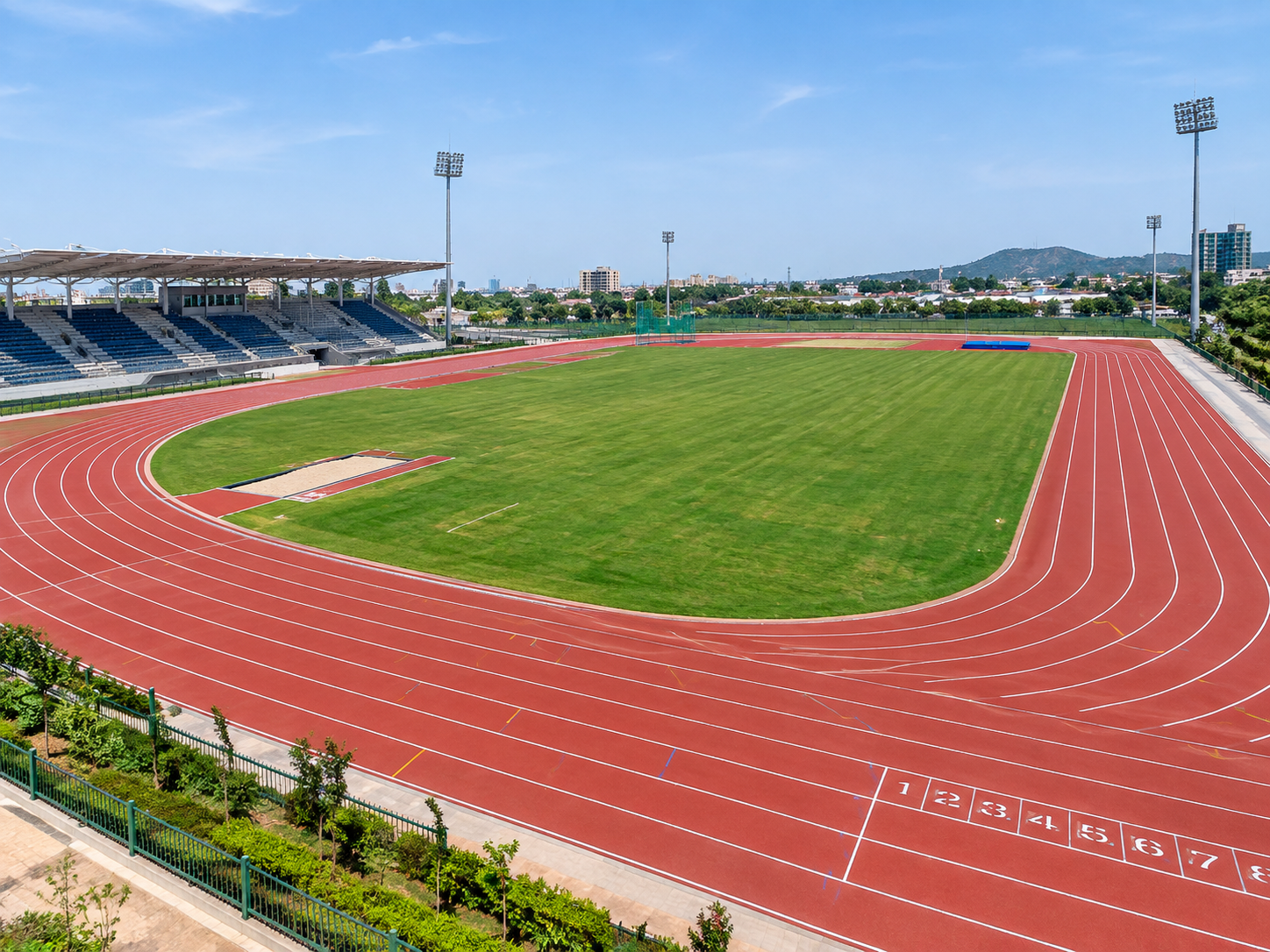
What Is Athletics Track Construction?
Athletics track construction is the process of developing a running track using carefully engineered civil and synthetic surface systems. The construction process generally includes site assessment, earthwork, sub-base preparation, drainage, surface leveling, synthetic layer installation, line marking, and final quality inspection.
Unlike ordinary outdoor flooring, an athletics track must be designed to withstand repeated running, sprinting, turning, jumping, and other athletic movements. Surface performance, shock absorption, traction, drainage, dimensional accuracy, and durability are therefore important considerations during construction.
Why Professional Athletics Track Construction Matters
A professionally constructed running track creates a consistent sporting environment while improving athlete safety and training performance. Poorly prepared foundations, inadequate drainage, uneven surfaces, or incorrect installation can result in premature surface damage and inconsistent running conditions.
- Provides a consistent and professional running surface
- Improves traction and athlete stability
- Provides controlled shock absorption and surface resilience
- Helps reduce excessive impact on athletes
- Supports intensive training and regular sports activities
- Improves resistance to weather and heavy usage
- Provides accurate lane dimensions and professional markings
- Improves the long-term value of sports infrastructure
Types of Athletics Track Construction
Different athletics facilities require different synthetic track systems. The most suitable option depends on the intended use, competition level, site conditions, expected traffic, performance requirements, and project budget.
Full PU Athletics Track
A Full PU athletics track is a high-performance polyurethane system designed for professional training facilities, stadiums, and competition environments.
- Premium polyurethane synthetic surface
- Excellent resilience and shock absorption
- Suitable for professional athletic facilities
- High durability under intensive usage
- Suitable for high-performance applications
Sandwich PU Athletics Track
A Sandwich PU track system consists of multiple engineered layers that provide a balance of performance, durability, and cost efficiency.
- Multi-layer polyurethane construction
- Good shock absorption
- Durable synthetic surface
- Suitable for schools and universities
- Ideal for training facilities and academies
EPDM Synthetic Athletics Track
EPDM athletics track flooring uses durable rubber granules to create a resilient and weather-resistant running surface suitable for educational, recreational, and training facilities.
- Durable rubber surface
- Good weather resistance
- Comfortable running characteristics
- Suitable for regular training activities
- Relatively easy to maintain
Indoor Athletics Track
Indoor athletics track flooring is designed for controlled indoor sporting environments where athletes require a safe and resilient surface throughout the year.
- Shock-absorbing synthetic surface
- Suitable for indoor training facilities
- Consistent surface performance
- Reduced exposure to outdoor weather
- Suitable for sports arenas and training centres
Compare Athletics Track Surface Systems
| Track System | Ideal Application | Performance | Durability | Maintenance |
|---|---|---|---|---|
| Full PU Track | Professional stadiums and high-performance facilities | Excellent | High | Low to Moderate |
| Sandwich PU Track | Universities, academies and training centres | Very Good | High | Low |
| EPDM Synthetic Track | Schools, recreational grounds and training areas | Good | High | Low |
| Indoor Synthetic Track | Indoor stadiums and athletic training arenas | Very Good | High | Low |
Athletics Track Construction Process
Professional athletics track installation requires careful planning and execution from the initial site survey through final surface finishing. The exact construction method depends on the selected track system and existing site conditions.
- Site Survey and Assessment: The site is inspected for dimensions, soil conditions, levels, existing surfaces, accessibility, drainage, and other project requirements.
- Track Layout and Planning: The track geometry, running lanes, field areas, drainage routes, and supporting infrastructure are planned according to the project requirements.
- Earthwork and Excavation: Required excavation, filling, compaction, and ground preparation are completed to establish a stable construction platform.
- Sub-Base Preparation: Proper aggregate layers and compaction provide the structural foundation required for the synthetic track system.
- Drainage Installation: Surface and subsurface drainage are planned to efficiently remove rainwater and reduce water accumulation.
- Surface Leveling: Precision leveling is performed to create the required gradients and smoothness before synthetic surface installation.
- Synthetic Track Installation: PU, EPDM, or another selected synthetic system is installed according to the technical specifications of the project.
- Lane Marking: Professional lane lines, start lines, finish lines, and other required markings are accurately applied.
- Quality Inspection: The completed track is inspected for surface consistency, finishing quality, drainage, markings, and overall installation performance.
400 Metre Athletics Track Construction
A 400m athletics track is commonly used for competitive athletics facilities. Its design incorporates oval running lanes around an infield area that can accommodate selected field events.
Track dimensions and lane configurations should be planned according to the applicable athletics regulations and the intended level of competition. A professional track contractor should verify the required dimensions, lane widths, radii, markings, and event layouts before construction begins.
Materials Used in Athletics Track Construction
High-quality materials play an important role in the performance and service life of a synthetic running track. Depending on the selected system, construction may include the following materials:
- Compacted soil and engineered subgrade
- Granular aggregate sub-base
- Bituminous or suitable structural base layers
- Polyurethane (PU) materials
- EPDM rubber granules
- SBR rubber granules where appropriate
- Primer and bonding materials
- Protective and finishing layers
- Specialized line-marking materials
Key Features of a High-Quality Synthetic Athletics Track
- Shock Absorption: Helps provide a more comfortable running experience.
- Traction: Provides suitable grip for sprinting, running, and athletic movements.
- Surface Resilience: Helps the track withstand repeated athletic activity.
- Weather Resistance: Suitable outdoor systems can withstand regular exposure to environmental conditions.
- Drainage Performance: Proper drainage helps prevent prolonged water accumulation.
- Consistent Surface: Professional installation helps maintain uniform running characteristics.
- Low Maintenance: Synthetic systems generally require less routine maintenance than natural grass surfaces.
- Durability: Correct material selection and professional installation can extend the useful service life of the track.
Athletics Track Construction Cost Factors
The total cost of athletics track construction in India varies from project to project. There is no single fixed price because the final investment depends on the track dimensions, site condition, construction system, materials, civil work, drainage, and installation requirements.
Major Factors Affecting Track Construction Cost
- Total track area and number of lanes
- Site location and accessibility
- Existing ground and soil conditions
- Excavation and earthwork requirements
- Sub-base and structural foundation requirements
- Drainage system requirements
- PU, EPDM, or other synthetic surface selection
- Thickness and number of synthetic layers
- Track markings and event markings
- Kerbing and edge finishing
- Transportation and labour costs
- Additional sports infrastructure requirements
For an accurate estimate, the project should be assessed based on the actual site dimensions, surface condition, selected track system, and technical specifications.
Applications of Athletics Track Construction
Professional synthetic running tracks can be developed for a wide range of sporting and educational facilities.
- Schools and educational institutions
- Colleges and universities
- Sports academies
- Athletics training centres
- Professional stadiums
- Sports complexes
- Fitness and training centres
- Government sports facilities
- Corporate sports campuses
- Military and institutional training facilities
- Community sports grounds
- Indoor athletic arenas
Athlete Safety and Performance
Athlete safety should be considered throughout the design and construction of a running track. A properly engineered synthetic surface can provide controlled resilience, appropriate traction, and a consistent running response.
The combination of a stable foundation, suitable synthetic surface, effective drainage, accurate installation, and regular maintenance helps create a safer and more reliable training environment for athletes.
Athletics Track Maintenance
Regular maintenance helps preserve the appearance, performance, and service life of a synthetic athletics track. The maintenance schedule should be based on the track system, climate, usage level, and manufacturer's recommendations.
- Regularly remove dust, leaves, dirt, and debris
- Keep drainage channels and outlets clear
- Inspect the surface for cracks, loose areas, or damage
- Repair damaged sections at an early stage
- Avoid unsuitable vehicles or heavy equipment on the track
- Maintain clear and visible lane markings
- Use appropriate cleaning methods for the installed surface
- Schedule professional inspection when required
How to Choose the Best Athletics Track Construction Company
Selecting the right athletics track construction company is important for achieving long-term performance and value. Before selecting a contractor, consider the following factors:
- Experience in synthetic running track construction
- Knowledge of PU and EPDM track systems
- Quality of construction and finishing materials
- Professional site assessment and technical planning
- Proper drainage and foundation design
- Experienced installation team
- Accurate track and lane marking
- Previous sports infrastructure projects
- Transparent project quotation
- Maintenance and after-installation support
Why Choose Sports Facility India for Athletics Track Construction?
Sports Facility India provides professional sports infrastructure solutions for educational institutions, sports academies, stadiums, clubs, and other sporting facilities. Our approach focuses on proper site planning, suitable material selection, quality construction, accurate finishing, and long-term track performance.
- Professional athletics track planning
- PU and EPDM synthetic track solutions
- Complete site preparation and construction
- Drainage and sub-base development
- Professional synthetic surface installation
- Accurate lane and track marking
- Solutions for schools, academies and stadiums
- Customized project planning based on site requirements
Frequently Asked Questions About Athletics Track Construction
Q1. What is athletics track construction?
A: Athletics track construction is the process of designing and building a running track using engineered foundations, drainage systems, synthetic surfaces, and professional track markings.
Q2. What is the standard length of an athletics track?
A: A standard outdoor athletics track is commonly designed as a 400-metre track. Exact dimensions, lane configuration, and markings should follow the applicable regulations for the intended competition level.
Q3. Which surface is best for an athletics track?
A: PU and EPDM-based synthetic systems are commonly used for athletics tracks. The best system depends on the facility's competition level, usage, performance requirements, site conditions, and budget.
Q4. How long does a synthetic athletics track last?
A: The service life varies according to the track system, installation quality, climate, usage, and maintenance. A professionally installed synthetic track can provide many years of regular service when properly maintained.
Q5. Is drainage important for outdoor athletics track construction?
A: Yes. Effective drainage is an important part of outdoor track construction because it helps manage rainwater and reduces prolonged water accumulation that can affect the foundation and synthetic surface.
Q6. What is a PU athletics track?
A: A PU athletics track uses polyurethane-based synthetic materials to create a resilient and high-performance running surface. PU systems are available in different construction configurations for training and competition facilities.
Q7. What is an EPDM athletics track?
A: An EPDM athletics track uses EPDM rubber granules as part of the synthetic surface system. It is commonly selected for schools, recreational grounds, training facilities, and other sports applications.
Q8. Can athletics tracks be constructed for schools?
A: Yes. Athletics tracks can be designed for schools based on the available area, student usage, sports requirements, budget, and site conditions.
Q9. Do you provide complete athletics track construction services?
A: Yes. Complete project solutions can include site assessment, civil preparation, sub-base development, drainage, synthetic surface installation, track marking, and finishing work.
Q10. How much does athletics track construction cost in India?
A: Athletics track construction cost depends on the track size, number of lanes, site preparation, drainage, foundation, selected PU or EPDM system, materials, labour, location, and project specifications. A site assessment is recommended for an accurate quotation.
Get a Professional Athletics Track Construction Quote
Planning a new running track for a school, university, sports academy, stadium, or sports complex? Sports Facility India provides professional Athletics Track Construction solutions designed around your site requirements, performance goals, and project specifications.
Contact our team to discuss your athletics track project and receive a customized construction proposal.
Request a Free Quote