
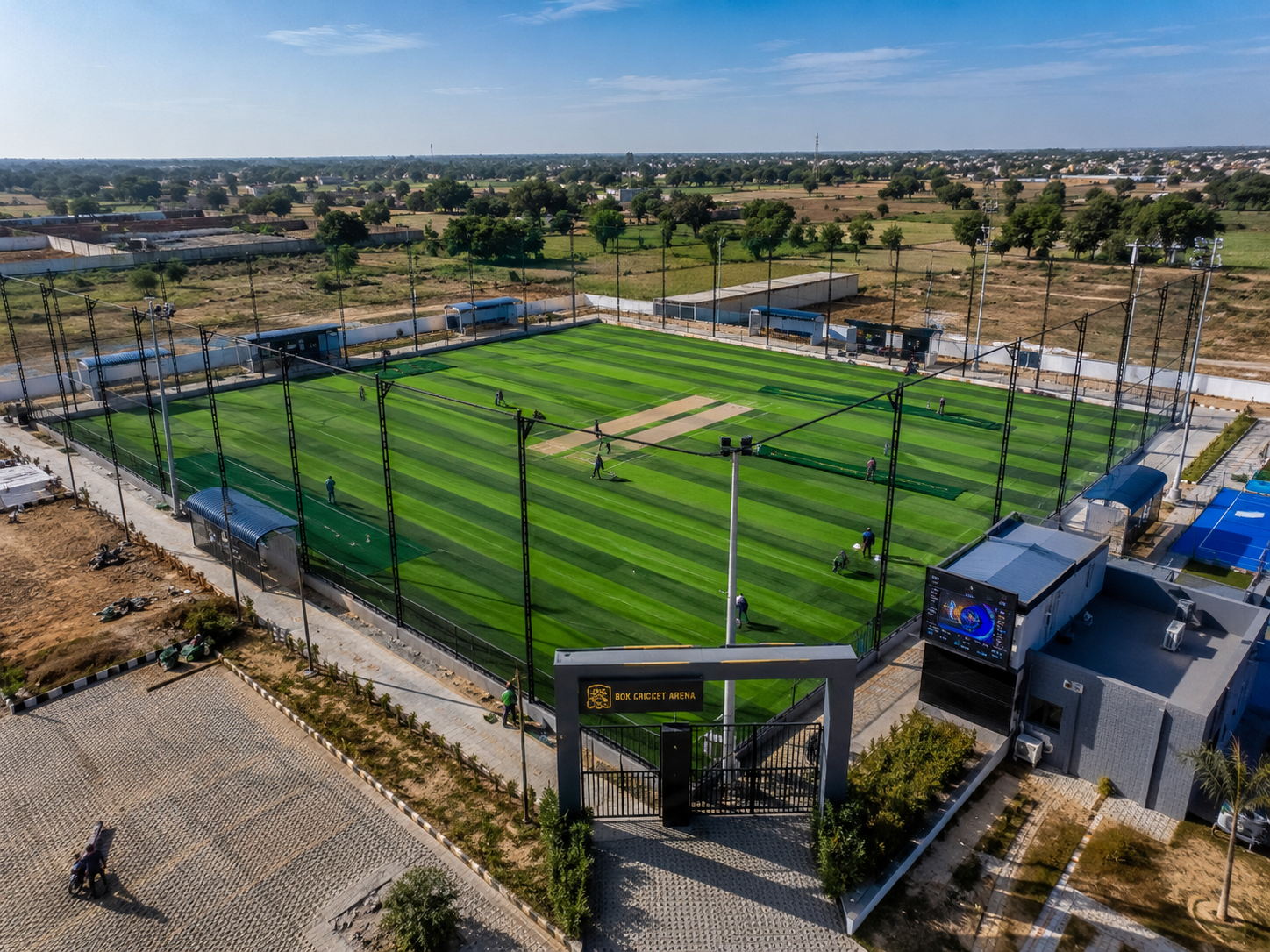
Why Invest in Professional Box Cricket Ground Construction?
A professionally planned box cricket ground offers an organized space for short-format cricket while making efficient use of available property. It can serve casual players, training groups, corporate teams and organized competitions. For commercial operators, a well-designed facility can also support hourly bookings, coaching sessions and recreational events.
The performance of the ground depends on more than the appearance of the artificial grass. Base stability, surface finishing, turf selection, ball containment, structural safety, drainage and lighting all contribute to the facility's usability.
- Make productive use of compact urban and commercial spaces.
- Create a dedicated area for recreational cricket and practice.
- Choose synthetic turf suited to the intended playing conditions.
- Use protective netting to help contain cricket balls.
- Plan LED sports lighting for suitable evening activities.
- Develop facilities for schools, academies, clubs and businesses.
- Customize the playing layout to suit the available site.
- Plan for maintenance access and long-term operational needs.
- Consider indoor or outdoor construction according to site suitability.
Complete Box Cricket Turf Ground Construction Services
Developing a box cricket arena requires coordination between civil construction, sports surfacing and supporting infrastructure. Sports Facility India offers project solutions that can combine individual construction activities into an integrated facility, depending on the agreed project scope.
1. Site Survey and Feasibility Assessment
The project begins with an assessment of the available land or existing building. Measurements, access, ground levels, soil conditions, existing flooring, available height, drainage and intended use are reviewed before the layout is finalized.
2. Box Cricket Layout and Design
Layout planning covers the playing area, cricket pitch, boundary clearance, structural posts, fencing, side and overhead netting, entry gates and lighting positions. Commercial projects may also require space for reception, seating, equipment storage and customer movement.
3. RCC Base and Civil Construction
Depending on the site, civil work may include excavation, filling, leveling, compaction, grading, concrete or RCC construction and surface finishing. The selected base system should be appropriate for the ground conditions and the requirements of the turf product.
4. Artificial Cricket Turf Installation
Cricket-specific synthetic turf is installed with attention to alignment, seam treatment, edge finishing and secure fixing. Surface preparation and installation methods should follow the selected turf system's technical recommendations.
5. MS Structure, Fencing and Netting
Structural framing, perimeter fencing, protective cricket netting and access gates help define the playing area. The framework, foundations, connections and containment system should be designed for the relevant site conditions and anticipated loads.
6. LED Sports Lighting Installation
Suitable sports floodlights can be incorporated for evening practice and matches. Fixture positions, glare control, electrical safety and the intended level of illumination should be considered during the design stage.
7. Drainage and Water Management
Outdoor projects may require surface grading, drainage channels, suitable outlets and other water-management measures. The solution should reflect local rainfall, ground levels, soil conditions and the selected base construction.
8. Turnkey Box Cricket Construction
A turnkey project can coordinate design, civil work, turf installation, structural fabrication, fencing, netting, lighting, drainage and finishing under an agreed construction scope. This approach helps align the individual components before handover.
Types of Box Cricket Turf Ground Construction
Box cricket facilities can be developed for different environments. The right configuration depends on available space, building restrictions, target users, expected playing frequency and project objectives.
Indoor Box Cricket Ground
Indoor facilities can be planned inside suitable warehouses, commercial buildings, sports halls or purpose-built structures. Projects require careful assessment of clear height, ventilation, lighting, structural suitability, access and the existing floor.
Outdoor Box Cricket Ground
Outdoor grounds require suitable artificial turf, a properly prepared base, effective water management and weather-appropriate structural materials. UV exposure, rainfall, wind conditions and maintenance access should be considered during planning.
Commercial Box Cricket Arena
Commercial arenas can be designed for hourly bookings, memberships, coaching, tournaments, corporate games and group activities. Durable materials, safe access, lighting and convenient maintenance arrangements are important considerations.
School and Cricket Academy Ground
Schools and academies can use compact cricket facilities for coaching sessions, student activities, practice matches and competitions. The layout should reflect the age group, playing format, supervision requirements and available campus space.
Residential Society Box Cricket Facility
Residential communities can create dedicated recreational spaces for residents, children and community sports activities. Site planning should account for access, surrounding buildings, noise, safety, applicable permissions and maintenance responsibilities.
Corporate Box Cricket Ground
Corporate facilities can provide space for employee recreation, internal tournaments, team-building activities and organized sporting events. The design can incorporate practical access, lighting and optional spectator or support facilities.
Artificial Turf Selection for Box Cricket Grounds
Artificial turf is a key component of box cricket ground construction. However, not every synthetic grass product is suitable for cricket. The selection should consider the expected ball interaction, player movement, usage frequency, weather exposure, underlying base and maintenance requirements.
Cricket-Specific Synthetic Turf
Cricket-specific turf can provide a dedicated playing surface for recreational matches, training and regular box cricket activities. Product specifications, pile characteristics and installation requirements should be reviewed before selection.
Durable Turf for Frequent Use
Facilities expecting regular bookings or intensive practice should consider a turf system suitable for the anticipated foot traffic and playing frequency. Product durability depends on the complete specification, installation and ongoing maintenance.
Turf with a Shockpad System
A compatible cushioning layer may be considered when additional impact attenuation is required. A shockpad is not automatically necessary for every project; its suitability depends on the selected turf system and intended application.
Multi-Sport Synthetic Turf
Multi-sport surfaces may be suitable for facilities intended for cricket alongside selected recreational activities. The chosen system should meet the requirements of the intended sports rather than assuming that every turf type supports every activity.
Before finalizing a product, review the manufacturer's technical data, installation instructions, warranty conditions and maintenance guidance. The base and turf should be treated as a complete surface system.
Box Cricket Turf Ground Construction Process
A systematic construction process helps coordinate the different elements of a box cricket facility and reduces the likelihood of avoidable installation issues.
- Site inspection and measurements: Assess the available dimensions, access, levels, soil or floor conditions, utilities, drainage and project objectives.
- Layout and technical planning: Plan the playing area, pitch, safety clearances, structural posts, netting, gates, lighting and supporting facilities.
- Ground preparation: Complete the required excavation, filling, grading, leveling and compaction according to the approved construction design.
- Base construction: Prepare the RCC, concrete or other specified base system with appropriate levels, surface finish and drainage provisions.
- Structural fabrication and installation: Install the specified structural framework, fencing, access gates and protective netting in accordance with the approved design.
- Artificial turf installation: Position, align, join, secure and finish the synthetic turf using methods suitable for the selected product.
- Lighting and electrical work: Install the planned sports lights, cabling and associated electrical components where included in the project.
- Markings and finishing: Complete cricket markings, entry points, finishing details and optional branding or accessories.
- Inspection and handover: Review the playing surface, seams, edges, structures, netting, access gates, drainage and lighting before project completion.
Essential Components of a Professional Box Cricket Ground
A complete box cricket facility combines sports surfacing with structural, safety and operational components. Depending on the project specification, the installation may include:
- Prepared ground and engineered base system.
- Cricket-specific artificial turf.
- Optional compatible cushioning or shockpad layer.
- MS or galvanized structural framework.
- Perimeter fencing and protective netting.
- Overhead netting where required by the layout.
- Player and maintenance access gates.
- Outdoor drainage and water-management provisions.
- LED sports floodlights and electrical infrastructure.
- Cricket pitch and boundary markings.
- Optional spectator seating and waiting areas.
- Optional scoreboard, branding and sponsor graphics.
- Equipment storage and other supporting amenities.
The final component list should be agreed upon before construction begins so that the scope, materials and installation responsibilities are clearly defined.
Indoor vs Outdoor Box Cricket Ground Construction
Indoor and outdoor box cricket grounds have different planning and maintenance requirements. Comparing these factors can help property owners choose a suitable arrangement for their site.
| Planning Factor | Indoor Box Cricket | Outdoor Box Cricket |
|---|---|---|
| Weather exposure | Generally protected by the building envelope. | Exposed to rainfall, sunlight, wind and outdoor debris. |
| Base requirements | Existing floor suitability and required surface preparation must be assessed. | Ground preparation, levels and the specified base system are important. |
| Drainage | Depends on the building, existing floor and water-entry risks. | Requires a suitable strategy for rainfall and surface runoff. |
| Lighting | Planned illumination is required for the enclosed playing area. | Natural light may be supplemented with floodlights for evening play. |
| Structure | Must be coordinated with the existing building and its clear height. | May require an independent engineered frame and foundations. |
| Turf selection | Should be compatible with indoor conditions and the base. | Should account for UV exposure, weather and drainage conditions. |
| Maintenance | Less direct exposure to outdoor debris and weather. | May require more frequent debris removal and weather-related checks. |
Box Cricket Ground Dimensions and Layout Planning
There is no single ground dimension that suits every box cricket project. The required size depends on the playing format, available property, target users, ball type, safety requirements and operational objectives.
Accurate measurements should account for the usable playing area, pitch position, structural posts, fencing, side netting, overhead containment and player access. Safety clearance and the movement of players should be considered alongside the playing dimensions.
Commercial facilities may also require additional space for reception, waiting areas, equipment storage, seating, washrooms and circulation. Indoor projects need a separate assessment of clear height, ventilation, emergency exits and the suitability of the existing building.
Before construction, prepare a site-specific layout and verify that the proposed design meets applicable building, structural, fire and electrical requirements.
How to Choose the Right Box Cricket Construction System
The right construction specification should reflect the way the ground will be used rather than focusing only on the initial turf price. Consider the following factors when evaluating a proposed project.
- Available space: Measure the site accurately and identify access restrictions before approving the playing layout.
- Indoor or outdoor location: The environment affects base preparation, drainage, structural planning and turf selection.
- Expected playing frequency: Frequent use calls for a surface and supporting infrastructure selected for the anticipated level of activity.
- Cricket requirements: Choose a surface compatible with the intended playing format and the manufacturer's recommendations.
- Drainage and weather: Outdoor projects should include a practical plan for water runoff, rainfall and exposure to sunlight.
- Structural safety: Assess the framework, foundations, netting, fencing and gates as parts of the complete facility.
- Lighting: Consider fixture placement, glare, electrical safety and the expected hours of operation.
- Maintenance access: Allow sufficient access for turf cleaning, inspections and repairs.
- Total project budget: Compare the complete scope, including civil work, turf, steel, fencing, netting, lighting, drainage and finishing.
Box Cricket Turf Ground Construction Cost in India
The cost of box cricket turf ground construction in India varies according to the project dimensions, site conditions, materials and facilities included. A compact recreational ground may require a different construction approach from a commercial arena designed for frequent bookings and extended operating hours.
A reliable estimate should account for the complete construction scope rather than the cost of artificial grass alone. Major cost factors include:
- Ground dimensions and existing site conditions.
- Excavation, filling, leveling and compaction.
- RCC, concrete or other specified base construction.
- Artificial cricket turf type, specification and quantity.
- Optional cushioning or shockpad requirements.
- Structural steel, fabrication and installation.
- Perimeter fencing, side netting and overhead netting.
- Drainage channels and water-management provisions.
- LED floodlights, cabling and electrical work.
- Roofing or building modifications, where applicable.
- Access gates, markings, seating and additional amenities.
- Transportation, installation and project finishing.
The best way to estimate a box cricket construction project is to arrange a site assessment and define the required specifications. A detailed quotation can then identify the proposed materials, construction activities, inclusions and exclusions.
If you are planning a new facility, discuss your available area, preferred indoor or outdoor format, expected usage and budget with the project team before finalizing the construction scope.
Box Cricket Turf Ground Maintenance and Care
Regular maintenance helps preserve the appearance and playing consistency of an artificial turf ground. Maintenance frequency depends on the selected product, weather exposure, playing frequency and manufacturer's recommendations.
- Remove leaves, dust and loose debris from the turf.
- Inspect turf seams, edges and fixing points for damage.
- Keep drainage channels and outlets clear at outdoor facilities.
- Check fencing, netting, gates and structural connections.
- Brush or groom the turf using suitable maintenance equipment.
- Follow the manufacturer's guidance for cleaning and stain removal.
- Inspect floodlights, cables and electrical fittings periodically.
- Repair damaged turf, netting or structural components promptly.
- Keep access routes and surrounding areas clean and unobstructed.
Avoid using cleaning chemicals, equipment or repair materials that are incompatible with the turf system. Planned inspections and timely repairs can help prevent minor issues from becoming larger maintenance problems.
Where Can Box Cricket Turf Grounds Be Constructed?
A box cricket ground can be considered for a range of commercial, educational, residential and recreational environments. Every site should be evaluated for available space, access, structural suitability, safety and applicable permissions.
- Commercial sports arenas and cricket turf centres.
- Cricket coaching academies and sports training facilities.
- Schools, colleges and educational campuses.
- Residential societies and community recreation areas.
- Corporate campuses and employee sports facilities.
- Hotels, resorts and leisure properties.
- Private sports clubs and membership-based facilities.
- Fitness centres and recreational complexes.
- Multi-sport facilities and community sports grounds.
- Suitable indoor warehouses and commercial buildings.
The proposed design should be tailored to the needs of the intended users. For example, a school ground may prioritize supervised practice, while a commercial arena may require booking access, spectator space, lighting and efficient movement between sessions.
Benefits of Professional Box Cricket Ground Construction
A coordinated construction approach helps ensure that the playing surface, base, framework and supporting systems are planned together. This can improve usability, simplify maintenance and reduce the risk of problems caused by incompatible materials or poorly coordinated installation work.
Efficient Space Utilization
A compact playing layout can make a suitable urban, institutional or commercial property useful for dedicated cricket activities.
Organized Playing Area
Properly planned fencing, netting and access gates help define the playing zone and manage ball containment.
Practical Surface Maintenance
Artificial turf eliminates routine mowing and reduces the watering needs associated with natural grass, although cleaning, grooming and repairs remain necessary.
Flexible Facility Usage
Depending on the layout, the facility can support practice, recreational matches, coaching sessions, tournaments and corporate activities.
Why Choose Sports Facility India for Box Cricket Ground Construction?
A successful box cricket project requires coordination between sports-surface installation, civil work, structural fabrication, fencing, protective netting, drainage and lighting. Sports Facility India provides sports infrastructure solutions for clients planning recreational grounds, training facilities and commercial box cricket arenas.
The project scope can be developed around the available site, intended playing format and proposed facilities. A clearly defined specification helps establish which construction components are required and how the individual systems will work together.
- Site assessment and project feasibility planning.
- Customized box cricket ground layout planning.
- RCC and civil base construction solutions.
- Artificial cricket turf supply and installation.
- MS structural fabrication and installation.
- Perimeter fencing and protective netting systems.
- Indoor and outdoor box cricket facility planning.
- Sports lighting and electrical coordination.
- Drainage and water-management planning.
- Finishing, markings and optional facility accessories.
- Turnkey project coordination according to the agreed scope.
Before appointing a construction provider, review the proposed materials, installation specifications, project scope, completion schedule, warranty conditions and maintenance recommendations. These details help you evaluate the project beyond its initial price.
Frequently Asked Questions About Box Cricket Turf Ground Construction
1. What is box cricket turf ground construction?
Box cricket turf ground construction is the development of a compact cricket facility with a suitable base, synthetic cricket turf, structural framework, fencing, protective netting and access gates. Depending on the project, drainage, lighting and additional amenities can also be included.
2. How much does box cricket turf ground construction cost in India?
The cost depends on ground dimensions, site conditions, civil work, turf specification, structural steel, fencing, netting, lighting and drainage. A site-specific quotation based on the complete construction scope is more useful than a fixed turf-only price.
3. Which artificial turf is best for box cricket?
Cricket-specific synthetic turf is generally preferred for dedicated cricket facilities. The final product should be selected according to playing requirements, expected foot traffic, weather exposure, base compatibility and manufacturer specifications.
4. Can a box cricket ground be constructed indoors?
Yes. Indoor box cricket grounds can be developed in suitable warehouses, sports halls and purpose-built buildings. The site must provide adequate clear height, space, ventilation, lighting, access and structural suitability.
5. Can box cricket turf grounds be constructed outdoors?
Yes. Outdoor facilities can use synthetic cricket turf installed over a suitable base with appropriate drainage, structural fencing and protective netting. The design should account for rainfall, UV exposure and local weather conditions.
6. Is drainage necessary for an outdoor box cricket ground?
Yes. An outdoor facility should have a suitable water-management strategy based on the ground levels, rainfall, soil conditions and construction system. Effective drainage helps manage rainwater and protect the playing surface.
7. Is a shockpad required for box cricket turf?
No. A shockpad is not automatically required for every installation. It may be considered when additional cushioning or impact attenuation is needed and the layer is compatible with the selected turf system.
8. How long does artificial cricket turf last?
Turf service life depends on material quality, installation, playing frequency, maintenance, UV exposure and weather conditions. Consult the manufacturer's technical specifications and warranty for the selected product.
9. How long does it take to construct a box cricket ground?
The construction timeline depends on site preparation, ground size, base curing requirements, structural fabrication, turf installation, lighting and other project components. The schedule should be confirmed after site assessment and approval of the construction plan.
10. Does Sports Facility India provide turnkey box cricket construction?
Sports Facility India provides integrated construction solutions that can include site assessment, layout planning, civil work, artificial turf installation, structural fabrication, fencing, netting, drainage, lighting and finishing, according to the agreed project scope.
Plan Your Box Cricket Turf Ground Construction Project
Planning a new box cricket facility for a sports academy, school, residential society, corporate campus or commercial sports centre? Sports Facility India can help you explore construction solutions based on your site, playing requirements and proposed facilities.
Discuss the available area, preferred indoor or outdoor format, turf requirements, civil work, structural framework, fencing, protective netting, drainage and lighting before finalizing your project specification.
Get a Project ConsultationBox Cricket Turf Ground Construction Company in India
Sports Facility India offers box cricket turf ground construction in India for clients planning compact cricket facilities for sports, recreation, coaching and commercial use. The construction scope can combine site evaluation, layout planning, civil and RCC base work, artificial cricket turf, structural fabrication, fencing, protective netting, drainage and sports lighting.
Whether you are developing a recreational box cricket ground, a commercial cricket arena, a school sports facility or a training ground for a cricket academy, the project should be designed around the available land, expected usage, environmental conditions, safety requirements and maintenance needs.
Professional planning helps coordinate the playing surface with the structural and operational components required for a functional facility. Material selection, installation quality, drainage, access and routine maintenance should all be considered before construction begins.
For box cricket ground construction services, contact Sports Facility India to discuss your site, project requirements and proposed construction scope.