
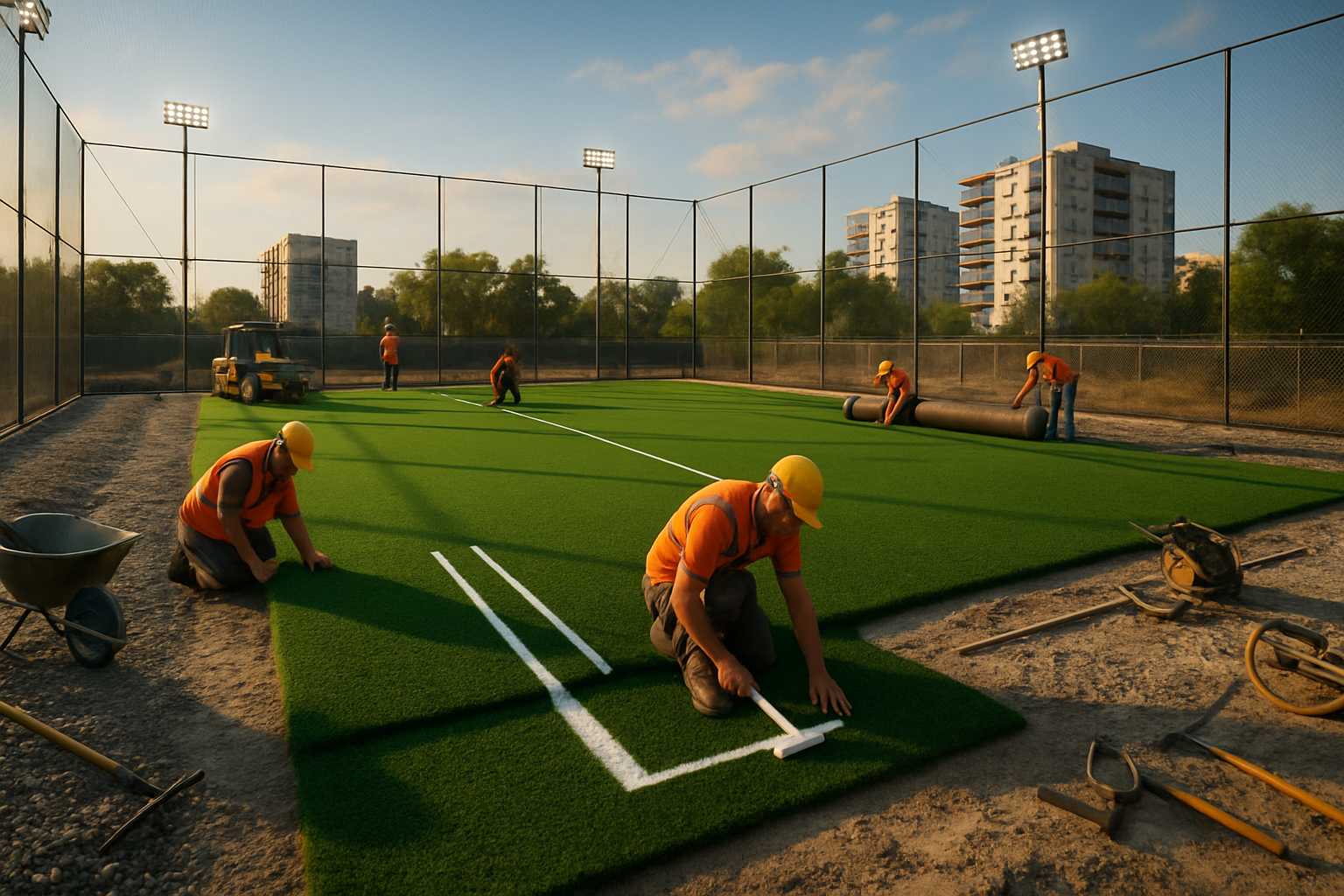
What Is Box Cricket Turf Construction?
Box cricket turf construction is the process of designing and building an enclosed cricket arena using synthetic turf and a suitable supporting structure. The playing area is typically surrounded by steel framework and sports netting to help contain the ball and define the boundaries of the facility.
The construction process begins with a site assessment to determine the available space, existing ground condition, access requirements, drainage needs and structural limitations. Based on these findings, the appropriate base system, turf specification, enclosure height and supporting infrastructure can be selected.
Box cricket facilities can be used by schools, colleges, cricket academies, private clubs, residential communities, corporate campuses and commercial sports operators. Their design can be customized for recreational play, coaching, regular bookings or other planned activities.
Explore our box cricket solutions to understand the different facility options available for your project.
Why Invest in a Professionally Constructed Box Cricket Ground?
A professionally planned box cricket facility helps bring the major construction elements together in a coordinated manner. Appropriate site preparation, turf selection, structural design and net installation can improve usability and help reduce avoidable maintenance problems.
- Efficient utilization of available land.
- A designated space for recreational cricket and practice.
- Enclosed playing boundaries using suitable sports netting.
- Options for outdoor, indoor and covered installations.
- Possibility of evening operation with appropriate floodlighting.
- Customizable designs for different sites and budgets.
- Suitable layouts for educational and community sports facilities.
- Potential for commercial hourly bookings and organized events.
- Maintenance planning based on turf type and expected usage.
The right design depends on the purpose of the facility, the available footprint, local site conditions and the level of activity expected after completion.
Types of Box Cricket Turf Construction
Box cricket facilities are not limited to one standard design. Their configuration can be adjusted to suit different users, operating requirements and property conditions.
Commercial Box Cricket Arena
Commercial box cricket facilities are planned for repeated bookings, recreational matches and regular player traffic. The project may include durable turf, suitable steelwork, protective netting, floodlighting and customer amenities.
Indoor Box Cricket Construction
Indoor box cricket projects are developed within suitable buildings or covered structures. Available height, ventilation, lighting, electrical arrangements, structural capacity and emergency access must be considered during planning.
Outdoor Box Cricket Turf
Outdoor facilities are built on open plots and require attention to rainwater drainage, sunlight exposure, wind conditions and weather-resistant construction materials.
Box Cricket for Schools and Colleges
Educational facilities can use compact cricket arenas for physical education, student recreation, coaching sessions and organized sports activities. Safety and ease of supervision are important design considerations.
Cricket Academy Turf Facility
Academy projects can be customized for coaching, practice drills and recreational games. Turf characteristics and playing layouts should reflect the activities the facility will support.
Residential Society Box Cricket
Residential communities can create dedicated sports spaces for residents while considering operating hours, surrounding buildings, lighting direction, noise management and access.
Components of a Complete Box Cricket Turf Facility
A reliable box cricket arena depends on the combined performance of its surface, foundation, enclosure and supporting systems. Each component should be selected according to the project design.
1. Site Survey and Layout Planning
The first stage is to measure the available area and assess its suitability for construction. Site levels, access points, surrounding structures, existing flooring, drainage and other restrictions are considered before preparing the proposed layout.
2. Ground Preparation and Civil Base
The base provides support for the synthetic turf and helps establish the intended playing levels. Depending on site conditions, work may include excavation, grading, compaction, granular sub-base preparation or a suitable concrete base. The final system should be selected according to the ground conditions and engineering requirements.
3. Synthetic Cricket Turf Installation
Synthetic cricket turf creates the main playing surface. Selection should consider pile characteristics, density, backing, durability, intended usage, outdoor exposure and maintenance requirements. Correct alignment, seam finishing and secure edge fixing are also important.
4. MS Steel Structure Fabrication
The steel framework supports the enclosure and may also accommodate netting and lighting fixtures. Structural dimensions, member sizes, connections, anchoring and corrosion protection should be determined according to the design, site exposure and applicable engineering requirements.
5. Sports Safety Netting
Sports netting helps contain cricket balls within the designated playing zone. The net material, mesh, fixing arrangement and enclosure configuration should be suitable for the expected ball impact and facility usage. Netting should be inspected periodically for damage or loose connections.
6. LED Floodlighting
LED floodlights can make evening games possible when the system is designed for the intended playing conditions. Fixture positions, illumination levels, glare control, electrical safety and maintenance access should be evaluated during planning.
7. Surface Drainage and Rainwater Management
Outdoor projects need a drainage strategy appropriate for the site. Surface levels, water flow, drainage channels and discharge points should be planned to reduce water accumulation and protect the playing surface and underlying base.
8. Electrical and Additional Facilities
Depending on the project scope, supporting infrastructure may include electrical distribution, lighting controls, entrance gates, seating, equipment storage, washrooms, changing rooms and customer waiting areas. These additions should be considered before construction begins.
Step-by-Step Box Cricket Turf Construction Process
A structured construction sequence helps coordinate civil, structural, turf and electrical work. The exact sequence can vary according to the site, design and project scope.
- Site inspection: Assess the available area, ground condition, access, existing infrastructure and construction feasibility.
- Design and layout preparation: Plan the playing area, pitch position, enclosure, entrances, circulation space, lighting and supporting facilities.
- Ground preparation: Remove unsuitable material where necessary and prepare the site through grading, leveling and compaction.
- Base construction: Develop the selected foundation or base system to provide a stable and suitable surface for turf installation.
- Drainage planning and installation: Provide appropriate water-management arrangements for outdoor sites and other locations where drainage is required.
- Steel framework installation: Fabricate and install the enclosure structure according to the approved design and structural requirements.
- Synthetic turf laying: Install, align and secure the selected cricket turf using the specified installation method.
- Netting installation: Attach protective netting and check the enclosure for gaps, loose sections and other installation concerns.
- Lighting and electrical work: Install and test floodlights, cabling, controls and associated electrical components.
- Final inspection and handover: Review the turf surface, seams, structure, netting, drainage and lighting before the facility is handed over.
How to Choose the Right Synthetic Cricket Turf
Choosing the right artificial cricket turf is an important part of box cricket ground construction. The most suitable product depends on the intended playing style, frequency of use, site conditions and available maintenance resources.
Sports-Grade Synthetic Turf
Sports-grade turf should be assessed for construction quality, consistency, backing, durability and suitability for cricket-related activities. Product specifications should be reviewed before purchase.
High-Durability Turf for Commercial Use
Facilities with frequent bookings should consider turf designed for repeated use. Installation quality and maintenance arrangements are equally important when evaluating long-term surface performance.
UV-Resistant Turf for Outdoor Projects
Outdoor synthetic turf should be appropriate for prolonged exposure to sunlight and local weather conditions. UV resistance, drainage compatibility and the manufacturer's maintenance guidance should be checked.
Cushioning and Shock-Absorbing Layers
A compatible cushioning layer may be considered where additional impact management or player comfort is a project objective. It is not automatically required for every installation. The full turf system should be evaluated for its intended use.
There is no single turf specification that suits every box cricket project. The final selection should be based on product data, installation requirements, site conditions and the intended playing experience.
Box Cricket Turf Construction Cost in India
The box cricket turf construction cost in India depends on several factors, including the playing area, existing site condition, base preparation, synthetic turf specification, steel framework, netting, drainage and lighting.
A site with an existing suitable concrete slab may require a different scope of work from an undeveloped plot that needs excavation, ground preparation and a new engineered base. Indoor projects may also involve building-related work, ventilation or additional electrical requirements.
Factors That Affect Box Cricket Construction Cost
- Total site area and dimensions of the playing zone.
- Condition of the existing ground or concrete slab.
- Excavation, leveling and base construction requirements.
- Type, specification and quantity of synthetic cricket turf.
- Need for cushioning or additional surface layers.
- Steel framework design, height and fabrication requirements.
- Sports netting material, quantity and installation method.
- Number, specification and positioning of LED floodlights.
- Drainage arrangements and rainwater disposal requirements.
- Indoor roofing, covered structures or building modifications.
- Electrical work, access gates and supporting amenities.
- Transportation, installation and site-specific constraints.
Because these variables differ from one site to another, a reliable quotation should be based on an assessment of the project and its specifications rather than an assumed universal rate per square foot.
For a more accurate estimate, share the site dimensions, location, existing surface condition and the facilities you want to include.
Commercial Box Cricket Ground Construction
Commercial box cricket arenas are designed to support regular player bookings, recreational matches, coaching programs and sporting events. Their planning should address both construction quality and the practical needs of operating a sports business.
Depending on the business model and available space, a commercial facility may include reception space, seating, equipment storage, changing rooms, washrooms, drinking water facilities, advertising areas and booking management systems.
Before developing a commercial box cricket facility, investors should evaluate local demand, competing venues, site accessibility, expected booking utilization, maintenance expenses, staffing and operating costs. Projected revenue should be based on realistic assumptions rather than guaranteed booking levels.
Durable materials, appropriate lighting, planned maintenance and efficient site management can contribute to a more functional customer experience.
Box Cricket Turf Construction for Schools and Colleges
Schools, colleges and universities can use compact cricket facilities to expand their sports infrastructure without requiring a conventional full-size cricket ground. A well-planned arena can support physical education, student recreation, coaching sessions and organized competitions.
Educational projects should prioritize suitable netting, safe access, clear playing boundaries, appropriate lighting and manageable maintenance requirements. The layout should also consider supervision and the movement of players around the facility.
The design can be adapted to the available campus area and the types of activities the institution intends to support.
Box Cricket Turf for Residential Societies
Residential societies and housing developments can use box cricket arenas to create dedicated recreational spaces for residents. Compact construction can make it possible to use suitable underutilized land for organized sports and community activities.
Before installation, the project team should consider nearby homes, noise, operating hours, lighting direction, drainage, entry points and maintenance access. Community requirements should be incorporated into the design from the beginning.
Box Cricket Facilities for Cricket Academies
Cricket academies can use synthetic turf facilities for practice, coaching, recreational matches and selected skill-development activities. The playing layout and surface should be selected according to the planned training program.
Where the facility will experience intensive daily use, the design should pay particular attention to turf durability, surface condition, drainage, netting, lighting and ease of maintenance. The arena should be assessed as a complete system rather than as an isolated turf installation.
Applications of Box Cricket Turf Construction
Box cricket construction can support a variety of recreational, educational and commercial requirements. Typical applications include:
Schools
Cricket activities, physical education and student recreation.
Colleges and Universities
Campus sports, student clubs and recreational competitions.
Cricket Academies
Coaching sessions, practice activities and selected training drills.
Residential Communities
Shared recreational facilities for residents and families.
Commercial Sports Centres
Bookable cricket arenas for recreational play and organized events.
Corporate Campuses
Employee recreation, corporate matches and workplace sports events.
Private Sports Clubs
Additional cricket infrastructure for club members and activities.
Hotels and Resorts
Recreational sports amenities for suitable hospitality properties.
Indoor vs Outdoor Box Cricket Construction
Indoor Box Cricket Facilities
Indoor box cricket can reduce interruptions caused by rain and other outdoor weather conditions. However, the building must provide appropriate clear height, ventilation, lighting, structural capacity and access. Existing buildings should be evaluated before adapting them for sports use.
Outdoor Box Cricket Facilities
Outdoor arenas can make use of open plots and may provide greater flexibility in enclosure layout. Their construction should account for sunlight, rainfall, wind exposure, surface drainage and the durability of exposed materials.
The choice between indoor and outdoor construction depends on site availability, local climate, project budget, intended usage and operating requirements.
Box Cricket Turf Maintenance and Care
Routine maintenance helps keep the playing surface and supporting infrastructure in usable condition. The maintenance frequency should reflect the turf manufacturer's instructions, weather exposure and intensity of use.
- Remove leaves, dust and loose debris from the turf surface.
- Inspect turf seams, edges and fixing points regularly.
- Check netting for tears, loose connections and damaged sections.
- Inspect steel members and connections for corrosion or damage.
- Keep drainage channels and outlets clear where applicable.
- Check floodlights, electrical fittings and controls periodically.
- Use cleaning methods and equipment recommended for the turf.
- Repair damaged components promptly to prevent further deterioration.
A planned inspection schedule can help identify minor issues before they develop into more extensive repairs.
How Long Does Synthetic Cricket Turf Last?
The service life of synthetic cricket turf depends on product quality, installation methods, usage intensity, maintenance, weather exposure and the condition of the underlying base. A commercial facility with frequent daily bookings may experience different wear patterns from a school or residential facility used for limited hours.
Regular cleaning, prompt repairs and compliance with manufacturer maintenance guidance can help preserve the playing surface. Before selecting a turf product, review its specifications, warranty terms and suitability for the proposed application.
An expected service life should be discussed in relation to the selected product and operating conditions rather than treated as a guaranteed period for every installation.
Why Choose Professional Box Cricket Turf Construction?
The performance of a box cricket facility depends on the coordination of civil work, turf installation, structural fabrication, netting, drainage and lighting. Problems in one part of the system can affect the usability and maintenance of the complete arena.
An unsuitable base may contribute to unevenness or water accumulation. Poorly finished turf seams can affect surface appearance, while inadequate structural planning can create problems with enclosure stability and net fixing.
Professional project planning helps define the scope of work, select appropriate materials, coordinate construction activities and inspect the completed installation. The design and specifications should always reflect the actual site conditions and intended use.
Sports-Facility can help plan a box cricket project around your requirements, from initial site evaluation to the selection of construction components and supporting infrastructure.
Box Cricket Turf Construction Across India
Box cricket facilities can be developed in metropolitan cities, growing urban centres, educational campuses, residential developments, commercial sports complexes and private properties across India.
Construction specifications should be selected according to local conditions. Soil characteristics, rainfall, temperature, sunlight, wind exposure, site access and existing infrastructure can all influence the design and installation method.
A site-specific assessment helps establish the appropriate playing layout, base system, turf selection, drainage strategy and structural requirements for each project.
Frequently Asked Questions About Box Cricket Turf Construction
1. What is box cricket turf construction?
Box cricket turf construction is the development of an enclosed cricket playing area using synthetic turf, a suitable base, structural framework, protective netting and supporting systems such as lighting and drainage where required.
2. How much does box cricket turf construction cost in India?
The cost depends on site dimensions, existing ground conditions, base preparation, turf specification, steel structure, netting, drainage, lighting and additional amenities. A project-specific quotation is recommended for accurate pricing.
3. Which turf is suitable for a box cricket ground?
Sports-grade synthetic cricket turf should be selected according to expected usage, product specifications, site conditions and maintenance requirements. Outdoor projects should also consider sunlight and weather exposure.
4. Can box cricket turf be installed indoors?
Yes. Indoor facilities can be developed in suitable buildings or covered structures after evaluating clear height, ventilation, lighting, structural capacity, access and safety requirements.
5. Can a box cricket ground be constructed outdoors?
Yes. Outdoor construction is possible with suitable turf, weather- resistant materials, an appropriate base and a drainage system designed for the site.
6. Is a shock pad necessary for box cricket turf?
A shock-absorbing layer is not essential for every project. It may be considered where additional cushioning is desired, subject to the compatibility of the complete turf system and the intended use.
7. Is box cricket turf suitable for commercial use?
Yes. Commercial facilities can support hourly bookings, recreational matches, coaching programs and events. Operators should also plan for maintenance, customer access, operating costs and local demand.
8. How long does box cricket construction take?
The project duration depends on site preparation, civil work, structural fabrication, turf installation, lighting, drainage and other requirements. A schedule can be prepared after the design and construction scope have been finalized.
9. Is drainage required for outdoor box cricket?
Outdoor projects need appropriate rainwater management. The drainage design should consider surface levels, local rainfall, the underlying base and the available discharge arrangements.
10. Can box cricket turf be installed on an existing concrete slab?
It may be possible if the existing slab is structurally sound, suitably level and compatible with the proposed installation. The surface and drainage conditions should be inspected first.
11. Can box cricket facilities operate at night?
Yes. An appropriately designed LED floodlighting system can support evening play. Lighting layout, glare control and electrical safety should be considered during planning.
12. What information is required for a construction quotation?
Useful information includes the project location, site dimensions, photographs of the existing ground, intended indoor or outdoor use, preferred facilities and any available layout drawings.
Plan Your Box Cricket Turf Construction Project
Looking to develop a box cricket arena for a school, cricket academy, residential society, sports club or commercial facility? Sports-Facility can help you plan a project based on the available space, intended usage and construction requirements.
Discuss your requirements for synthetic cricket turf, civil base preparation, MS steel structure, protective netting, drainage, LED floodlighting and additional amenities. A site-specific assessment can help determine a suitable construction approach and project scope.
Contact our team to discuss your box cricket facility and request a project consultation.
Request a Box Cricket Consultation