
Choosing the Best Tennis Court Flooring: Complete Expert Guide for Every Sports Facility
Choosing the best tennis court flooring is one of the most important decisions when planning a new tennis court. The right court surface directly impacts ball bounce, playing speed, athlete safety, maintenance requirements, and the overall lifespan of the court. Whether you are constructing a tennis court for schools, sports academies, clubs, residential communities, resorts, universities, or professional tournaments, selecting the appropriate flooring ensures excellent performance for years to come.
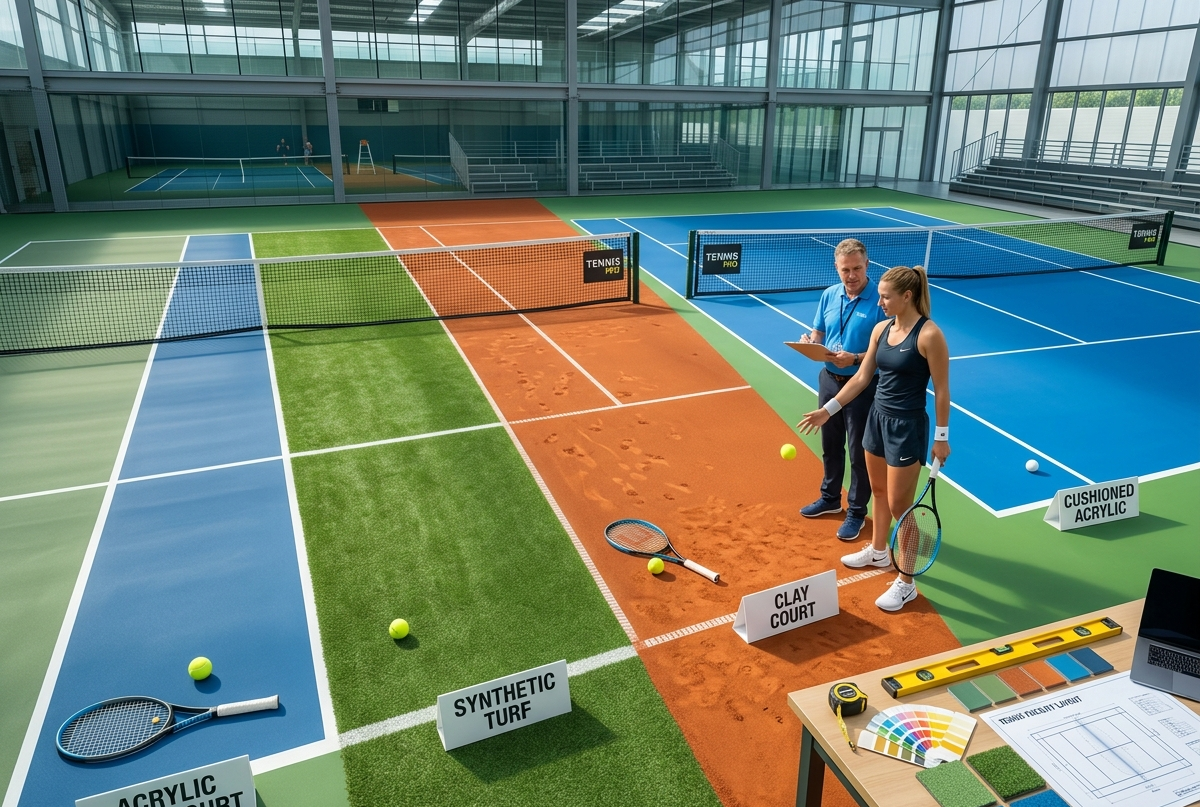
Modern tennis courts are available in various surface systems including acrylic hard courts, cushioned acrylic courts, synthetic sports flooring, clay courts, and natural grass courts. Every surface offers unique playing characteristics, installation requirements, and maintenance costs. This complete guide explains everything you need to know before choosing the best tennis court flooring.
Why Choosing the Best Tennis Court Flooring Matters
A tennis court is a long-term investment. Selecting the correct flooring improves player comfort, minimizes injuries, enhances game consistency, and reduces maintenance expenses throughout the court's life. Professional-grade tennis court flooring also increases the value of sports facilities while providing a superior playing experience for beginners and advanced players alike.
- Consistent and predictable ball bounce
- Improved player movement and grip
- Reduced stress on knees and joints
- Excellent weather resistance for outdoor courts
- Long service life with minimal maintenance
- Professional tournament-quality playing conditions
Factors to Consider When Choosing Tennis Court Flooring
1. Indoor or Outdoor Installation
Outdoor tennis courts require UV-resistant, waterproof, and weatherproof flooring systems that can withstand rain, heat, humidity, and seasonal temperature changes. Indoor courts prioritize surface consistency, comfort, and controlled playing conditions.
2. Level of Play
The intended use of the court significantly influences flooring selection.
- Recreational courts
- School tennis courts
- Sports academy courts
- Club tennis facilities
- Professional tournament courts
3. Budget
Installation costs vary depending on flooring material, site preparation, drainage systems, fencing, lighting, and accessories. Choosing a durable surface often reduces long-term maintenance expenses.
4. Climate Conditions
Regions with high rainfall, extreme heat, or humidity require specialized acrylic coatings and proper drainage systems to maintain court performance.
5. Maintenance Requirements
Some tennis court surfaces require regular maintenance, while others offer years of reliable service with minimal upkeep.
Types of Tennis Court Flooring
Acrylic Tennis Court Flooring
Acrylic flooring is the most widely used surface for outdoor tennis courts. It provides excellent ball bounce, outstanding durability, UV resistance, and low maintenance. Acrylic courts are suitable for schools, sports clubs, universities, and tournament facilities.
Cushioned Acrylic Tennis Courts
Cushioned acrylic systems incorporate shock-absorbing layers that reduce impact on players' joints. These courts are preferred for training academies and professional competitions.
Synthetic Tennis Court Flooring
Synthetic flooring offers superior durability, excellent traction, and consistent performance. It is suitable for both indoor and outdoor applications.
Clay Tennis Courts
Clay courts produce slower ball speeds and higher bounce, making them ideal for endurance training and extended rallies. However, they require frequent maintenance.
Natural Grass Courts
Grass courts provide fast-paced gameplay with lower ball bounce. Although visually attractive, they require intensive maintenance and specialized care.
Comparison of Popular Tennis Court Surfaces
| Surface | Speed | Maintenance | Durability | Best For |
|---|---|---|---|---|
| Acrylic | Medium-Fast | Low | Excellent | Outdoor Courts |
| Cushioned Acrylic | Medium | Low | Excellent | Professional Facilities |
| Synthetic | Medium | Low | Very High | Indoor & Outdoor |
| Clay | Slow | High | Moderate | Training Courts |
| Grass | Fast | Very High | Moderate | Championship Courts |
Benefits of the Best Tennis Court Flooring
- Professional playing experience
- Consistent ball bounce and court speed
- Excellent player safety
- Superior shock absorption
- Slip-resistant playing surface
- UV and weather resistance
- Long operational lifespan
- Low annual maintenance costs
- Suitable for all skill levels
- Excellent return on investment
Tennis Court Construction Process
- Site Inspection
- Ground Preparation
- Sub-base Construction
- Drainage Installation
- Surface Leveling
- Acrylic or Synthetic Flooring Installation
- Court Line Marking
- Net Post Installation
- Final Surface Testing
- Project Handover
Maintenance Tips for Tennis Court Flooring
- Clean the court regularly.
- Remove leaves and debris.
- Wash the surface periodically.
- Repair cracks immediately.
- Maintain proper drainage.
- Resurface acrylic courts every 5–8 years if required.
- Inspect fencing, nets, and accessories regularly.
Why Choose Professional Tennis Court Flooring Installation?
Professional installation ensures accurate court dimensions, proper slope for drainage, premium-quality materials, and long-lasting performance. Experienced contractors follow international standards to deliver courts that meet recreational and professional playing requirements.
Frequently Asked Questions
Which is the best tennis court flooring?
Acrylic tennis court flooring is considered the most popular option because it offers durability, weather resistance, consistent ball bounce, and low maintenance.
Which tennis court surface lasts the longest?
High-quality acrylic and synthetic sports flooring can last over 10 years with proper maintenance and periodic resurfacing.
What is the best tennis court flooring for schools?
Outdoor acrylic sports flooring is an excellent choice for schools because it is durable, economical, safe, and easy to maintain.
How much does tennis court flooring cost?
The overall cost depends on the selected surface, site preparation, drainage, fencing, lighting, and project specifications.
Can acrylic tennis courts be used in all weather?
Yes. Premium acrylic sports flooring is designed to withstand UV exposure, rainfall, and varying weather conditions, making it ideal for outdoor installations.
Need Expert Help Choosing the Best Tennis Court Flooring?
Whether you're planning a tennis court for a school, sports academy, residential society, club, university, or commercial sports complex, our experienced team provides complete tennis court design, construction, acrylic flooring installation, resurfacing, and maintenance services across India. Contact us today for a free consultation and customized project estimate.
Get Free Expert Consultation