Types of Jogging Tracks Explained
Selecting the right jogging track surface is one of the most important decisions when planning a running facility. Every surface is designed with specific performance characteristics, durability levels, maintenance requirements, and installation methods. The ideal jogging track depends on factors such as daily foot traffic, available budget, environmental conditions, safety requirements, and the intended use of the facility.
Modern jogging tracks are commonly constructed using EPDM rubber, Polyurethane (PU), Acrylic coatings, Sandwich Systems, and Synthetic Athletics Track systems. Each material offers unique advantages ranging from recreational walking paths to international-standard athletic tracks.
EPDM Rubber Jogging Track
EPDM (Ethylene Propylene Diene Monomer) rubber is one of the most widely used materials for modern jogging track construction. It is manufactured by combining colored EPDM rubber granules with premium polyurethane binders to create a seamless, highly resilient running surface.
The elastic properties of EPDM significantly reduce impact on joints, making it an excellent choice for children, senior citizens, recreational runners, and fitness enthusiasts. The material also offers excellent UV resistance, weather protection, and long-lasting color stability even under continuous outdoor exposure.
Key Features
- Excellent shock absorption
- Soft and comfortable running surface
- Slip-resistant textured finish
- UV and weather resistant
- Low maintenance requirements
- Available in multiple attractive colors
- Environmentally friendly material
Recommended Applications
- Public parks
- Residential societies
- Schools and colleges
- Fitness parks
- Hospitals
- Community recreation areas
Polyurethane (PU) Jogging Track
Polyurethane jogging tracks are designed for professional sports performance where durability, flexibility, and consistent energy return are essential. PU systems create a seamless running surface capable of withstanding intensive training sessions and heavy pedestrian traffic without compromising comfort.
These premium surfaces offer exceptional abrasion resistance, excellent elasticity, and superior resistance to weather, UV rays, and moisture. Their smooth finish improves running efficiency while providing long-term structural stability.
Key Features
- Professional sports-grade surface
- Outstanding durability
- High flexibility and resilience
- Excellent energy return
- Seamless installation
- Weather and UV resistant
- Long operational life
Recommended Applications
- Sports stadiums
- Athletic academies
- Universities
- Sports complexes
- International training centers
- Professional running tracks
Acrylic Jogging Track
Acrylic jogging tracks provide an economical solution for recreational facilities requiring attractive appearance, reliable performance, and easy maintenance. Acrylic coatings are applied over asphalt or concrete bases to create a durable, textured, anti-slip running surface.
These tracks are ideal for moderate daily usage while offering excellent resistance to sunlight, rain, and surface wear. Acrylic systems are widely selected where cost efficiency and long-term value are equally important.
Key Features
- Economical construction option
- Fast installation
- Excellent surface grip
- UV-resistant finish
- Simple maintenance
- Decorative color options
- Suitable for multipurpose facilities
Recommended Applications
- Schools
- Municipal parks
- Walking pathways
- Residential developments
- Community playgrounds
- Recreational facilities
Sandwich System Jogging Track
The Sandwich System combines an SBR rubber cushion base with a premium polyurethane wearing layer and EPDM finishing. This multi-layer construction provides exceptional impact absorption while maintaining excellent structural stability and athletic performance.
Sandwich systems are designed for facilities that require professional-quality performance combined with long service life. The layered construction distributes impact evenly, improves running comfort, and enhances surface durability under heavy daily usage.
Key Features
- Multi-layer construction
- Excellent cushioning
- High durability
- Professional athletic performance
- Superior drainage capability
- Long service life
- Outstanding running comfort
Recommended Applications
- Universities
- Athletic training centers
- Sports academies
- Competition facilities
- Premium sports complexes
Synthetic Athletics Track
Synthetic athletics tracks represent the highest level of modern sports flooring technology. Designed to meet national and international performance standards, these tracks provide exceptional durability, consistent traction, maximum safety, and excellent energy return for professional athletes.
Constructed using advanced polyurethane systems and synthetic rubber materials, these tracks are capable of handling intensive competitions and year-round athletic training with minimal maintenance.
Key Features
- International-quality sports surface
- Maximum durability
- Excellent athlete safety
- Consistent running performance
- Superior UV resistance
- Low maintenance
- Premium appearance
Recommended Applications
- Olympic-standard stadiums
- National sports centers
- International competitions
- Athletic championships
- Professional sports universities
Jogging Track Surface Comparison
Understanding the differences between various jogging track systems helps planners, architects, schools, government organizations, and developers choose the most suitable surface according to performance expectations, installation budget, maintenance requirements, and project objectives.
| Surface Type | Comfort | Durability | Slip Resistance | Maintenance | Best For | Expected Life |
|---|---|---|---|---|---|---|
| EPDM Rubber | ★★★★★ | ★★★★☆ | ★★★★★ | Low | Parks & Residential Projects | 8–12 Years |
| Polyurethane (PU) | ★★★★★ | ★★★★★ | ★★★★★ | Low | Professional Sports Facilities | 10–15 Years |
| Acrylic | ★★★★☆ | ★★★★☆ | ★★★★☆ | Very Low | Schools & Recreation Areas | 5–8 Years |
| Sandwich System | ★★★★★ | ★★★★★ | ★★★★★ | Low | Training Facilities | 10–15 Years |
| Synthetic Athletics | ★★★★★ | ★★★★★ | ★★★★★ | Low | International Stadiums | 12–15 Years |
Choosing the Right Jogging Track Surface
EPDM rubber is the preferred choice for parks, schools, and residential communities because of its excellent cushioning and safety. Polyurethane systems are recommended for professional sports infrastructure, while acrylic surfaces offer an economical solution for educational institutions and recreational pathways. Sandwich systems provide balanced athletic performance with enhanced durability, whereas synthetic athletics tracks are ideal for national and international sporting venues requiring world-class performance and compliance with professional standards.
Jogging Track Construction Process Explained
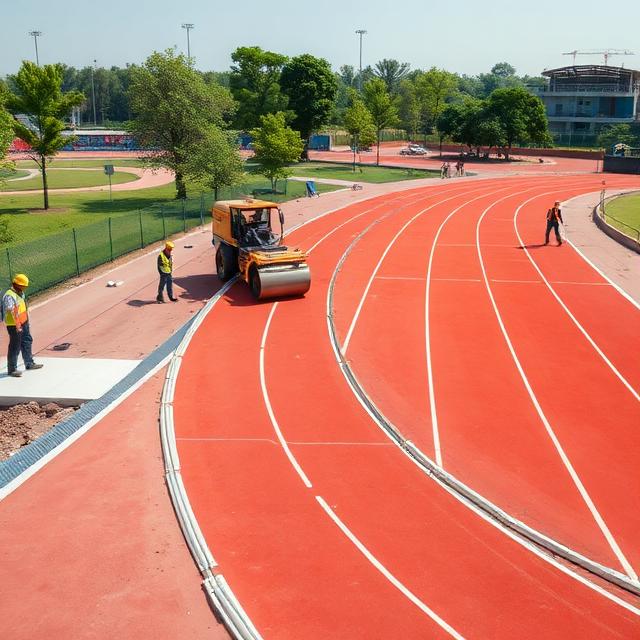
A professionally constructed jogging track is the result of careful engineering, premium construction materials, and precise installation techniques. Every stage of the construction process plays a vital role in ensuring the finished track delivers superior safety, long-term durability, excellent drainage, comfortable cushioning, and outstanding running performance. From initial site investigation to the final quality inspection, each step is carried out according to industry standards to create a reliable and low-maintenance jogging surface.
1. Site Survey & Planning
Every successful jogging track begins with a comprehensive site survey. Engineers assess soil conditions, available space, natural slope, drainage patterns, accessibility, and expected foot traffic before preparing the project layout. Modern laser surveying equipment ensures accurate dimensions and proper alignment throughout construction.
- Land measurement and mapping
- Topographical survey
- Soil investigation
- Drainage planning
- Track alignment design
2. Excavation & Ground Preparation
After marking the layout, excavation removes vegetation, loose soil, debris, and unsuitable materials. The ground is graded to the required level before heavy-duty compaction equipment creates a stable foundation capable of supporting multiple construction layers.
- Site clearing
- Excavation
- Ground grading
- Mechanical compaction
- Foundation preparation
3. Granular Sub-Base Installation
The sub-base provides structural strength and proper load distribution. Well-graded crushed stone aggregates are spread in multiple layers and compacted until the required density is achieved. This layer also improves drainage and prevents future settlement.
- Crushed stone aggregate
- Layer-by-layer compaction
- Laser level checking
- Drainage improvement
- Foundation stabilization
4. Asphalt or Concrete Base Construction
A smooth asphalt or reinforced concrete base is installed above the compacted sub-base to create a strong platform for the synthetic running surface. The finished base is checked for smoothness, slope, cracks, and moisture before surfacing begins.
- Bituminous asphalt paving
- Concrete base option
- Precision leveling
- Expansion joint preparation
- Surface curing
5. SBR Cushion Layer Installation
The SBR (Styrene Butadiene Rubber) layer forms the shock-absorbing foundation of the jogging track. Rubber granules are mixed with polyurethane binder and machine-laid to create a resilient cushion that minimizes impact on joints while extending the lifespan of the surface.
- SBR rubber granules
- PU binder mixing
- Machine paving
- Thickness control
- Impact absorption
6. EPDM Rubber Surface Installation
Premium EPDM rubber granules are blended with UV-resistant polyurethane binder and applied over the SBR layer to produce a seamless, weather-resistant, anti-slip, and visually attractive running surface. Skilled installers ensure uniform thickness and a smooth finish throughout the track.
- EPDM granule mixing
- Colored rubber surfacing
- Seamless installation
- UV-resistant finish
- Slip-resistant texture
7. Line Marking & Final Finishing
After the surface has cured completely, lane markings, directional arrows, distance indicators, logos, and safety markings are applied using premium sports coating paints. Edge finishing and expansion joints are completed before final cleaning.
- Distance markers
- Lane markings
- Directional arrows
- Custom graphics
- Professional finishing
8. Quality Inspection & Project Handover
The completed jogging track undergoes detailed quality checks including thickness measurement, slope verification, drainage testing, adhesion inspection, color consistency, surface smoothness, and dimensional accuracy. Only after meeting quality standards is the project handed over to the client.
- Surface inspection
- Drainage testing
- Thickness verification
- Adhesion testing
- Final project handover
Benefits of Modern Jogging Tracks
Modern jogging tracks are designed to provide a safer, healthier, and more enjoyable running experience while reducing maintenance costs and improving the appearance of recreational spaces. Advanced synthetic materials provide consistent performance throughout the year and significantly increase the lifespan of the facility.
Excellent Shock Absorption
Reduces stress on knees, ankles, hips, and joints during walking or running.
Enhanced Safety
Anti-slip surfaces provide excellent grip under both dry and wet weather conditions.
Long Service Life
Premium synthetic materials provide reliable performance for many years.
Low Maintenance
Easy cleaning and minimal repairs reduce annual maintenance costs.
Weather Resistant
Excellent resistance against sunlight, rain, moisture, and temperature changes.
Professional Appearance
Modern colorful surfaces enhance the beauty and value of sports facilities.
Eco-Friendly Materials
Many EPDM systems utilize environmentally responsible construction materials.
Suitable for All Ages
Comfortable surfaces support children, adults, senior citizens, and athletes alike.
Applications of Jogging Tracks
Jogging tracks are widely installed across public and private infrastructure projects to encourage fitness, recreational activities, athletic training, and healthy lifestyles. Their versatile design makes them suitable for both small community spaces and large international sports venues.
Public Parks
Schools & Educational Campuses
Universities
Sports Stadiums
Sports Academies
Residential Townships
Corporate Campuses
Hospitals & Wellness Centers
Hotels & Resorts
Government Recreation Projects
Military & Police Training Centers
Fitness Clubs & Outdoor Gyms
Jogging Track Maintenance Guide
Routine maintenance helps preserve the appearance, safety, and performance of a jogging track. Regular inspections and preventive care reduce repair costs while extending the life of the surface.
- Clean the surface regularly to remove dust, leaves, and debris.
- Inspect drainage systems to prevent water accumulation.
- Repair small surface damages before they expand.
- Avoid dragging heavy equipment across the track.
- Remove moss or algae from shaded areas.
- Inspect line markings annually.
- Schedule professional inspections when required.
Factors Affecting Jogging Track Construction Cost
The overall cost of jogging track construction varies depending on project specifications, site conditions, and the selected surfacing system. Understanding these factors helps clients plan their investment more effectively.
Track Size
Larger projects require additional materials and labor.
Surface Material
EPDM, PU, Acrylic, Sandwich System, and Synthetic Tracks have different installation costs.
Ground Preparation
Soil stabilization, excavation, and grading influence project expenses.
Base Construction
Concrete and asphalt bases differ in construction requirements and pricing.
Thickness
Greater surface thickness increases material consumption and durability.
Customization
Special colors, graphics, logos, curves, and lane markings affect overall cost.
Why Choose Our Jogging Track Construction Services?
Choosing the right contractor is essential for building a jogging track that delivers long-lasting durability, exceptional safety, and superior running comfort. Our team combines engineering expertise, premium construction materials, and modern installation technology to develop jogging tracks that meet national and international quality standards. From concept planning to project completion, every stage is executed with precision to ensure outstanding performance and customer satisfaction.
Experienced Professionals
Our engineers, project managers, and installation specialists have extensive experience in constructing jogging tracks for parks, schools, universities, sports complexes, stadiums, residential societies, and commercial developments.
Premium Quality Materials
We use certified EPDM rubber granules, polyurethane binders, acrylic coatings, SBR cushion layers, and synthetic athletic systems sourced from trusted manufacturers to ensure durability and long-term performance.
Complete Turnkey Solutions
From site survey and engineering design to excavation, base preparation, surfacing, line marking, quality inspection, and project handover, we provide end-to-end jogging track construction services.
Advanced Construction Technology
Our projects are completed using laser leveling equipment, precision paving machinery, mechanical compactors, and professional finishing tools to achieve accurate dimensions and superior workmanship.
Customized Project Design
Every jogging track is designed according to the client's available space, usage requirements, preferred colors, branding, drainage needs, and performance expectations.
Quality Assurance
Every completed project undergoes detailed inspections including surface thickness, slope verification, drainage testing, adhesion checks, finish quality, and safety evaluation before delivery.
Frequently Asked Questions
What is a jogging track?
A jogging track is a specially engineered running surface designed for walking, jogging, and recreational running. It is typically constructed using EPDM rubber, polyurethane, acrylic, or synthetic athletic materials to provide comfort, safety, and durability.
Which jogging track material is the best?
EPDM rubber is the preferred choice for parks, schools, and residential communities due to its excellent cushioning and safety. Polyurethane and synthetic athletic systems are ideal for professional sports facilities.
How long does a jogging track last?
Depending on the surface material, installation quality, maintenance, and usage, a professionally constructed jogging track typically lasts between 8 and 15 years.
Is an EPDM jogging track suitable for outdoor use?
Yes. EPDM rubber is highly resistant to UV rays, rain, temperature variations, and heavy foot traffic, making it one of the best materials for outdoor jogging tracks.
How often should a jogging track be maintained?
Routine cleaning and annual inspections are usually sufficient. Prompt repairs of minor surface damage help maximize the lifespan and maintain safety.
Can jogging tracks be customized?
Yes. Jogging tracks can be customized with different colors, lane markings, logos, distance markers, curves, borders, and decorative designs to match project requirements.
Where are jogging tracks commonly installed?
Jogging tracks are installed in public parks, schools, colleges, universities, sports complexes, residential communities, hospitals, hotels, corporate campuses, and recreational centers.
Do you provide maintenance services?
Yes. We provide maintenance, resurfacing, repairs, inspection, and renovation services for existing jogging tracks to restore their appearance and performance.
Ready to Build a World-Class Jogging Track?
Whether you are planning a jogging track for a public park, educational institution, sports complex, residential township, corporate campus, or government project, our experts are ready to provide complete turnkey construction solutions tailored to your requirements.
Contact us today for a free consultation, project planning, material recommendations, and a detailed quotation. We are committed to delivering safe, durable, and aesthetically appealing jogging tracks built to the highest industry standards.
AI SEO Optimized Content
We are a trusted jogging track construction company in India specializing in EPDM rubber jogging tracks, polyurethane running tracks, acrylic jogging tracks, sandwich systems, and synthetic athletics tracks. Our complete turnkey solutions include site survey, excavation, sub-base preparation, asphalt or concrete base construction, SBR cushion layer installation, EPDM surfacing, professional line marking, quality inspection, resurfacing, renovation, and annual maintenance.
Our jogging track systems are designed to deliver excellent shock absorption, anti-slip performance, weather resistance, UV stability, superior durability, and long-lasting comfort for parks, schools, universities, sports complexes, residential societies, hospitals, hotels, commercial developments, and government infrastructure projects across India.
Voice Search Optimized Questions
- What is the best jogging track material?
- How is an EPDM jogging track constructed?
- Which company builds jogging tracks in India?
- How much does jogging track construction cost?
- How long does an EPDM jogging track last?
- What is the difference between EPDM and PU jogging tracks?
- Who provides turnkey jogging track construction services?
- Which jogging track surface is safest for running?
- Can EPDM jogging tracks be installed in parks?
- How do I choose the best jogging track contractor?