Synthetic Running Track Court Construction
Synthetic Running Track Court Construction is a specialized process that involves designing, developing, and installing high-performance athletic tracks for schools, colleges, universities, sports academies, stadiums, and training facilities. Modern synthetic running tracks are engineered to provide excellent shock absorption, superior traction, consistent performance, and long-term durability, ensuring a safe and professional environment for athletes of all skill levels.
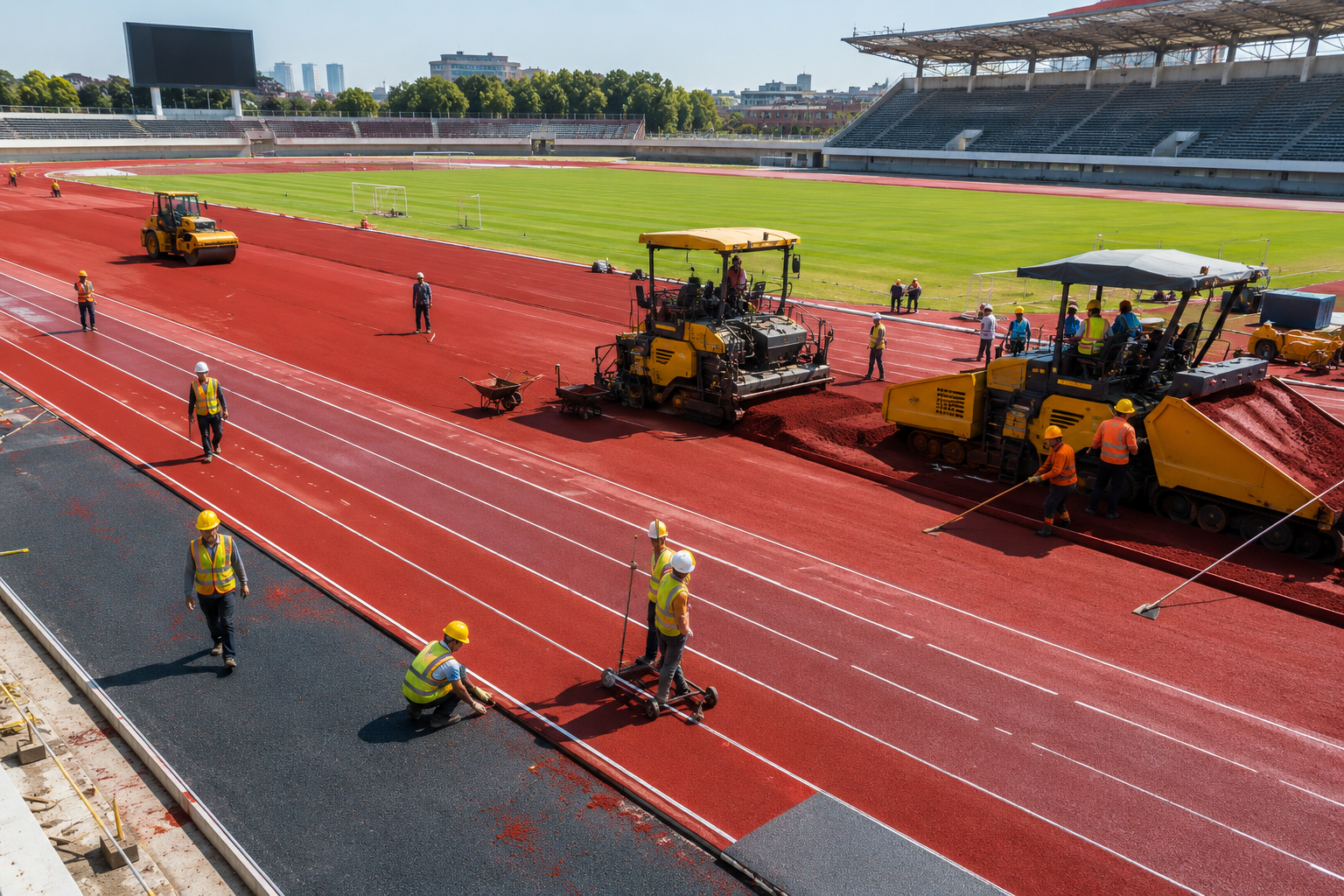
Professional synthetic running track court construction includes site preparation, sub-base development, drainage systems, asphalt or concrete foundations, synthetic surfacing installation, lane marking, and quality testing. Using advanced polyurethane (PU), EPDM rubber granules, and sandwich system technologies, these tracks deliver optimal athletic performance while minimizing injury risks and maintenance requirements.
Types of Synthetic Running Track Court Construction
EPDM Running Track Construction
Best for: Schools, colleges, training centers, and community sports facilities.
- Comfortable and athlete-friendly surface
- Excellent shock absorption properties
- Weather-resistant and UV-stable system
- Cost-effective construction solution
PU Running Track Construction
Best for: Professional sports academies and competitive athletic facilities.
- Superior performance and durability
- Excellent energy return for athletes
- Seamless and spike-resistant surface
- International-standard athletic track system
Sandwich System Track Construction
Best for: High-performance stadiums and competitive sports venues.
- Multi-layer construction technology
- Enhanced cushioning and resilience
- Strong structural stability
- Long-term performance under heavy use
Full PU Athletic Track Construction
Best for: International-standard sports complexes and stadiums.
- Premium athletic performance
- Exceptional force reduction
- Advanced traction and comfort
- Maximum durability and lifespan
Running Track Construction Process
- Site Survey & Planning: Evaluation of location, dimensions, and project requirements.
- Earthwork & Base Preparation: Development of a stable foundation and proper grading.
- Drainage Installation: Efficient water management systems for long-term performance.
- Asphalt or Concrete Base Construction: Creation of a durable structural platform.
- Synthetic Surface Installation: Application of EPDM, PU, or sandwich system materials.
- Lane Marking & Finishing: Precision athletic markings according to sports standards.
- Quality Inspection: Final testing for safety, durability, and performance compliance.
Benefits of Synthetic Running Track Court Construction
- Excellent shock absorption and athlete safety
- Consistent running performance and traction
- Weather-resistant and UV-protected surface
- Reduced risk of sports-related injuries
- Long service life with minimal maintenance
- Suitable for training and competitive events
- Professional appearance and lane visibility
- High durability under heavy daily usage
Applications of Synthetic Running Track Court Construction
- School and college athletic tracks
- Sports academies and coaching centers
- Professional athletic stadiums
- University sports facilities
- Government sports infrastructure projects
- Military and police training centers
- Community sports complexes
- International competition venues
Why Choose Synthetic Running Track Court Construction?
Synthetic running track court construction provides athletes with a high-performance surface designed for speed, comfort, and safety. Unlike traditional running surfaces, synthetic athletic tracks deliver consistent traction, improved energy return, and excellent cushioning that helps reduce stress on joints and muscles.
Whether for schools, sports academies, training facilities, or professional stadiums, synthetic running tracks offer a long-lasting investment that enhances athletic performance while meeting modern sports infrastructure standards.
Frequently Asked Questions
What is synthetic running track court construction?
Synthetic running track court construction involves building athletic tracks using specialized materials such as EPDM rubber, polyurethane, and advanced sports surfacing systems.
How long does a synthetic running track last?
Depending on the system and maintenance practices, synthetic running tracks generally last between 8 and 12 years.
Which running track system is best?
PU and full polyurethane systems are preferred for professional athletic facilities, while EPDM systems are widely used in schools and training centers.
Is synthetic running track construction suitable for outdoor facilities?
Yes. Synthetic track systems are designed to withstand outdoor weather conditions, UV exposure, and heavy athletic usage.
Do you provide complete running track construction services?
Yes. Services include site preparation, base construction, drainage systems, surfacing installation, lane marking, and project completion.
Build a Professional Synthetic Running Track
We specialize in Synthetic Running Track Court Construction for schools, colleges, sports academies, stadiums, and athletic facilities. Our expert team delivers durable, safe, and high-performance running tracks designed to meet national and international sports standards.
Request a Free Quote