
What Is a Basketball Center Circle?
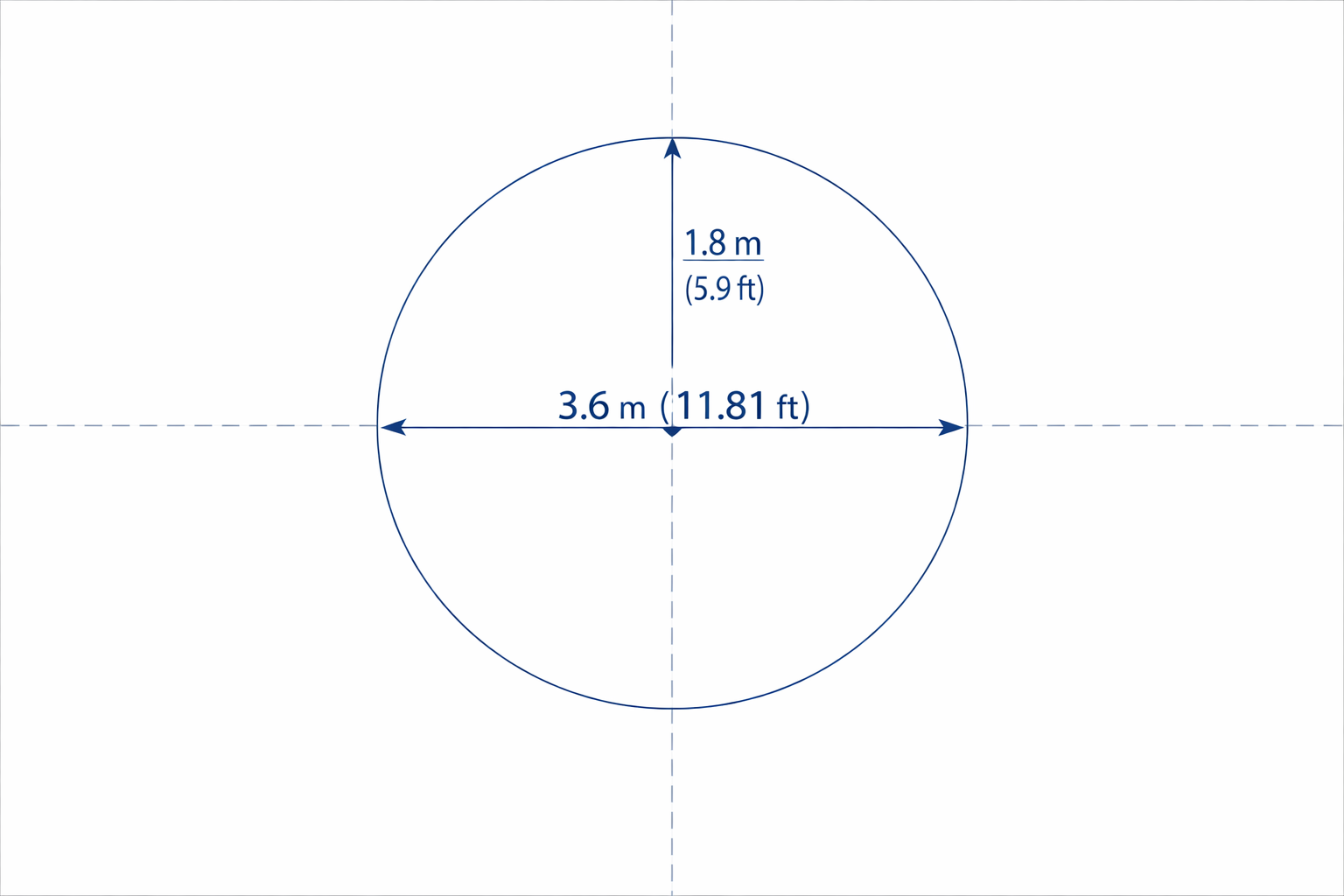
The basketball center circle is the circular marking at the centre of the court. It is positioned around the central point where the centre line intersects the court's longitudinal midpoint. This marking is associated with the opening jump ball and forms an important reference point in the overall court layout.
During basketball court construction, the center point is established before the circle is measured and marked. Court marking professionals use accurate measuring tools and suitable marking equipment to produce a symmetrical circle that aligns with the centre line.
The required basketball center circle dimensions depend on the standard being followed. Competition courts should use the specifications issued by the relevant governing organization, while recreational and training courts should be designed around their intended use.
Standard Basketball Center Circle Dimensions
The center circle is usually described by two measurements: its radius and its diameter. The radius runs from the centre point to the circumference, while the diameter measures the full distance across the circle through its centre.
FIBA Center Circle
- Radius: 1.80 metres
- Diameter: 3.60 metres
- Radius: approximately 5.91 feet
- Diameter: approximately 11.81 feet
- Radius is measured to the outer edge of the circumference under the FIBA 2024 rule.
NBA-Style Center Circle
- Radius: 6 feet
- Diameter: 12 feet
- Radius: 1.8288 metres
- Diameter: 3.6576 metres
- Use the applicable NBA court diagram when planning an NBA-style layout.
School and College Courts
- Requirements depend on the governing rules and level of play.
- Available space may affect the overall facility design.
- Youth and training facilities may have different specifications.
- Confirm competition requirements before construction.
Recreational and Custom Courts
- Plan the circle as part of the complete court layout.
- Use consistent measurements for clear markings.
- Branding may be incorporated where permitted.
- Choose dimensions based on the intended use of the facility.
Basketball Center Circle Size in Feet, Inches and Metres
Converting basketball center circle dimensions between metric and imperial units can help contractors, architects, facility managers and sports organizations plan court markings accurately.
| Measurement | FIBA 2024 | NBA-Style Diagram |
|---|---|---|
| Radius | 1.80 m / 180 cm / approximately 5.91 ft | 6 ft / 182.88 cm / 1.8288 m |
| Diameter | 3.60 m / 360 cm / approximately 11.81 ft | 12 ft / 365.76 cm / 3.6576 m |
| Measurement system | Metric | Imperial |
| Measurement reference | Radius measured to the outer edge of the circumference | Follow the applicable NBA court diagram and specifications |
Metric conversions are rounded where indicated. Do not mix dimensions from different standards when marking a regulation court.
Basketball Center Circle Diameter vs Radius
Radius and diameter are the two basic measurements used to set out a basketball center circle. Understanding the difference helps prevent errors during court construction and line marking.
What Is the Diameter?
The diameter is the complete distance from one side of the circle to the opposite side, passing through the exact centre point. For a circle with a 1.80-metre radius, the diameter is 3.60 metres.
What Is the Radius?
The radius is the distance between the centre point and the circular line. For the FIBA 2024 center circle, this measurement is 1.80 metres to the outer edge of the circumference.
Center Circle Measurement Formula
Diameter = Radius × 2
Radius = Diameter ÷ 2
Example: 1.80 m × 2 = 3.60 m diameter.
Why Is the Basketball Center Circle Important?
The center circle is a functional court marking rather than merely a decorative feature. Correct placement supports the court's geometry and helps create a consistent playing layout.
Accurate Court Layout
A correctly positioned circle helps establish the centre of the playing area and aligns with the court's centre line.
Opening Jump Ball
The center circle identifies the designated central area associated with the opening jump ball under basketball rules.
Professional Appearance
Clean, symmetrical markings improve the visual quality of basketball courts in schools, academies, clubs and sports facilities.
Construction Reference
The court centre provides a useful reference when measuring and aligning other markings across the playing surface.
How to Measure and Mark a Basketball Center Circle
Accurate center circle marking begins with a verified court layout and the correct measurement specification. The following steps describe a general process for preparing the marking.
Step 1: Establish the Court Centre
Confirm the court boundaries and locate the midpoint between the two end lines. Establish the centre point where the court's centre line intersects the longitudinal midpoint.
Step 2: Confirm the Applicable Standard
Identify whether the court must follow FIBA, NBA, school, college, recreational or another specified layout. Use the correct official dimensions for the intended facility.
Step 3: Measure the Required Radius
Measure from the exact centre point to the required circumference. Under the FIBA 2024 rule, the center circle radius is 1.80 metres measured to the outer edge of the circumference.
Step 4: Mark the Circle
Use suitable court-marking equipment, a circle-marking jig or another accurate measuring system to draw the circle while maintaining a consistent radius.
Step 5: Check the Alignment
Recheck the measurements at several points around the circle. Confirm that the line is symmetrical and correctly aligned with the centre line before applying permanent paint.
Step 6: Apply Compatible Marking Material
Prepare the surface as required and apply court-marking material compatible with the selected sports flooring system. Follow the product instructions for application and curing.
Common Basketball Center Circle Marking Mistakes
Measurement errors can affect the quality of the center circle and the alignment of the overall basketball court. Common problems include:
- Locating the court centre point incorrectly.
- Using the wrong radius for the selected court standard.
- Mixing FIBA and NBA-style dimensions in one layout.
- Creating a circle that is uneven or out of alignment.
- Failing to check measurements before applying paint.
- Using marking materials that are not compatible with the playing surface.
- Applying paint to a dirty, damp or poorly prepared surface.
- Adding logos or decorative designs that conflict with competition requirements.
Accurate setting-out, suitable equipment and a final measurement check can help reduce these problems and produce a clean, consistent finish.
Basketball Center Circle Size for Different Types of Courts
Professional Basketball Courts
Professional and competition courts should follow the current rules of the organization governing the event. The center circle should be measured and marked according to the specified court diagram.
School Basketball Courts
School courts may be used for physical education, recreational games, inter-school events and organized competitions. Confirm the applicable requirements before choosing the court dimensions and marking layout.
College and University Basketball Courts
Institutional courts should be planned around the intended level of play, available building space and competition regulations. Accurate center circle marking contributes to a consistent court layout.
Basketball Training Courts
Training facilities can use clearly defined center circles to help players become familiar with regulation-style court markings. Where the court is intended for official matches, the relevant competition standard should be followed.
Outdoor Basketball Courts
Outdoor courts need appropriate surface preparation and marking materials that suit the selected outdoor sports flooring system. Weather exposure, drainage and maintenance requirements should be considered before marking the circle.
Residential and Recreational Courts
Residential communities, clubs and recreational facilities can incorporate a center circle into a full or half-court layout. The selected dimensions should suit the planned court design and its intended use.
Basketball Center Circle and Overall Court Layout
The basketball center circle should be planned as part of the entire court rather than measured in isolation. Its position must correspond with the centre line and the full playing area's dimensions.
Depending on the applicable court specification, the main layout may include boundary lines, the centre line, free-throw lines and areas, three-point markings, basket positions and other required markings. Establishing the main reference points first helps ensure that these features align correctly.
For competition facilities, use the current official court diagram and rules issued by the relevant governing organization. For recreational projects, define the intended playing layout before construction and marking begin.
Basketball Court Flooring and Center Circle Marking
The quality and durability of basketball center circle markings depend partly on the selected sports surface and the marking products used. Different flooring systems require suitable preparation methods and compatible paints or marking materials.
Wooden Basketball Flooring
Indoor hardwood courts require careful setting-out and marking products suitable for the installed sports floor finish. Surface protection and product compatibility should be checked before application.
Acrylic Basketball Court Surface
Acrylic sports surfaces are used for many outdoor and selected indoor courts. The surface should be properly prepared and the marking material should be compatible with the acrylic system.
Polyurethane Sports Flooring
Polyurethane flooring systems can incorporate court markings as part of an indoor sports surface. Follow the flooring manufacturer's instructions for line marking and maintenance.
Modular Sports Flooring
Modular tiles may be used for selected outdoor or multipurpose basketball facilities. Confirm how court lines should be incorporated into the particular flooring system.
Before marking begins, ensure that the surface is clean, stable and suitably prepared. Always follow the technical instructions for the selected flooring and marking products.
Can a Basketball Center Circle Include a Logo?
Custom basketball courts may incorporate team logos, institutional branding or decorative designs in the center area. These options are often considered for schools, sports academies, clubs, residential communities and corporate sports facilities.
Any custom design should be planned alongside the required court markings. For official competition courts, confirm the applicable rules for colours, logos and permitted markings before approving the design.
For recreational facilities, the design should maintain clear visibility of the center circle and the centre line so that the playing layout remains easy to identify.
Factors Affecting Basketball Center Circle Marking Cost
The cost of basketball center circle marking depends on the project scope, surface condition, materials and the amount of work required. The circle diameter alone does not determine the total price.
- Type of basketball court surface.
- Condition of the existing playing area.
- Indoor or outdoor installation environment.
- Required court standard and measurement specification.
- Surface preparation and repair requirements.
- Type and quantity of court-marking material.
- Whether only the center circle or the complete court is being marked.
- Logo, branding or other customization requirements.
- Project location, access and overall work scope.
A site assessment can help identify the preparation, measurement and marking work needed for a particular basketball court.
How to Maintain Basketball Center Circle Markings
Regular inspection and suitable cleaning help maintain the appearance and visibility of basketball center circle markings. Maintenance needs vary according to the flooring material, usage level and indoor or outdoor environment.
- Clean the court using methods recommended for the installed flooring system.
- Inspect the circle regularly for fading, peeling or surface damage.
- Address water accumulation and drainage problems on outdoor courts.
- Avoid harsh cleaning chemicals unless approved for the surface.
- Use compatible products when repairing or repainting markings.
- Check measurements and alignment before carrying out any remarking work.
If the markings become unclear or the playing surface requires repair, assess the full affected area before applying new paint.
Frequently Asked Questions About Basketball Center Circle Size
1. What is the standard basketball center circle size?
Under the FIBA 2024 rules, the center circle has a radius of 1.80 metres measured to the outer edge of the circumference. This equals a diameter of 3.60 metres.
2. What is the basketball center circle diameter in metres?
The FIBA 2024 center circle diameter is 3.60 metres, or 360 centimetres. This is calculated by doubling the radius of 1.80 metres.
3. What is the basketball center circle size in feet?
A 3.60-metre diameter is approximately 11.81 feet. NBA-style court diagrams use a 6-foot radius, equivalent to a 12-foot diameter.
4. What is the radius of a basketball center circle?
Under the FIBA 2024 rules, the center circle radius is 1.80 metres. The radius is measured from the centre point to the outer edge of the circular line.
5. What is the difference between the radius and diameter?
The radius is the distance from the centre point to the circular line. The diameter is the full distance across the circle through the centre, so the diameter is twice the radius.
6. Is the basketball center circle the same on every court?
No. Measurements and marking requirements may vary between governing organizations and facility types. Always confirm the applicable rules before constructing or marking a court for official competition.
7. How do you measure a basketball center circle?
First establish the exact centre point of the court. Then measure the specified radius and use suitable marking equipment to create a consistent circle around that point.
8. Can a basketball center circle include a logo?
Yes, logos and branding may be included in custom court designs where permitted. Official competition requirements and the visibility of required markings must take priority.
9. Do basketball court contractors provide center circle marking?
Basketball court contractors may provide center-point measurement, center-circle marking and complete court line-marking services for indoor and outdoor facilities.
10. Which flooring is suitable for basketball court markings?
Basketball markings can be applied to suitable wooden, acrylic, polyurethane and modular sports flooring systems. The marking material must be compatible with the selected surface and its manufacturer's requirements.
Need Basketball Court Construction or Line Marking?
Planning a new basketball court or renovating an existing sports surface? Accurate measurement and professional line marking can help create a well-organized playing area for schools, colleges, sports academies, clubs and recreational facilities.
Sports Facility India provides sports facility solutions for basketball court projects. Discuss your project requirements, flooring options and court marking needs with the team.
Contact Sports Facility IndiaBasketball Center Circle Size: Key Takeaway
The basketball center circle size is an important measurement in court design, construction and line marking. A correctly positioned circle helps maintain the court's central alignment and provides the designated area associated with the opening jump ball.
Under the FIBA 2024 rules, the center circle has a 1.80-metre radius and a 3.60-metre diameter. NBA-style court diagrams use a 6-foot radius and 12-foot diameter. These specifications are similar but not identical, so the correct standard should be confirmed before permanent court marking begins.
For reliable results, establish the court centre accurately, use the applicable official measurements and choose marking materials suitable for the playing surface.
Reference: FIBA Official Basketball Rules and the NBA Officials Guide court diagram. Check the latest applicable rules before construction.