
basketball restricted area arc distance


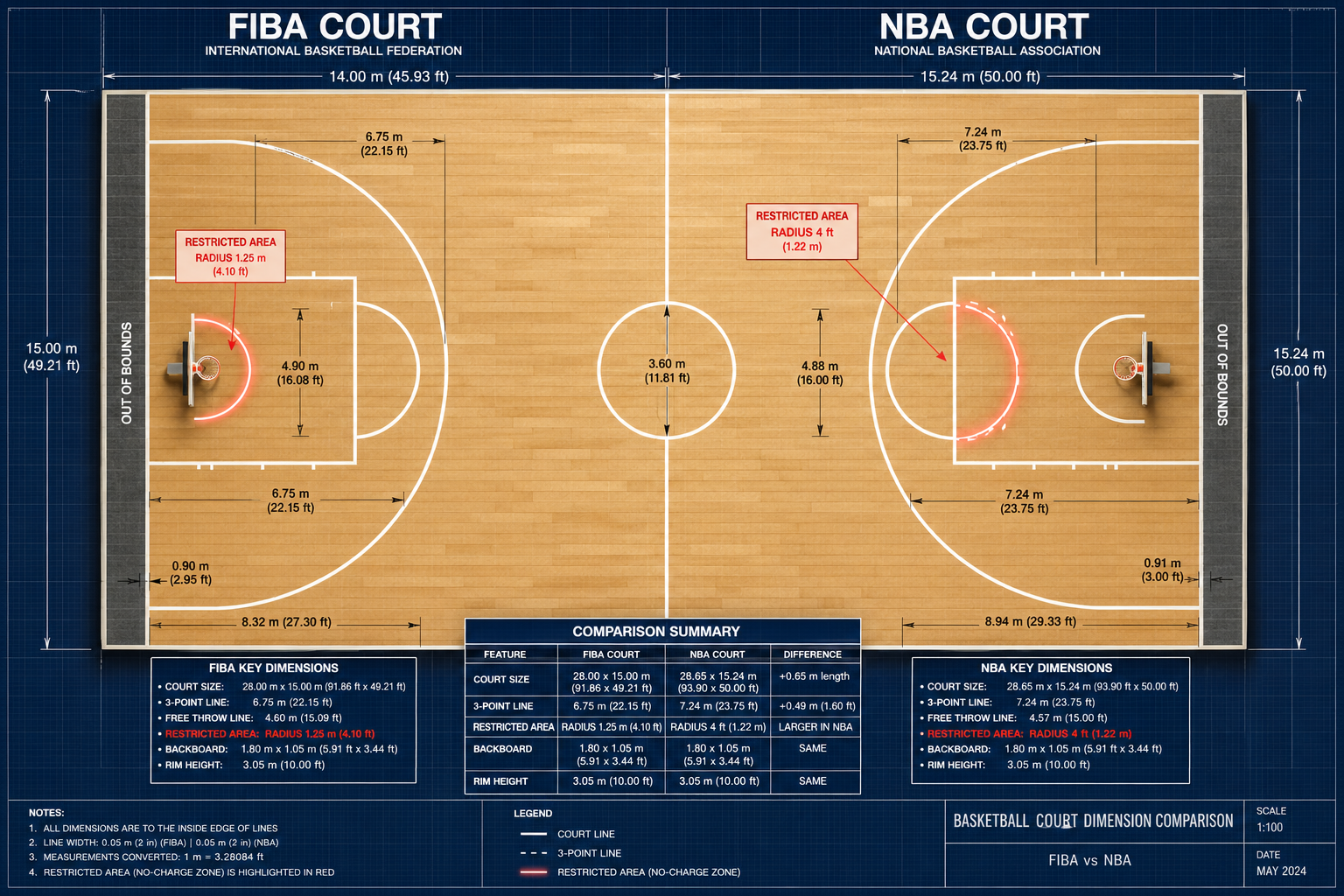
Modern basketball court construction, both indoor and outdoor, demands high-performance flooring systems that ensure durability, player safety, and consistent game quality. One of the most important design elements in any professional basketball facility is the restricted area arc, also known as the no-charge semicircle. This marked zone plays a crucial role in regulating physical contact near the basket and maintaining fair gameplay standards during offensive drives, rebounds, and close-range shots. A professionally engineered basketball floor is designed to deliver excellent shock absorption, anti-slip traction, and long-lasting surface stability. High-quality materials such as hardwood maple, synthetic sports flooring, acrylic coatings, or epoxy-based systems are widely used to achieve superior performance. These flooring systems are built to withstand continuous gameplay, heavy impact, and frequent player movement while maintaining consistent ball bounce and surface integrity around critical zones like the restricted area. Restricted Area Arc Measurements (Basketball Court Standards) The restricted area arc is a semicircular zone directly beneath the basketball hoop. Its primary purpose is to prevent defenders from drawing charging fouls when positioned too close to the basket. Standard measurements are defined under global basketball regulations: FIBA Standard: The restricted area arc has a radius of 1.25 meters (approximately 4.1 feet) measured from the center of the basket. This zone ensures safe offensive play near the rim and supports consistent foul decisions. NBA Standard: The arc is also measured at 1.25 meters (approximately 4 feet), maintaining a similar no-charge principle while adapting to league-specific court design standards. Key Importance of the Restricted Area Arc A properly marked restricted area enhances player safety by reducing high-impact collisions during layups and post moves. It also improves refereeing accuracy by clearly distinguishing legal defensive positions. Additionally, durable flooring around this zone ensures resistance against wear caused by intense foot traffic, jumping, and pivoting movements. From a performance perspective, a well-constructed restricted area contributes to consistent ball response, better traction, and improved athlete control. Visually, it adds a professional finish to the court layout, making it suitable for training centers, tournaments, and competitive leagues. Flooring and Construction Standards High-quality basketball court construction involves proper sub-base leveling, installation of cushioning layers for impact reduction, and application of durable top surfaces. Precise arc marking using long-lasting paint or coating systems ensures clarity, accuracy, and compliance with international standards, resulting in a safe and professional playing environment. .

Have a Query ?

Basketball Restricted Area Arc & Key Area Dimensions | NBA & FIBA Court Layout Guide


Basketball restricted area arc marking on professional court showing key area and no-charge zone layout for FIBA and NBA standards

Basketball Restricted Area Arc & Court Dimensions (Meter & Feet)

Official FIBA, NBA & NCAA Standards for Court Design and Marking

The basketball restricted area arc is one of the most important markings in a professional basketball court. It defines the no-charge zone under the basket and ensures fair play, player safety, and correct referee decisions.

Along with the restricted arc, understanding complete basketball court dimensions in meter and feet is essential for accurate construction, marking, and international-standard gameplay.

Basketball Court Dimensions (Meter & Feet)

Standard FIBA basketball court size is: 28 meters × 15 meters (91.9 ft × 49.2 ft)

  • Court Length: 28 m (91.9 ft)
  • Court Width: 15 m (49.2 ft)
  • Basket Height: 3.05 m (10 ft)
  • Free Throw Line: 4.6 m (15 ft)
  • Three Point Line: 6.75 m (22.1 ft)

Basketball Restricted Area Arc (No-Charge Zone)

The restricted area arc is marked under the basket and prevents defenders from drawing offensive fouls while standing too close to the hoop.

Official Standards

  • FIBA: 1.25 meters radius
  • NBA: 4 feet (1.22 meters) radius
  • NCAA: 4 feet (1.22 meters) radius

Restricted Area Arc Comparison Table

Governing Body Arc Radius Usage Purpose
FIBA 1.25 m International Standard global gameplay
NBA 1.22 m (4 ft) Professional Charge/block foul rule clarity
NCAA 1.22 m (4 ft) College Player safety improvement

Why the Restricted Area Arc Matters

The restricted area arc ensures fair gameplay by preventing defenders from standing directly under the basket to draw charging fouls. It improves safety, reduces injuries, and helps referees make accurate decisions.

  • Improves player safety during drives
  • Ensures fair charge/block decisions
  • Maintains international standards
  • Required for professional court marking

Half Court Dimensions (Meter & Feet)

A standard half basketball court measures: 14 meters × 15 meters (45.9 ft × 49.2 ft)

It is commonly used in schools, academies, and residential sports areas.

Frequently Asked Questions

What is basketball court size in meter and feet?

FIBA standard court size is 28m × 15m (91.9 ft × 49.2 ft).

What is restricted area arc in basketball?

It is a no-charge zone under the basket used to determine foul decisions.

What is NBA restricted arc size?

NBA uses a 4 ft (1.22 m) radius restricted area arc.

Why is restricted arc important?

It improves safety and ensures fair referee decisions during contact plays.

What is half court size?

Half court size is 14m × 15m (45.9 ft × 49.2 ft).

Get Professional Basketball Court Design & Marking

We provide complete basketball court construction and accurate restricted area arc marking based on FIBA standards across India.

Request Free Quote

Leading basketball restricted area arc distance

Our Expertise in Basketball Restricted Area Arc Marking Services
We have completed numerous basketball court marking projects across India, including precise restricted area arc measurements for indoor courts, academies, schools, sports complexes, fitness centers, and multi-purpose facilities.


Why Clients Choose Us for Restricted Area Arc Marking & Court Line Layout

1. Nationwide professional court marking services across India.
2. Accurate FIBA, NBA, and NCAA standard restricted area arc layout and painting.
3. Custom court marking solutions tailored for training centers, schools, and indoor arenas.
4. High-durability court marking paints with long-lasting performance at competitive pricing.

We’ve successfully executed basketball court marking projects for indoor arenas, sports academies, college courts, commercial sports halls, and community play zones. Every project reflects our commitment to precision, correct measurements, and professional-grade finishing.

Investing in a precisely marked basketball restricted area arc is essential to ensure correct officiating, safe gameplay, and compliance with global basketball standards. With www.sports-facility.in, you get more than just a marking contractor—you get a reliable partner focused on accuracy, quality, and professional execution.

Whether you are a school, sports academy, fitness center, club, or indoor training facility, we provide basketball court marking solutions that follow FIBA, NBA, and NCAA specifications. Choose sports-facility.in, the trusted basketball court marking company, to deliver perfectly measured, durable, and professional restricted area arc layouts.

Frequently Asked Questions

What types of sports facilities do you specialize in?

We specialize in a wide range of sports facilities including basketball courts, tennis courts, badminton courts, pickleball courts, running tracks, and multi-sport complexes.

Do you provide maintenance services for existing facilities?

Yes, we offer comprehensive maintenance services to ensure your sports facilities remain in top condition. This includes regular inspections, repairs, and resurfacing as needed.

Can you customize the design of the sports facility?

Absolutely! We work closely with our clients to create custom designs that meet their specific needs and preferences, ensuring the facility is tailored to the intended use.

What materials do you use for construction?

We use high-quality materials that are durable and suitable for the specific sport. This includes synthetic surfaces, wooden flooring, and specialized coatings for optimal performance.

Badminton Court Flooring, Sports Flooring, Acyrllic Flooring Services, Sports Flooring Services, Sports Court, Rubber Flooring, Basketball Equipmen, tennis court flooring, basketball court flooring, badminton court flooring, volleyball court flooring, pickleball court flooring, skating rink flooring, walking track flooring, multi‑purpose court flooring, cycle track flooring