
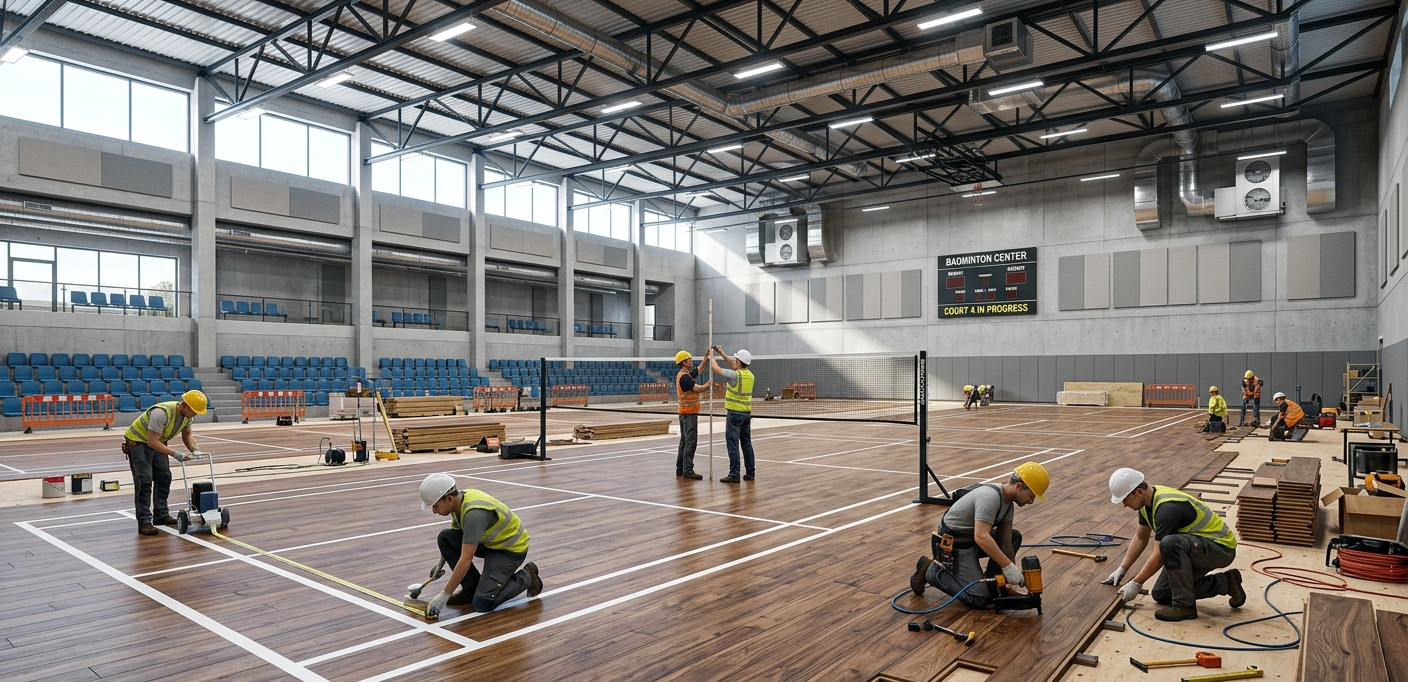
Why It Is Important to Build a Badminton Court Professionally
Choosing to build a badminton court with proper planning and professional methods ensures a safe and reliable playing surface for athletes of all skill levels. Whether the court is intended for schools, sports clubs, fitness centers, academies, or recreational halls, a well-constructed badminton court supports consistent gameplay and long-term durability.
When you build a badminton court using modern flooring systems, the surface provides balanced traction, proper cushioning, and smooth shuttle movement. This improves player comfort and helps reduce stress on joints during intense matches. Careful preparation of the base, accurate leveling, and installation of suitable sports flooring materials are essential steps in achieving long-lasting performance.
A properly designed court not only improves the playing experience but also enhances the overall appearance of the facility. Investing in quality workmanship when you build a badminton court helps maintain structural stability, supports heavy usage, and ensures reliable performance over many years.
Top Flooring Choices to Build a Badminton Court
Wooden Sports Flooring
Recommended for: Professional indoor badminton facilities.
- Smooth and stable surface suitable for competitive play
- Excellent cushioning to improve player comfort
- Long service life with proper maintenance
PU (Polyurethane) Sports Flooring
Recommended for: Multi-purpose indoor courts and training centers.
- Flexible surface that absorbs impact effectively
- Slip-resistant design for improved safety
- Suitable for both practice and recreational matches
Vinyl Badminton Flooring
Recommended for: Community halls and practice facilities.
- Low-maintenance surface with good durability
- Textured finish that enhances grip
- Reliable performance for regular use
Comparison of Materials Used to Build a Badminton Court
| Flooring Material | Best Application | Average Lifespan | Maintenance Level |
|---|---|---|---|
| Wooden Flooring | Professional Indoor Courts | 10–15 Years | Moderate |
| PU Flooring | Indoor Multi-Sport Areas | 8–12 Years | Low |
| Vinyl Flooring | Training and Recreational Courts | 6–10 Years | Low |
Key Factors to Consider Before You Build a Badminton Court
- Type of Usage: Competitive courts require premium flooring, while training courts can use cost-effective materials.
- Player Safety: Selecting cushioned and anti-slip surfaces helps prevent injuries.
- Indoor or Multi-Purpose Setup: Choose flooring that matches the intended environment and activity level.
- Budget Planning: Material selection should align with financial planning and long-term value.
- Maintenance Needs: Opt for surfaces that remain stable and easy to clean over time.
Frequently Asked Questions About Building a Badminton Court
Which flooring option is best to build a badminton court?
Wooden flooring is commonly used for professional indoor courts because it offers smooth movement and reliable impact absorption.
How long does badminton court flooring usually last?
Depending on maintenance and usage levels, wooden flooring can last 10–15 years, PU flooring 8–12 years, and vinyl flooring 6–10 years.
Can badminton courts be installed inside gyms or halls?
Yes, badminton courts can be installed in indoor halls using PU or vinyl flooring systems that support multi-purpose activities.
Is complete construction support available to build a badminton court?
Full-service solutions typically include layout planning, flooring installation, court marking, and net setup.
Start Your Project to Build a Badminton Court
Planning to build a badminton court requires careful design, reliable materials, and precise installation. A professionally constructed court enhances performance, ensures safety, and provides long-term value for sports facilities, schools, and recreational spaces.
Request Project Consultation