
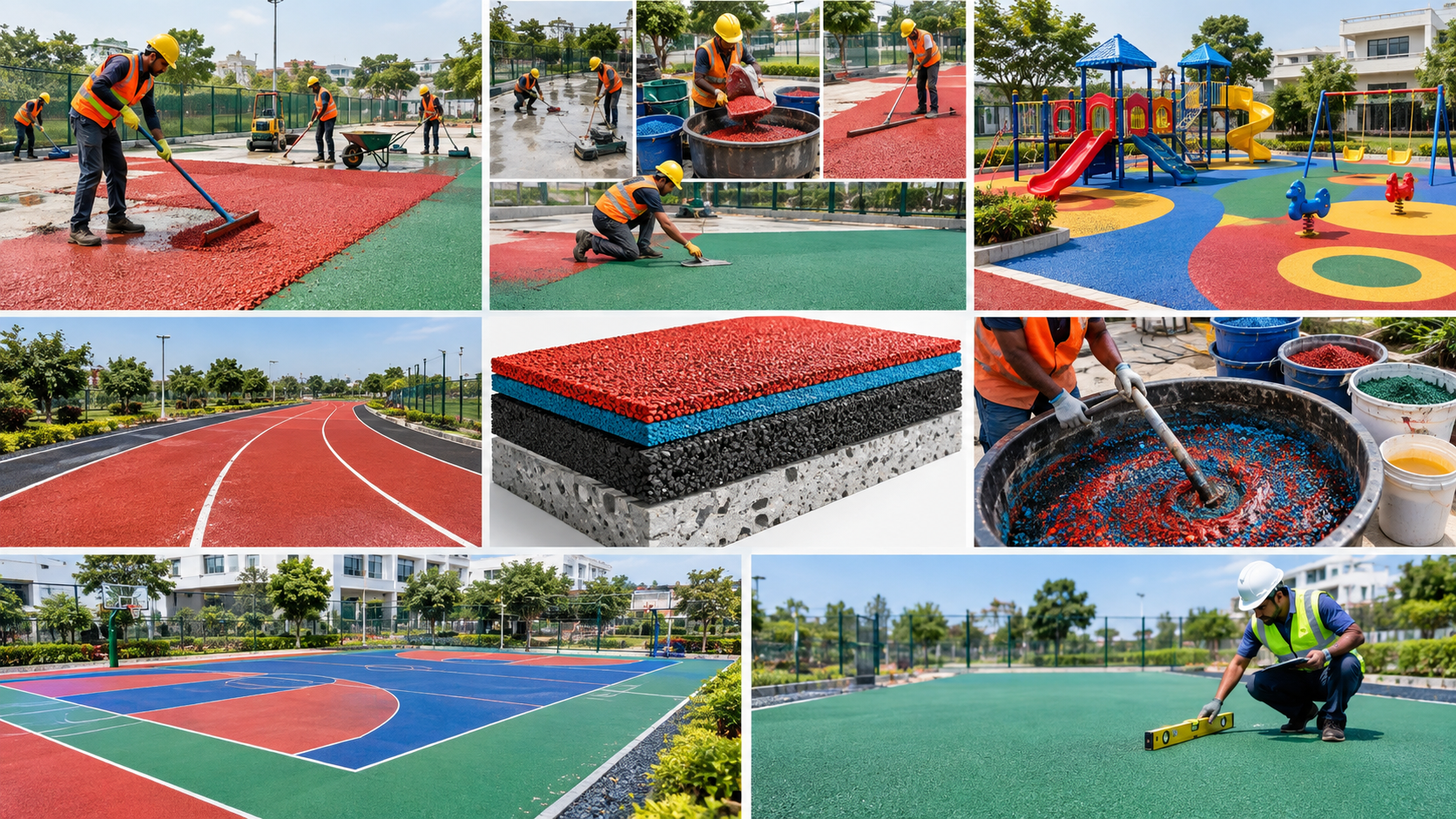
What Is the EPDM Flooring Procedure?
The basic EPDM flooring installation process includes site inspection, substrate preparation, cleaning and leveling, installation of a suitable cushioning layer where required, EPDM granule and PU binder mixing, surface application, leveling, compaction, finishing and curing.
The exact procedure can vary depending on whether the project uses a single-layer, dual-layer, wet-pour or other EPDM flooring system.
Why Is a Proper EPDM Flooring Procedure Important?
EPDM flooring performance is influenced by every stage of construction. Even high-quality rubber granules may not provide the expected result if the substrate is poorly prepared or the binder is incorrectly mixed.
Better Surface Performance
Correct installation helps create a consistent and resilient surface suitable for regular sports and recreational activity.
Improved Safety
Appropriate thickness, cushioning and surface texture can help provide suitable impact absorption and traction for the intended application.
Stronger Bonding
Proper substrate preparation and binder application help improve adhesion between the flooring system and its supporting base.
Long-Term Durability
Correct material ratios, installation techniques and curing conditions contribute to the long-term service performance of the flooring.
Step-by-Step EPDM Flooring Installation Procedure
Step 1: Site Inspection and Planning
The first stage is to inspect the installation area. Dimensions, substrate condition, drainage, access, surface levels, expected usage and design requirements are evaluated before construction begins.
Step 2: Base Preparation
The concrete, asphalt or other approved substrate is cleaned and prepared. Cracks, holes, loose material and significant surface irregularities should be repaired before the rubber flooring is installed.
Step 3: Surface Cleaning and Leveling
Dust, dirt, grease and loose particles are removed from the substrate. The surface is checked for level and appropriate falls or drainage requirements, particularly for outdoor installations.
Step 4: Primer or Bonding Preparation
Where required by the flooring system, a compatible primer or bonding treatment is applied to the prepared substrate. Product-specific application instructions should be followed.
Step 5: Installation of SBR Cushion Layer
For dual-layer EPDM systems, an SBR rubber base layer may be installed to provide additional resilience and cushioning. The thickness is selected according to the project requirements.
Step 6: EPDM Granule and PU Binder Mixing
EPDM granules are mixed with the specified polyurethane binder in the recommended proportion. Consistent mixing is important for achieving uniform bonding and surface performance.
Step 7: EPDM Surface Application
The prepared EPDM mixture is spread over the designated area to the specified thickness. Installers work carefully to maintain uniform coverage and consistent surface levels.
Step 8: Leveling and Compaction
The newly installed material is leveled and compacted using suitable tools and techniques. This stage helps achieve the required texture, density and surface uniformity.
Step 9: Color and Design Installation
Different EPDM colors can be combined to create zones, patterns, graphics, borders and other decorative designs. Design work should be planned before installation to maintain clean transitions.
Step 10: Curing
The installed flooring is allowed to cure under suitable site conditions. Curing time varies according to the binder, temperature, humidity, ventilation, thickness and manufacturer instructions.
Step 11: Final Inspection
The completed flooring is inspected for surface uniformity, bonding, finish, design accuracy and visible defects before the area is handed over for use.
Types of EPDM Flooring Installation Procedures
Single-Layer EPDM Flooring
A single-layer system can be used where the project requires a resilient EPDM surface without a separate SBR cushioning layer.
- Suitable for selected recreational areas
- Direct EPDM surface installation
- Simple system configuration
Dual-Layer EPDM Flooring
Dual-layer systems generally combine an SBR rubber base with a colored EPDM top layer. This configuration can provide additional cushioning for suitable applications.
- SBR base layer
- EPDM wearing layer
- Additional cushioning
Wet-Pour EPDM Flooring
Wet-pour rubber flooring is installed by mixing rubber granules with a binder and applying the mixture in place. It is commonly considered for playgrounds and recreational areas.
- Seamless appearance
- Custom color options
- Resilient surface construction
Customized EPDM Flooring
Customized EPDM systems can incorporate multiple colors, patterns, graphics and activity zones according to the architectural or recreational design.
- Multiple color combinations
- Custom graphics
- Activity-zone layouts
EPDM Flooring Procedure Comparison
| System | Typical Application | Cushioning | Design Options | Maintenance |
|---|---|---|---|---|
| Single-Layer EPDM | Recreational areas and selected activity zones | Moderate | Good | Low |
| Dual-Layer EPDM | Playgrounds, tracks and active-use areas | Higher | Good | Low |
| Wet-Pour EPDM | Playgrounds and recreational spaces | Application dependent | Excellent | Low |
| Customized EPDM | Themed play areas and activity zones | Project dependent | Excellent | Low |
Materials Used in EPDM Flooring Installation
The materials used depend on the selected flooring system and application. A typical EPDM rubber flooring construction may include:
- EPDM Rubber Granules: Colored EPDM granules form the visible wearing surface.
- SBR Rubber Granules: Recycled SBR granules may be used as a cushioning base layer in dual-layer systems.
- Polyurethane Binder: A compatible PU binder is used to bond the rubber granules together.
- Primer: A suitable primer may be required depending on the substrate and flooring system.
- Base Materials: Concrete, asphalt or another properly prepared substrate can support the flooring system where appropriate.
EPDM Flooring Thickness Requirements
EPDM flooring thickness should not be selected solely by a standard thickness chart. The required thickness depends on the intended application, cushioning requirement, substrate, traffic level and relevant safety criteria.
| Application | Thickness Consideration | Key Requirement |
|---|---|---|
| General Recreational Areas | Application dependent | Durability and comfort |
| Fitness Areas | Application dependent | Resilience and traction |
| Playgrounds | Based on fall-height requirements | Impact attenuation |
| Jogging Tracks | Based on system design | Cushioning and durability |
EPDM Flooring Procedure for Outdoor Applications
Outdoor EPDM flooring requires additional attention to drainage, substrate stability, moisture and environmental exposure. Before installation, the base should be assessed to ensure that water can drain effectively and that the substrate is suitable for the selected system.
- Inspect the existing base and drainage.
- Repair cracks and surface defects.
- Remove dust, dirt and contaminants.
- Confirm suitable moisture and weather conditions.
- Use EPDM materials appropriate for exterior exposure.
- Apply the specified PU binder system correctly.
- Protect the surface during curing.
- Complete a final surface inspection before opening the area.
EPDM Playground Flooring Procedure
Playground flooring requires careful consideration of impact attenuation. For this reason, the EPDM flooring system should be designed according to the required fall height and applicable playground safety criteria rather than selecting thickness only on appearance or price.
A typical playground system may include a prepared base, resilient SBR cushioning layer and colored EPDM top layer. The final specification should be established according to the playground equipment, critical fall height requirements, drainage and project standards.
Quality Control During EPDM Flooring Installation
Quality control is important throughout the installation rather than only at the final stage.
- Check substrate cleanliness and condition.
- Verify material specifications before mixing.
- Follow the manufacturer's binder-to-granule ratio.
- Maintain consistent application thickness.
- Check surface levels and transitions.
- Protect the installation during curing.
- Inspect the finished surface for visible defects.
Common EPDM Flooring Installation Mistakes to Avoid
- Installing over a poorly prepared or contaminated substrate.
- Ignoring drainage requirements in outdoor installations.
- Using unsuitable or incompatible binders.
- Incorrect mixing of EPDM granules and binder.
- Applying inconsistent flooring thickness.
- Opening the surface before adequate curing.
- Ignoring the specific requirements of playground applications.
- Using unsuitable cleaning chemicals after installation.
Benefits of Professional EPDM Flooring Installation
- Consistent and resilient surface construction
- Good impact absorption characteristics
- Suitable traction for many sports and recreational uses
- Wide range of colors and design possibilities
- Suitable for many indoor and outdoor applications
- Resistance to regular weather and UV exposure
- Easy routine cleaning
- Low-maintenance surface requirements
- Customizable thickness and cushioning configurations
EPDM Flooring Procedure Cost
The cost of the EPDM flooring installation process varies according to the project specification. A proper quotation should consider both material and construction requirements.
Factors Affecting EPDM Flooring Cost
- Total installation area
- EPDM granule quality and color
- Required flooring thickness
- SBR cushioning layer requirements
- Substrate condition
- Surface preparation and repair work
- PU binder specification
- Custom graphics and designs
- Site location and accessibility
- Drainage or civil work requirements
- Installation complexity
For an accurate estimate, provide the project dimensions, application type, site location and desired flooring specification.
EPDM Flooring Maintenance After Installation
Regular maintenance helps preserve the appearance and performance of an EPDM surface.
- Remove loose dirt and debris regularly.
- Use a soft broom or suitable cleaning equipment.
- Clean with compatible mild cleaning solutions.
- Avoid aggressive chemicals and abrasive cleaning methods.
- Inspect the surface periodically for damage.
- Keep outdoor drainage paths clear.
- Repair localized damage when necessary.
- Follow the maintenance instructions supplied for the specific flooring system.
Where Is EPDM Flooring Used?
Playgrounds
Resilient surfaces for children's play and activity areas.
Jogging Tracks
Rubber surfaces designed for walking, running and fitness activities.
Gyms
Durable flooring for training and general fitness environments.
Sports Facilities
Suitable EPDM systems can be considered for selected sports and recreational areas.
Schools
Useful for school playgrounds, activity zones and recreational areas.
Parks
Suitable for outdoor fitness zones, walking areas and recreational spaces.
EPDM Flooring Procedure by Sports Facility India
Sports Facility India provides complete EPDM flooring installation support for sports, playground, fitness and recreational projects. Our approach covers project assessment, surface preparation, flooring system selection, material installation, finishing and project handover.
- Site inspection and project planning
- Substrate assessment and preparation
- EPDM flooring system selection
- SBR cushioning installation where required
- EPDM granule and PU binder application
- Surface finishing and design work
- Quality inspection
- Installation support across India
EPDM Flooring Installation Services Across India
EPDM flooring installation can be planned for projects across India, including schools, sports academies, playgrounds, fitness centers, parks, jogging tracks, residential developments and recreational facilities.
Project requirements may vary according to regional climate, site conditions, intended use and substrate. A site assessment helps determine the appropriate flooring system.
Frequently Asked Questions About EPDM Flooring Procedure
What are the steps involved in the EPDM flooring procedure?
The process generally includes site inspection, substrate preparation, cleaning, leveling, installation of a cushioning layer where required, EPDM granule and PU binder mixing, surface application, leveling, finishing and curing.
What materials are used in EPDM flooring?
EPDM flooring systems generally use EPDM rubber granules and a suitable polyurethane binder. Some systems also use SBR rubber granules as a cushioning base layer and primer where required.
How long does EPDM flooring take to cure?
Curing time varies according to the binder, temperature, humidity, ventilation, thickness and manufacturer's instructions. The surface should remain protected until adequate curing has occurred.
Can EPDM flooring be installed outdoors?
Yes. EPDM flooring is commonly used in outdoor playgrounds, jogging tracks, fitness areas and recreational spaces when the complete flooring system is suitable for outdoor conditions.
Is EPDM flooring suitable for playgrounds?
Yes. EPDM flooring can be used for playgrounds where a resilient and impact-attenuating surface is required. Thickness and cushioning should be selected according to the playground equipment and applicable safety requirements.
What affects the cost of EPDM flooring installation?
Cost depends on the project area, flooring thickness, EPDM material quality, cushioning system, substrate preparation, design requirements, site location and installation complexity.
Do you provide complete EPDM flooring installation services?
Yes. Sports Facility India provides end-to-end EPDM flooring installation support, including site assessment, base preparation, rubber flooring installation, finishing and project handover.
Get Professional EPDM Flooring Procedure Services
Planning an EPDM playground, jogging track, gym, sports area or recreational surface? Contact Sports Facility India for professional EPDM flooring installation solutions.
Share your project area, location, application and flooring requirements to discuss the appropriate EPDM flooring system.
Request a Site InspectionEPDM Flooring Procedure – Voice Search Questions
What is the procedure for EPDM flooring? The EPDM flooring procedure includes substrate preparation, cushioning layer installation where required, EPDM granule mixing, surface application, leveling, finishing and curing.
How is EPDM rubber flooring installed? EPDM rubber flooring is generally installed by preparing the substrate, mixing EPDM granules with a compatible polyurethane binder and applying the mixture to the specified thickness.
How long does EPDM flooring take to cure? EPDM flooring curing time depends on the binder, weather conditions, thickness and manufacturer's recommendations.
Is EPDM flooring suitable for playgrounds? Yes. EPDM flooring can be designed as a resilient playground surface with cushioning and impact attenuation appropriate to the playground requirements.
What is the cost of EPDM flooring installation? EPDM flooring cost depends on area, thickness, material specification, substrate preparation, cushioning requirements, design and installation conditions.