
Why Is EPDM Court Flooring Thickness Important?
The thickness of an EPDM flooring system directly influences its cushioning characteristics, durability and suitability for different activities. Selecting the correct thickness helps ensure that the flooring performs according to the intended application.
- Impact Protection: An appropriately designed rubber flooring system helps reduce impact forces during everyday activities.
- Shock Absorption: Rubber cushioning layers improve surface comfort and help reduce stress on joints.
- Surface Durability: Correct material thickness and quality help the flooring withstand regular use.
- Slip Resistance: A properly finished EPDM surface provides suitable traction for recreational activities.
- Weather Resistance: UV-resistant EPDM granules are suitable for many outdoor flooring applications.
- Long-Term Performance: Proper installation and maintenance help extend the usable life of the flooring system.
Standard EPDM Court Flooring Thickness Options
EPDM flooring is available in different thickness configurations to meet the requirements of playgrounds, recreational courts, fitness areas and sports facilities. The following options are indicative specifications. Final selection should be based on the complete flooring system and its intended use.
6mm EPDM Flooring Thickness
A 6mm EPDM surface may be considered for light-use recreational areas, decorative rubber flooring and selected indoor applications where limited cushioning is required. It is important to evaluate the substrate and complete system before selecting this thickness.
8mm EPDM Flooring Thickness
An 8mm EPDM wearing layer can be considered for selected school activity zones, recreational spaces and light-to-moderate-use areas. It offers a flexible rubber surface with a balance of appearance and functional performance.
10mm EPDM Flooring Thickness
A 10mm EPDM surface may be suitable for certain playgrounds, jogging areas, fitness zones and recreational facilities. Where additional cushioning is required, an appropriate SBR rubber base layer can be incorporated into the flooring design.
12mm EPDM Flooring Thickness
A 12mm EPDM wearing layer may be specified for selected applications requiring a thicker rubber finish. The complete flooring assembly should be evaluated for shock absorption, load requirements, substrate compatibility and intended sports activity.
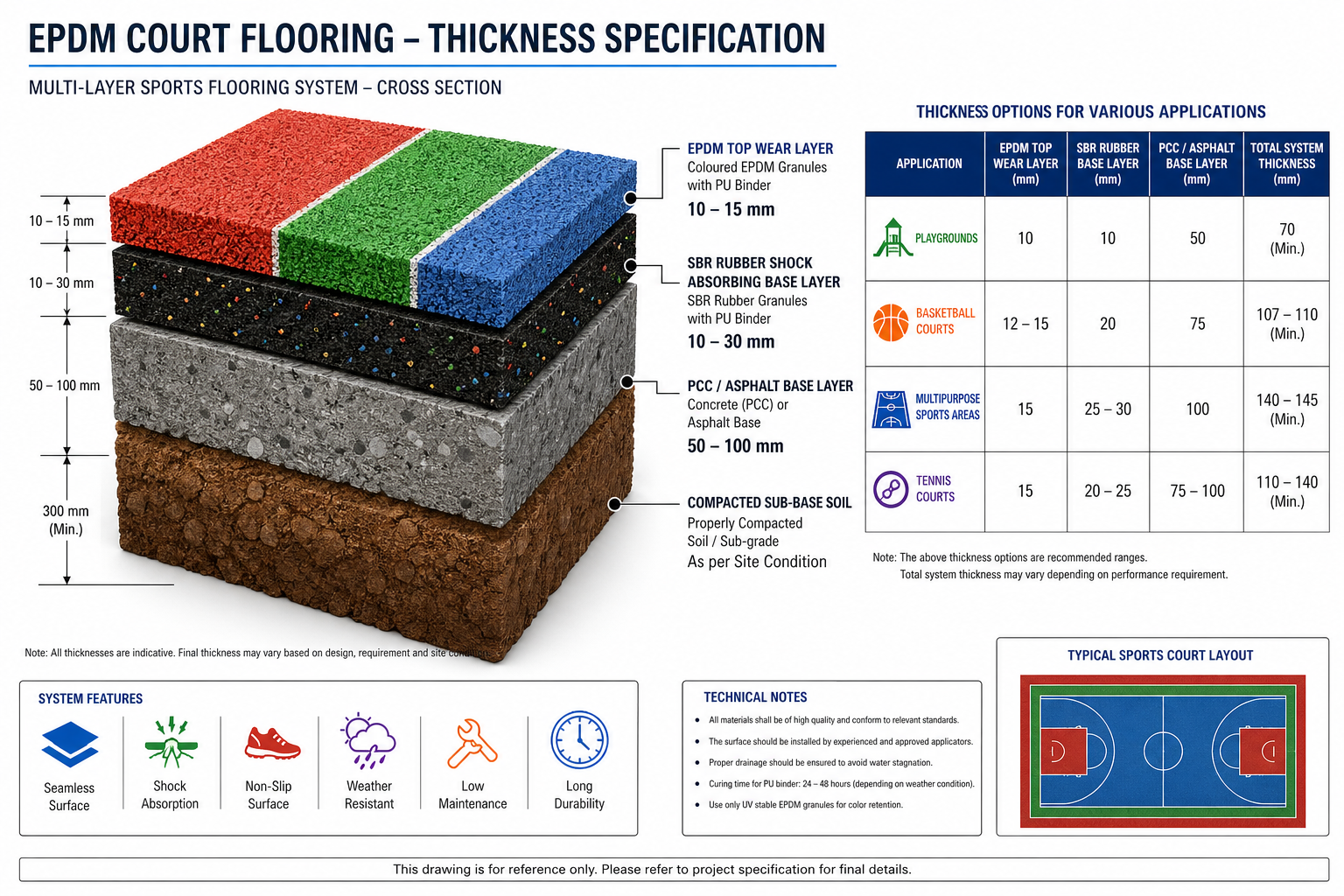
Note: EPDM wearing-layer thickness and total flooring-system thickness are not the same. For example, a system with an 8mm EPDM top layer over a 10mm SBR base layer has a total nominal thickness of 18mm.
EPDM Flooring Thickness Comparison Table
| EPDM Top Layer | Potential Applications | Key Consideration |
|---|---|---|
| 6mm | Decorative and selected light-use areas | Limited cushioning requirements |
| 8mm | Recreational and selected school activity areas | Moderate surface-use requirements |
| 10mm | Playgrounds and selected fitness areas | Evaluate cushioning and base-layer requirements |
| 12mm | Selected thicker EPDM surface applications | Application-specific system design |
EPDM Court Flooring System – Different Layers Explained
A professional EPDM rubber flooring system can include multiple layers. Each layer performs a specific function and contributes to the overall performance of the finished surface.
1. Concrete or Asphalt Base
The concrete or asphalt foundation provides structural support for the EPDM flooring. The base must be stable, properly levelled, clean and suitable for the selected flooring system. Adequate drainage should also be considered for outdoor installations.
2. SBR Rubber Cushion Layer
SBR rubber granules are commonly used to create a resilient cushioning layer. They are mixed with a suitable polyurethane binder and installed at the specified thickness. This layer improves the cushioning characteristics of the complete flooring assembly.
3. EPDM Rubber Top Layer
Coloured EPDM granules are mixed with a compatible PU binder and applied over the prepared base or cushioning layer. The EPDM wearing surface provides colour, texture, flexibility and resistance to outdoor exposure.
4. Surface Finishing and Curing
The installed flooring is finished to achieve a consistent surface appearance. The system is allowed to cure according to the binder manufacturer's recommendations before it is opened for use.
Applications of EPDM Rubber Flooring
EPDM rubber flooring is suitable for various indoor and outdoor recreational environments. Its flexibility, colour options and weather-resistant properties make it a popular choice for different types of facilities.
- School Playgrounds: Rubber flooring for children's recreational and activity areas.
- Jogging Tracks: Flexible rubber surfaces for walking, jogging and recreational running.
- Sports Facilities: Selected multi-purpose recreational areas and sports activity zones.
- Fitness Centres: Rubber flooring for selected exercise and training spaces.
- Outdoor Parks: Decorative and functional surfaces for public recreational areas.
- Swimming Pool Surrounds: Selected outdoor areas where a suitable slip-resistant flooring specification is required.
The correct flooring material and thickness should always be selected according to the activity. EPDM playground flooring should not automatically be considered a certified sports performance surface for every competitive sport.
EPDM Court Flooring Cost per Square Foot in India
The EPDM court flooring cost per square foot depends on the selected thickness, EPDM granule quality, SBR cushioning layer, PU binder, base preparation, colour combination and project location.
For preliminary budgeting, indicative EPDM flooring estimates may range from ₹90 to ₹180 per sq. ft. for selected basic and standard specifications. Premium systems, additional cushioning, complex designs and extensive site preparation can increase the overall project cost.
The final quotation should clearly specify whether the price includes the EPDM wearing layer, SBR base layer, primer, surface preparation, labour, transportation and applicable taxes.
Factors Affecting EPDM Flooring Price
- Flooring Thickness: Greater material thickness generally increases material consumption and installation cost.
- EPDM Granule Quality: Colour stability, granule quality and UV resistance influence pricing.
- SBR Rubber Layer: Additional cushioning layers increase the total material and labour requirements.
- Base Preparation: Concrete repairs, levelling, cleaning and drainage work affect project expenses.
- Design and Colours: Custom patterns, multiple colours, logos and court markings may increase costs.
- Project Location: Transportation, site accessibility and local installation conditions influence the final quotation.
EPDM Flooring Installation Process – Step by Step
Proper installation is essential for achieving a durable and uniform EPDM rubber surface. A professional installation process generally includes the following stages.
Step 1: Site Inspection and Surface Preparation
The installation team inspects the site, checks the existing substrate and identifies any cracks, uneven sections or drainage issues. The surface is cleaned and prepared before installation begins.
Step 2: Base Preparation and Priming
The concrete or asphalt base is prepared according to the selected flooring specification. A compatible primer may be applied where required to improve bonding between layers.
Step 3: SBR Rubber Base Layer Installation
Where the design requires additional cushioning, SBR rubber granules are mixed with PU binder and installed at the specified thickness. The layer is evenly distributed and compacted as required.
Step 4: EPDM Granule Top Layer Application
Coloured EPDM granules are mixed with a suitable polyurethane binder and applied over the prepared surface. The material is spread evenly to achieve the required thickness and finish.
Step 5: Curing and Finishing
The finished EPDM surface is allowed to cure under suitable environmental conditions. Court designs, colour patterns and markings are completed according to the project requirements.
Step 6: Final Quality Inspection
The completed flooring is inspected for thickness consistency, bonding, surface finish, drainage and other project-specific quality requirements before handover.
Benefits of Professional EPDM Court Flooring Installation
- Consistent surface thickness and professional finishing.
- Suitable cushioning through an appropriately designed rubber system.
- Wide range of colour combinations and surface designs.
- UV-resistant material options for outdoor applications.
- Flexible flooring solutions for schools, parks and recreational facilities.
- Low-maintenance surface when properly installed and maintained.
- Customised installation based on site conditions and project requirements.
EPDM Flooring Maintenance Tips
Regular maintenance helps preserve the appearance and performance of EPDM flooring. The following practices are recommended:
- Clean the surface regularly to remove dust, leaves and debris.
- Use suitable cleaning methods recommended by the flooring manufacturer.
- Avoid harsh chemicals that may damage the rubber or PU binder.
- Inspect the surface periodically for cracks, loose granules or damaged areas.
- Maintain proper drainage to prevent standing water.
- Repair damaged sections promptly to avoid further deterioration.
Frequently Asked Questions About EPDM Court Flooring Thickness
1. What is the standard EPDM court flooring thickness?
EPDM wearing layers are commonly specified in different thicknesses, including 6mm, 8mm, 10mm and 12mm. The correct thickness depends on the application and whether an additional SBR cushioning layer is included.
2. Which EPDM flooring thickness is suitable for playgrounds?
The suitable thickness depends on the playground equipment, potential fall height and required impact attenuation. A certified playground safety system should be selected based on the applicable critical fall-height requirements rather than EPDM thickness alone.
3. What is the difference between EPDM and SBR rubber flooring?
EPDM is commonly used as a coloured wearing layer because of its colour options and weather resistance. SBR rubber is frequently used as a cushioning base layer. Both materials can be combined in a multi-layer flooring system.
4. How much does EPDM flooring cost per square foot in India?
Indicative estimates for selected EPDM flooring specifications may range from ₹90 to ₹180 per square foot. Actual prices depend on thickness, material quality, base preparation, design and installation requirements.
5. Is EPDM flooring suitable for outdoor courts?
Yes. Suitable UV-resistant EPDM systems can be installed in outdoor recreational areas, playgrounds, jogging tracks and selected sports facilities. The complete system must be designed for the local climate and drainage conditions.
6. How long does EPDM rubber flooring last?
The service life depends on material quality, installation, weather exposure, traffic levels and maintenance. A project-specific lifespan should be confirmed with the flooring manufacturer or installer.
7. Can EPDM flooring be installed over concrete?
Yes. EPDM flooring can be installed over a suitable concrete base after checking its strength, surface condition, moisture level, cleanliness and compatibility with the selected binder system.
8. Does EPDM flooring require an SBR rubber base layer?
Not every EPDM flooring project requires an SBR base layer. The requirement depends on the intended application, total system thickness, cushioning needs and flooring manufacturer's specifications.
9. Is EPDM flooring suitable for basketball and badminton courts?
EPDM is suitable for selected recreational and multi-purpose surfaces. However, competitive basketball and badminton courts generally require sport-specific flooring systems that meet the relevant performance, ball-response and traction requirements.
10. How can I get an EPDM flooring installation quotation?
Contact Sports Facility India with your project location, total area, application, preferred colours and base details. Our team can help evaluate the flooring requirements and prepare a project-specific quotation.
EPDM Flooring Installation Services Across India
Sports Facility India provides EPDM rubber flooring installation solutions for playgrounds, schools, parks, fitness centres and recreational sports facilities.
We serve projects in Lucknow, Kanpur, Agra, Mathura, Noida, Delhi NCR and other locations across India, subject to project requirements and site assessment.
Whether you require EPDM playground flooring, rubber jogging tracks, recreational court flooring or a customised sports flooring system, we can help you select a suitable material specification and installation approach.
Looking for Professional EPDM Court Flooring Installation?
Get expert assistance in selecting the right EPDM court flooring thickness for your playground, sports court, gym or recreational project.
Sports Facility India provides customised EPDM flooring solutions with professional installation and project support.
Call: +91 8009483311