
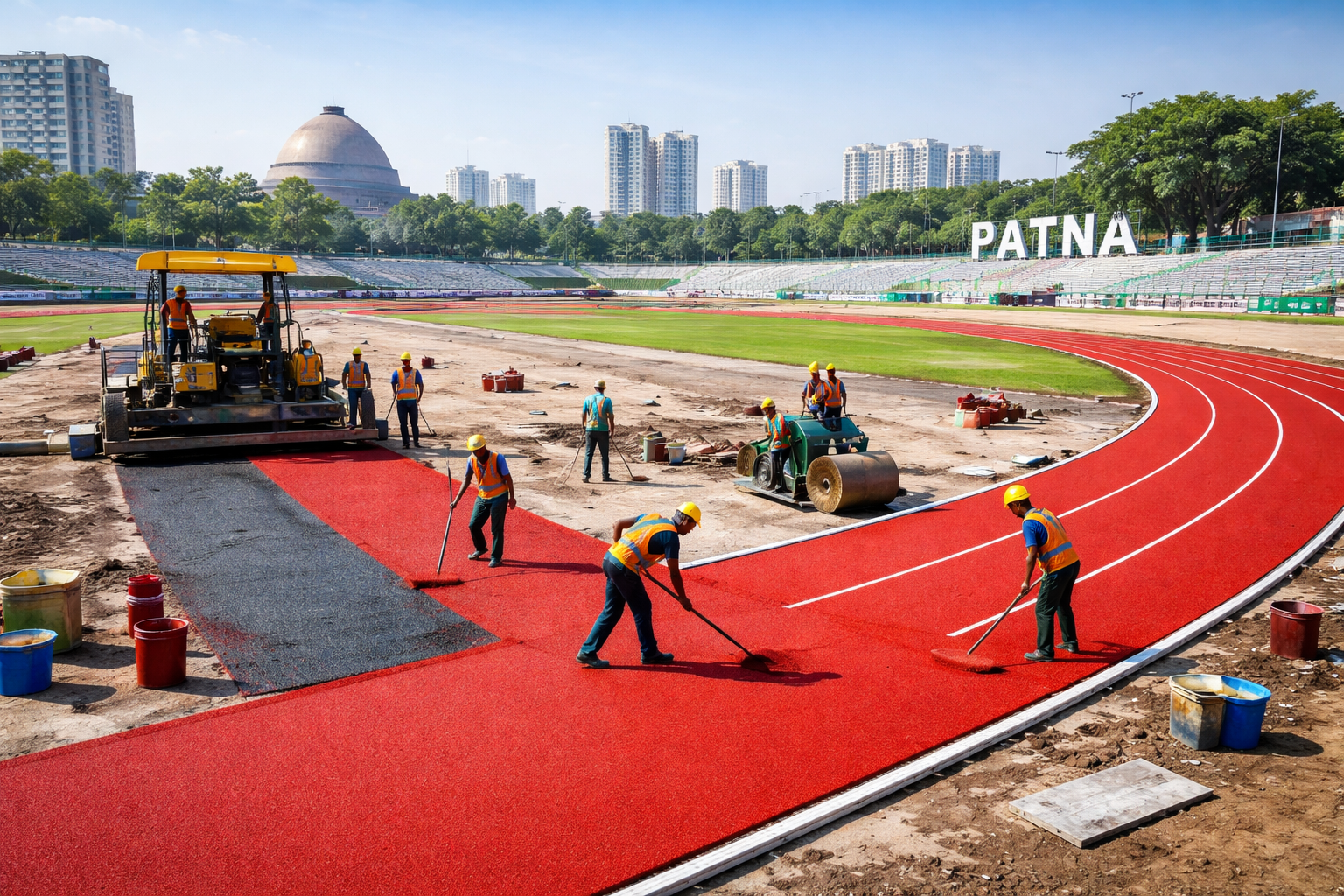
What Is Jogging Track Construction?
Jogging track construction is the process of creating a dedicated running and walking surface using multiple engineered layers. The construction normally includes site preparation, excavation, compacted sub-base, aggregate layers, drainage arrangements, shock-absorbing materials, binding systems, and a durable synthetic top surface.
The objective is to create a smooth and resilient surface that supports repeated foot impact while maintaining traction and user comfort. Depending on the application, a jogging track may be constructed using EPDM rubber, PU systems, SBR rubber, or other synthetic sports flooring technologies.
The selection of the track system depends on factors such as project location, expected footfall, available budget, drainage conditions, performance requirements, maintenance expectations, and the intended use of the facility.
Jogging Track Construction Materials
Different materials are used during jogging track construction to create a stable, shock-absorbing, weather-resistant, and durable surface. The material combination can vary according to the selected track system and project requirements.
EPDM Rubber Granules
EPDM rubber is commonly used as a resilient top surface because of its flexibility, colour stability, weather resistance, and comfortable running characteristics.
PU Polyurethane
Polyurethane is used in high-performance synthetic track systems to provide a seamless, durable, and professionally finished athletic surface.
SBR Rubber Granules
SBR rubber can be used in the base or cushioning layer to improve impact absorption and provide resilience beneath the finished surface.
Polyurethane Binder
PU binders help bond rubber granules and create a stable, cohesive synthetic flooring system.
Aggregate Materials
Properly graded aggregate materials provide a stable foundation, support drainage, and help distribute loads beneath the synthetic surface.
Protective Surface Coating
Depending on the system, a protective finishing layer can improve surface durability, colour retention, traction, and resistance to regular outdoor use.
Jogging Track Construction Layers
A professionally constructed jogging track generally consists of several layers. Each layer has a specific function in providing structural stability, drainage, cushioning, and surface performance.
| Construction Layer | Purpose |
|---|---|
| Prepared Subgrade | Compacted ground foundation prepared to provide a stable base for the track. |
| Granular Sub-Base | Provides structural support and assists with drainage and load distribution. |
| Base Layer | Creates a properly leveled and stable foundation for the synthetic system. |
| Shock-Absorbing Layer | Provides cushioning and helps reduce the direct impact transferred to the user. |
| Binder Layer | Bonds the rubber or synthetic components together to form a stable surface system. |
| EPDM / PU Surface | Provides the finished running surface with traction, durability, and visual appeal. |
| Line Marking | Provides clear track boundaries, lanes, directional markings, or other required identification. |
Jogging Track Construction Process
The quality and service life of a jogging track depend heavily on proper installation. Professional construction follows a planned sequence from site inspection through final quality checking.
1. Site Inspection and Survey
The site is evaluated for dimensions, soil condition, existing surface, slope, drainage, accessibility, and intended usage.
2. Layout and Planning
The track layout, width, curves, entry points, drainage requirements, and surface system are planned according to the available space.
3. Excavation and Earthwork
Unsuitable soil and unwanted materials are removed before the ground is graded and prepared for subsequent construction layers.
4. Sub-Base Preparation
Selected granular materials are placed and compacted to establish a stable and properly graded foundation.
5. Drainage Installation
Appropriate drainage arrangements are incorporated to help control surface water and reduce the possibility of water accumulation.
6. Base Leveling
The base is checked for levels, slopes, smoothness, and stability before installation of the synthetic running surface.
7. Rubber / Cushion Layer Installation
Where specified, SBR rubber or another resilient layer is installed to provide cushioning and impact absorption.
8. EPDM or PU Surface Installation
The selected synthetic surface is installed using appropriate binders, equipment, and application techniques.
9. Surface Finishing
The finished surface is checked for consistency, texture, adhesion, levels, and overall appearance.
10. Marking and Final Inspection
Required markings are applied and the completed track is inspected before final handover.
EPDM vs PU Jogging Track Systems
EPDM and PU are two commonly selected synthetic surface technologies. The appropriate choice depends on the intended application, performance requirements, site conditions, and project budget.
| Feature | EPDM System | PU System |
|---|---|---|
| Surface Material | EPDM rubber granules | Polyurethane-based system |
| Typical Usage | Parks, schools, recreational tracks | Professional sports and athletic facilities |
| Surface Finish | Textured and resilient | Seamless synthetic finish |
| Weather Resistance | Suitable for outdoor applications | Suitable for appropriately designed outdoor systems |
| Colour Options | Multiple colour choices | Multiple finish options depending on system |
| Performance | Comfortable and resilient running surface | High-performance athletic surface options |
Benefits of Professional Jogging Track Construction
A properly designed and installed synthetic jogging track can improve the usability, comfort, safety, and appearance of recreational and athletic facilities.
- Provides a resilient running and walking surface.
- Offers improved shock absorption compared with hard pathways.
- Provides better traction for regular jogging activities.
- Supports comfortable use for recreational fitness activities.
- Can be designed for outdoor weather conditions.
- Requires comparatively straightforward routine maintenance.
- Available in different colours and surface finishes.
- Suitable for parks, schools, sports facilities, and residential projects.
- Enhances the appearance of fitness and recreational areas.
- Can be customized according to site dimensions and usage requirements.
Applications of Jogging Track Construction
Public Parks
Synthetic jogging tracks provide dedicated walking and running pathways in parks and recreational spaces.
Schools and Colleges
Tracks can be developed around educational campuses for fitness, physical education, and recreational activities.
Residential Societies
Jogging tracks can be incorporated into residential communities as part of outdoor fitness infrastructure.
Sports Complexes
Synthetic running surfaces can complement sports facilities and athlete training areas.
Corporate Campuses
Dedicated tracks can support employee fitness and outdoor recreational activities.
Hotels and Resorts
Jogging tracks can be designed as recreational amenities for guests and visitors.
Important Factors in Jogging Track Construction
Before starting a jogging track project, several technical and site-related factors should be evaluated to select the appropriate construction system.
- Site dimensions: Available land area determines the track layout and overall design.
- Soil condition: The existing ground must be evaluated before deciding the sub-base requirements.
- Drainage: Effective water management is essential for outdoor synthetic surfaces.
- Surface selection: EPDM, PU, SBR and other systems can be considered based on project requirements.
- Usage intensity: Expected daily footfall influences the selection of the surface and construction system.
- Climate: Local weather conditions should be considered when selecting materials and installation methods.
- Maintenance: Cleaning and periodic inspection requirements should be considered during planning.
- Budget: Project cost depends on the construction system, site preparation, track dimensions, materials, drainage, and installation requirements.
Jogging Track Maintenance
Regular maintenance helps preserve the appearance and performance of a synthetic jogging track. Maintenance requirements vary according to the installed flooring system, outdoor conditions, and usage intensity.
- Remove leaves, dust, dirt, and debris regularly.
- Clean the surface using suitable cleaning methods.
- Avoid harsh chemicals that may damage the synthetic surface.
- Prevent oil, fuel, and other damaging substances from remaining on the track.
- Inspect the surface periodically for cracks, loose areas, or damaged sections.
- Keep drainage channels and outlets free from blockages.
- Repair damaged areas promptly to prevent further deterioration.
- Schedule professional inspection when required.
Jogging Track Construction Cost in India
The cost of jogging track construction in India varies from project to project. A fixed price cannot be determined without evaluating the site, dimensions, construction method, material specifications, and installation requirements.
Major factors that influence the overall project cost include:
- Total track area and length.
- Existing ground and soil condition.
- Excavation and earthwork requirements.
- Sub-base and aggregate specifications.
- Drainage requirements.
- EPDM, PU, SBR, or other surface system selected.
- Required cushioning thickness.
- Surface preparation and leveling.
- Track markings and finishing.
- Transportation and project location.
- Installation complexity and site accessibility.
For an accurate estimate, a site assessment and project-specific quotation are recommended.
Why Choose Professional Jogging Track Construction Services?
Professional construction helps ensure that the track foundation, drainage, surface preparation, material application, and finishing are completed according to the requirements of the selected system.
Sports Facility provides end-to-end jogging track solutions, from initial consultation and site planning to material selection, base preparation, synthetic surface installation, marking, quality inspection, and project handover.
- Project-specific track planning.
- Selection of suitable synthetic flooring systems.
- Professional surface preparation.
- EPDM and PU track installation solutions.
- Drainage and base construction coordination.
- Surface finishing and marking.
- Quality inspection before handover.
- Solutions for residential, institutional, commercial, and sports projects.
Frequently Asked Questions About Jogging Track Construction
What materials are commonly used for jogging track construction?
Common materials include EPDM rubber, SBR rubber, polyurethane binders, PU systems, aggregate materials, and other synthetic sports flooring components. The exact material combination depends on the selected track system.
How long does a synthetic jogging track last?
The service life of a jogging track depends on the flooring system, installation quality, climate, usage intensity, maintenance, and site conditions. A properly maintained synthetic track can provide long-term service, but actual lifespan varies by project.
Is drainage necessary for an outdoor jogging track?
Yes. Proper drainage is an important part of outdoor jogging track construction because standing water can affect the foundation and synthetic surface over time.
What is the difference between EPDM and PU jogging tracks?
EPDM systems commonly use coloured rubber granules and are suitable for various recreational applications. PU systems can provide seamless, high-performance athletic surfaces. The appropriate choice depends on project requirements and specifications.
Can jogging tracks be constructed in parks and residential societies?
Yes. Synthetic jogging tracks can be designed for parks, residential communities, schools, corporate campuses, fitness centres, and other recreational areas.
What factors affect jogging track construction cost?
Track dimensions, site condition, excavation, base preparation, drainage, material selection, cushioning system, surface thickness, installation requirements, markings, transportation, and project location can all influence the final cost.
Get Professional Jogging Track Construction in India
Planning a new jogging track for a park, school, residential society, sports complex, corporate campus, or recreational facility? Sports Facility provides complete jogging track construction solutions using EPDM, PU, SBR, and synthetic sports flooring systems.
Contact our team to discuss your site requirements, track design, material options, construction method, and project estimate.
Request a Free QuoteJogging track construction details, jogging track construction in India, EPDM jogging track, PU jogging track construction, synthetic jogging track, jogging track installation, running track construction, EPDM track installation, synthetic running track India, jogging track flooring, jogging track contractor, jogging track construction company, outdoor jogging track construction.