
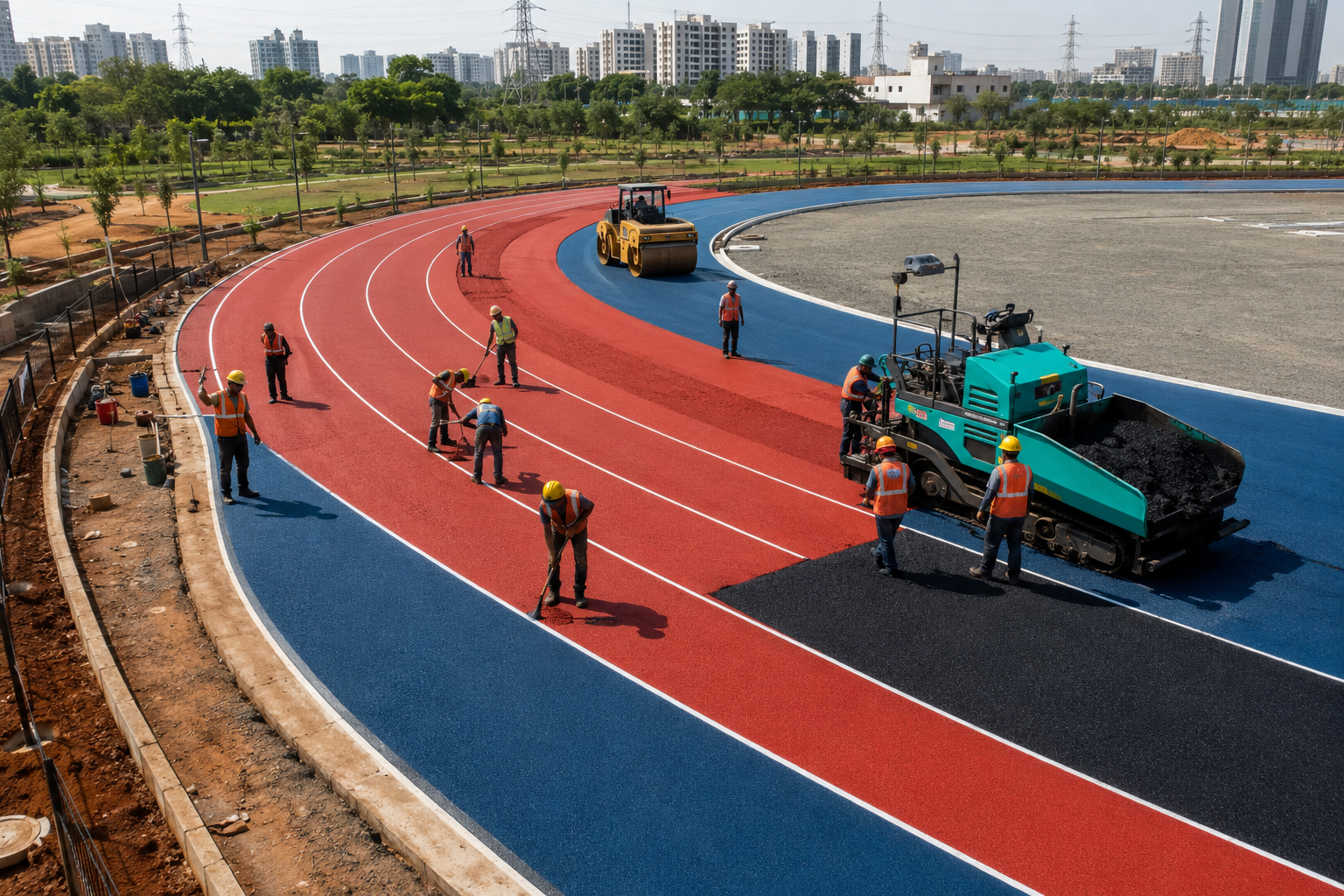
Jogging Track Construction Company in India
Sports Facility is a professional jogging track construction company in India, offering complete solutions for designing, developing, and installing high-quality jogging tracks for residential, commercial, institutional, and public recreational spaces. We specialize in EPDM rubber jogging tracks, PU synthetic flooring, rubberized running surfaces, and customized sports flooring systems designed for comfortable and regular physical activity.
With increasing awareness of fitness, outdoor exercise, and healthy lifestyles, jogging tracks have become an important feature of modern infrastructure. They are widely developed in public parks, residential townships, schools, colleges, universities, sports complexes, fitness centres, hotels, resorts, corporate campuses, and recreational facilities.
Our jogging track construction services cover the complete project cycle, including site inspection, layout planning, ground preparation, sub-base development, drainage arrangements, flooring material selection, surface installation, line marking, and final finishing. Every project is planned according to the available space, ground conditions, intended usage, and flooring requirements.
Whether you require a small jogging track for a residential society or a large running track for a sports academy, we provide customized construction solutions with suitable materials and professional installation practices.
Professional Jogging Track Construction Services
Constructing a durable jogging track requires proper engineering, quality materials, and careful execution. A suitable running surface must provide comfort, stability, traction, and effective water management while supporting regular pedestrian and jogging activities.
As an experienced jogging track contractor in India, Sports Facility offers comprehensive construction and installation services for different types of projects. Our team considers the technical requirements of each site before recommending the most appropriate flooring system.
Our Jogging Track Construction Services Include:
- Jogging track design, planning, and layout development
- Site inspection and ground condition assessment
- Excavation, earthwork, and ground preparation
- Sub-grade leveling and compaction
- Granular sub-base and aggregate preparation
- Concrete and asphalt base construction, where required
- Outdoor track drainage and slope management
- EPDM rubber jogging track installation
- PU synthetic jogging track flooring
- Rubberized running track construction
- Shock-absorbing flooring system installation
- Track edging, colour finishing, and line marking
- Final inspection and project handover
- Complete turnkey jogging track construction
Why Choose Sports Facility for Jogging Track Construction in India?
Selecting the right jogging track construction company is important for achieving a reliable surface and long-term project performance. The quality of the foundation, flooring material, drainage system, and installation process directly influences the usability and maintenance requirements of a jogging track.
Sports Facility focuses on providing project-specific solutions rather than recommending the same flooring system for every application. We consider the intended usage, available budget, location, weather conditions, and site requirements before planning the construction.
- Complete Project Solutions: Comprehensive services from initial planning and ground preparation to flooring installation and final finishing.
- Multiple Flooring Options: EPDM rubber, PU, synthetic, and rubberized flooring systems for different applications.
- Customized Track Designs: Track dimensions, colours, layouts, and surface specifications according to project requirements.
- Proper Base Preparation: Attention to leveling, compaction, and substrate preparation for a stable flooring system.
- Drainage Planning: Suitable slope and drainage arrangements for outdoor jogging track installations.
- Comfortable Running Surfaces: Resilient flooring options designed to provide cushioning and impact absorption.
- Professional Installation: Systematic application and finishing of the selected synthetic flooring.
- Residential and Commercial Projects: Solutions for parks, schools, housing societies, sports facilities, and commercial developments.
- Turnkey Execution: Coordinated construction services for projects requiring complete jogging track development.
Types of Jogging Track Flooring Systems
Choosing the correct flooring material is one of the most important decisions in jogging track construction. Different synthetic and rubber flooring systems offer different characteristics in terms of elasticity, cushioning, surface texture, appearance, and maintenance.
The selection should be based on the intended application, expected foot traffic, climate, substrate condition, and project specifications.
1. EPDM Rubber Jogging Track
EPDM rubber jogging track flooring is a popular option for parks, residential communities, educational institutions, and outdoor fitness areas. It is manufactured using coloured EPDM rubber granules combined with a suitable polyurethane binder to develop a resilient and attractive surface.
EPDM flooring is available in multiple colour combinations, allowing developers to create customized track designs, walking pathways, and recreational zones. Its elastic properties provide a comfortable surface for everyday walking, jogging, and recreational activities.
2. PU Jogging Track Flooring
Polyurethane (PU) jogging track flooring is a synthetic surface system used in sports and athletic environments. It consists of polyurethane-based layers that can be designed according to the required surface characteristics and application.
PU systems offer a seamless finish and consistent surface appearance. Depending on the selected system, they can incorporate resilient or cushioned layers for improved comfort and running performance. These surfaces are suitable for sports complexes, athletic training facilities, and selected institutional projects.
3. Synthetic Jogging Track
Synthetic jogging tracks are constructed using specialized flooring materials designed for regular running and recreational activities. These systems can incorporate different combinations of elastic layers, synthetic coatings, and protective wearing surfaces.
Synthetic track flooring is suitable for schools, colleges, universities, sports academies, stadiums, and fitness infrastructure projects where a consistent and professionally finished running surface is required.
4. Rubberized Jogging Track
Rubberized jogging tracks provide a resilient flooring option for walking paths, outdoor fitness zones, gardens, and recreational areas. These surfaces can be developed using suitable rubber granules and binding materials to create a practical and comfortable flooring system.
Depending on the material specification, rubberized flooring can be installed in different colours and thicknesses to match the project requirements. It is particularly useful for recreational environments where surface comfort, appearance, and maintenance are important considerations.
5. Outdoor Jogging Track Flooring
Outdoor jogging track flooring must be selected with consideration for sunlight, rainfall, temperature variations, water drainage, and regular exposure to environmental conditions. Suitable UV-resistant and weather-appropriate flooring systems help maintain surface performance.
We provide outdoor jogging track construction solutions using appropriate synthetic and rubber flooring systems based on the geographical location and site requirements.
Comparison of Different Jogging Track Flooring Materials
Each jogging track flooring system has specific characteristics and applications. The following comparison provides an overview of commonly selected materials.
| Flooring System | Important Characteristics | Recommended Applications |
|---|---|---|
| EPDM Rubber Flooring | Elastic, colourful, resilient, and available in different finishes. | Public parks, residential societies, schools, gardens, and walking tracks. |
| PU Synthetic Flooring | Seamless finish, consistent appearance, and customizable system construction. | Sports complexes, athletic facilities, training centres, and institutional projects. |
| Synthetic Track Flooring | Specialized surface systems with different cushioning and performance characteristics. | Universities, sports academies, stadiums, and running facilities. |
| Rubberized Flooring | Resilient, comfortable, and suitable for recreational applications. | Gardens, outdoor fitness areas, residential projects, and recreational pathways. |
Jogging Track Construction Process – Step-by-Step
A professionally constructed jogging track involves several technical stages. Each stage contributes to the stability, drainage, comfort, and overall quality of the completed surface.
1. Site Inspection and Feasibility Assessment
The construction process begins with a detailed inspection of the proposed area. The available space, existing ground condition, soil characteristics, elevation differences, access points, and drainage arrangements are evaluated to determine the construction requirements.
2. Jogging Track Layout and Design
The track layout is planned according to the available area and intended usage. Track width, alignment, curves, entry and exit points, walking zones, and surrounding landscaping requirements are considered during the design stage.
3. Excavation and Ground Preparation
Existing vegetation, unsuitable soil, loose materials, and unwanted obstructions are removed wherever necessary. The ground is excavated, filled, graded, and compacted according to the proposed construction levels.
4. Sub-Grade Preparation
The prepared ground is leveled and compacted to develop a stable foundation. Proper compaction helps minimize settlement and provides a suitable base for subsequent construction layers.
5. Sub-Base Construction
A suitable granular or aggregate sub-base is installed and compacted to provide structural support. The thickness and material specifications depend on soil conditions, expected usage, and the selected flooring system.
6. Drainage and Slope Development
Proper drainage is essential for outdoor jogging tracks. Suitable surface slopes, drainage channels, and water discharge arrangements are incorporated to reduce water accumulation and support effective rainwater management.
7. Base Surface Preparation
Depending on the project design, concrete or asphalt may be provided as the base for the synthetic flooring system. The surface is checked for level, cleanliness, stability, and suitability before flooring installation.
8. Installation of Cushioning Layer
Depending on the selected flooring system, an elastic rubber or cushioning layer may be installed to provide additional resilience and impact absorption. The layer composition and thickness are determined by the flooring specification.
9. Synthetic Flooring Installation
The selected EPDM, PU, or rubberized flooring system is applied over the prepared base using the appropriate installation procedure. Material mixing, application thickness, curing conditions, and finishing are controlled according to the system requirements.
10. Colour Finishing and Line Marking
Final surface finishing, edge details, colour combinations, and required line markings are completed according to the approved layout. The finished appearance is checked for consistency and workmanship.
11. Quality Inspection and Handover
The completed jogging track is inspected for surface uniformity, finishing, drainage arrangements, and installation quality. After the necessary checks, the facility is prepared for handover.
Jogging Track Construction Layers and Specifications
The construction build-up of a jogging track depends on the selected flooring material, ground conditions, drainage design, and project specifications. A typical outdoor synthetic jogging track may include the following layers:
- Natural Ground: Existing soil or prepared formation level.
- Compacted Sub-Grade: Prepared and compacted foundation layer.
- Granular Sub-Base: Selected aggregate or granular material for structural support.
- Asphalt or Concrete Base: A suitable paved base where specified in the design.
- Leveling Layer: Surface preparation to achieve the required profile and finish.
- Elastic Cushion Layer: Rubber or other resilient material where included in the flooring system.
- Wearing Surface: EPDM granules, PU coating, or another specified synthetic finish.
- Final Markings: Colour finishing, track boundaries, and required markings.
Not every jogging track requires all these layers. The final construction specification should be prepared according to the selected manufacturer's system, site investigation, structural requirements, and intended application.
Benefits of Installing a Professionally Constructed Jogging Track
A professionally designed jogging track creates a dedicated space for outdoor exercise, walking, running, and recreational fitness. Selecting an appropriate synthetic or rubber flooring system can improve the comfort, appearance, and functionality of the facility.
- Comfortable Surface: Resilient flooring systems provide a more comfortable alternative to many conventional hard surfaces.
- Impact Absorption: Suitable cushioning systems help absorb impact during walking and jogging.
- Improved Traction: Appropriate surface textures can provide suitable grip for regular recreational activities.
- Attractive Appearance: Different colours and surface finishes help enhance the visual appeal of the facility.
- Outdoor Suitability: Appropriate synthetic systems can be selected for outdoor environmental conditions.
- Customized Designs: Track dimensions, layouts, and colour combinations can be adapted to available space.
- Fitness Infrastructure: Provides a dedicated area for walking, jogging, and community fitness activities.
- Versatile Applications: Suitable for residential, institutional, commercial, and public recreational projects.
- Practical Maintenance: Properly selected and installed systems can be maintained through routine cleaning and inspection.
Applications of Jogging Track Construction in India
Jogging tracks are increasingly being incorporated into residential developments, educational campuses, sports infrastructure, and public recreational facilities. They provide designated outdoor exercise spaces for people of different age groups and fitness levels.
Public Parks and Gardens
EPDM and other suitable rubberized jogging track systems can be used to develop walking and running pathways in municipal parks, public gardens, and urban recreational spaces.
Residential Societies and Townships
Modern residential projects incorporate jogging tracks as part of their lifestyle and fitness amenities. Tracks can be designed around landscaped gardens, community areas, and open spaces.
Schools and Colleges
Educational institutions can develop dedicated jogging and running tracks to encourage outdoor physical activities, fitness programmes, and recreational exercise.
Universities and Sports Academies
Synthetic running surfaces can be incorporated into university campuses, sports academies, and training facilities according to the requirements of students and athletes.
Sports Stadiums and Complexes
Jogging track and synthetic sports flooring solutions can be used in sports complexes and athletic facilities where dedicated running and fitness areas are required.
Corporate Campuses and IT Parks
Corporate developments can include outdoor jogging pathways and fitness areas to create healthier and more active working environments.
Hotels and Resorts
Hotels, resorts, and wellness properties can install customized jogging tracks to provide guests with convenient outdoor exercise facilities.
Fitness Centres and Wellness Facilities
Outdoor running tracks can complement gyms, fitness centres, wellness clubs, and recreational facilities.
Important Factors to Consider Before Jogging Track Construction
Every jogging track project has different technical and functional requirements. Proper evaluation before construction helps in selecting the right flooring system and avoiding unnecessary installation or maintenance issues.
- Track Dimensions and Layout: The available area, proposed width, running direction, curves, and access points should be considered while designing the track.
- Soil and Ground Conditions: Existing soil, bearing conditions, settlement risks, and ground stability influence excavation and foundation requirements.
- Flooring Material: EPDM, PU, and other synthetic flooring systems should be compared according to the required comfort, surface characteristics, and application.
- Surface Thickness: Flooring thickness should be determined according to the selected system, expected usage, and manufacturer's technical specifications.
- Drainage Arrangements: Proper grading and drainage are important to manage rainwater and prevent unwanted water accumulation.
- Climate and Weather: Temperature, rainfall, sunlight, and UV exposure should be considered when selecting outdoor flooring materials.
- Expected Foot Traffic: A recreational garden track may require a different construction specification from a heavily used institutional running track.
- Maintenance Requirements: Cleaning procedures, periodic inspections, and repair requirements should be evaluated before choosing the flooring system.
- Project Budget: Material selection, civil work, drainage, track area, and installation complexity should be considered when preparing the overall project budget.
Jogging Track Maintenance and Care
Regular maintenance is important for preserving the appearance, cleanliness, and functionality of jogging track flooring. The maintenance procedure depends on the type of surface, outdoor exposure, usage intensity, and manufacturer's recommendations.
- Remove dust, leaves, mud, and loose debris regularly.
- Clean the flooring using suitable water-based cleaning methods.
- Avoid harsh chemicals and abrasive cleaning equipment.
- Keep drainage channels and surrounding outlets free from blockages.
- Inspect the flooring periodically for cracks, loose granules, or damaged sections.
- Repair damaged areas using compatible materials and recommended procedures.
- Avoid dragging heavy equipment across the finished surface.
- Follow the maintenance guidelines provided for the selected flooring system.
A planned maintenance programme helps identify minor issues early and supports the long-term performance of the jogging track.
Jogging Track Construction Cost in India
The jogging track construction cost in India depends on several factors, including the total project area, selected flooring material, construction layers, ground conditions, drainage arrangements, and installation requirements. Therefore, the cost per square foot or square metre can vary considerably from one project to another.
An EPDM rubber jogging track, PU synthetic running track, and basic rubberized recreational pathway may have different material and construction costs. Similarly, projects requiring extensive excavation, aggregate filling, concrete or asphalt base preparation, and additional drainage work may involve higher civil construction expenses.
Factors Affecting Jogging Track Construction Cost
- Total jogging track area and dimensions.
- Type and quality of EPDM, PU, or rubber flooring.
- Required flooring thickness and number of layers.
- Existing soil and ground conditions.
- Excavation, filling, and compaction requirements.
- Granular sub-base and concrete or asphalt construction.
- Drainage channels and slope development.
- Track layout, curves, and design complexity.
- Material transportation and project location.
- Installation, finishing, and line marking requirements.
For an accurate project estimate, it is advisable to evaluate the proposed site and prepare a detailed flooring specification. Sports Facility provides project-based jogging track construction quotations according to the area, material selection, and technical requirements.
Jogging Track Contractor, Manufacturer and Installation Company in India
Sports Facility offers specialized jogging track construction and sports flooring solutions for different types of recreational, institutional, and commercial projects across India. Our services focus on developing suitable running and walking surfaces through proper planning, material selection, base preparation, and installation.
We work on project requirements involving EPDM jogging track flooring, PU synthetic surfaces, rubberized pathways, and other specialized sports flooring systems. From small residential installations to larger institutional and recreational developments, each project is approached according to its intended use and site conditions.
Our turnkey approach covers essential construction activities, including site assessment, layout planning, civil groundwork, flooring installation, finishing, and handover. We aim to provide practical and professionally executed jogging track solutions that support regular outdoor fitness activities.
If you are planning a jogging track for a school, residential township, public park, sports academy, corporate campus, or commercial property, Sports Facility can assist with suitable construction and flooring solutions.
Jogging Track Construction Services Across India
Sports Facility provides jogging track construction and sports flooring solutions for projects in different parts of India. Our services can be considered for urban developments, institutional campuses, residential projects, public recreational facilities, and sports infrastructure developments.
We cater to project requirements in major cities and developing locations, subject to project scope, site assessment, and execution feasibility. Our solutions are designed according to local site conditions, climatic requirements, available infrastructure, and selected flooring specifications.
Whether your project is located in a metropolitan city, an educational campus, an industrial township, or a developing residential area, we can help you plan an appropriate jogging track construction system.
Frequently Asked Questions About Jogging Track Construction in India
1. Which company provides jogging track construction services in India?
Sports Facility provides jogging track construction and synthetic sports flooring solutions for residential, commercial, institutional, and recreational projects. Services include site preparation, flooring selection, EPDM installation, PU flooring, drainage planning, and finishing.
2. Which material is best for jogging track construction?
EPDM rubber, PU synthetic flooring, and other rubberized systems are commonly considered for jogging tracks. The best option depends on the intended application, required cushioning, site conditions, weather exposure, expected usage, and project budget.
3. What is the cost of jogging track construction per square foot in India?
Jogging track construction costs vary according to the selected flooring system, thickness, base preparation, drainage, excavation, total area, and location. A site assessment and detailed material specification are required to calculate an accurate rate per square foot.
4. Is EPDM rubber flooring suitable for outdoor jogging tracks?
Yes. EPDM rubber flooring is widely used in outdoor recreational and fitness areas. It offers colour flexibility, resilience, and a comfortable surface. The correct EPDM formulation, binder, thickness, and installation system should be selected for the intended outdoor conditions.
5. What is the difference between EPDM and PU jogging track flooring?
EPDM jogging track systems generally use coloured rubber granules bonded with a suitable binder to create a textured resilient surface. PU systems use polyurethane-based layers to develop a seamless synthetic surface. Their performance characteristics depend on the specific system design and installation.
6. What are the different layers of a jogging track?
A typical synthetic jogging track may include compacted sub-grade, granular sub-base, asphalt or concrete base, surface preparation, an optional cushioning layer, and a final EPDM or PU wearing surface. The exact construction depends on the site and selected flooring specification.
7. How much time is required to construct a jogging track?
Construction duration depends on the track area, ground condition, civil work requirements, drainage arrangements, flooring system, weather, and installation schedule. The project timeline can be estimated after evaluating the site and finalizing the construction specification.
8. Can jogging tracks be constructed in residential societies?
Yes. Jogging tracks can be developed in residential societies, apartments, townships, and gated communities. EPDM and suitable rubberized flooring systems are commonly considered for walking pathways and recreational jogging areas.
9. Can jogging tracks be installed in different colours?
Yes. EPDM and selected synthetic flooring systems are available in different colours. Multiple shades can be combined to create customized track designs, pathways, borders, and recreational zones.
10. Is proper drainage necessary for outdoor jogging track construction?
Yes. Proper drainage is important for outdoor jogging tracks to manage rainwater and prevent water accumulation. The drainage design should consider surface slopes, surrounding ground levels, drainage channels, and suitable discharge arrangements.
11. Can an existing jogging track be renovated?
Yes. Existing jogging tracks can often be repaired, resurfaced, or renovated depending on the condition of the flooring and underlying base. A site inspection is necessary to determine whether surface repairs or complete reconstruction is required.
12. Does Sports Facility provide turnkey jogging track construction?
Sports Facility provides complete jogging track construction solutions covering project planning, site preparation, base development, flooring installation, finishing, and handover, depending on the agreed project scope.