
What Is a Jogging Track Construction Manual?
A Jogging Track Construction Manual is a technical guide that explains the recommended procedures for planning, designing, constructing, testing, and maintaining a professional jogging track. It covers the complete construction sequence, beginning with site assessment and continuing through foundation preparation, drainage installation, sports flooring application, finishing, quality inspection, and maintenance.
A properly prepared construction methodology helps ensure that the jogging track has a stable foundation, effective drainage, suitable cushioning, adequate traction, uniform surface finishing, and long-term resistance to weather and regular pedestrian traffic.
The exact construction system should always be selected according to site conditions, soil characteristics, climate, intended usage, available budget, drainage requirements, and project specifications. Layer thicknesses and material specifications should therefore be finalized by qualified technical professionals after site evaluation.
Why Proper Jogging Track Construction Is Important
A jogging track is a specialized outdoor sports surface rather than an ordinary paved pathway. The foundation, drainage system, cushion layer, wearing surface, and edge treatment must work together to provide a consistent and comfortable running environment.
Inadequate soil preparation, poor drainage, insufficient compaction, incorrect slope, weak bonding, unsuitable materials, or improper installation can result in settlement, cracking, surface deterioration, water accumulation, or premature repairs.
Professional construction practices help create a more reliable sports surface while improving user comfort, safety, appearance, durability, and lifecycle value.
- Stable and properly prepared foundation
- Effective rainwater drainage
- Improved running comfort
- Enhanced impact absorption
- Better surface traction
- Uniform surface finish
- Improved weather resistance
- Reduced risk of premature deterioration
- Longer service life
- Lower maintenance requirements
- Professional appearance
- Better long-term performance
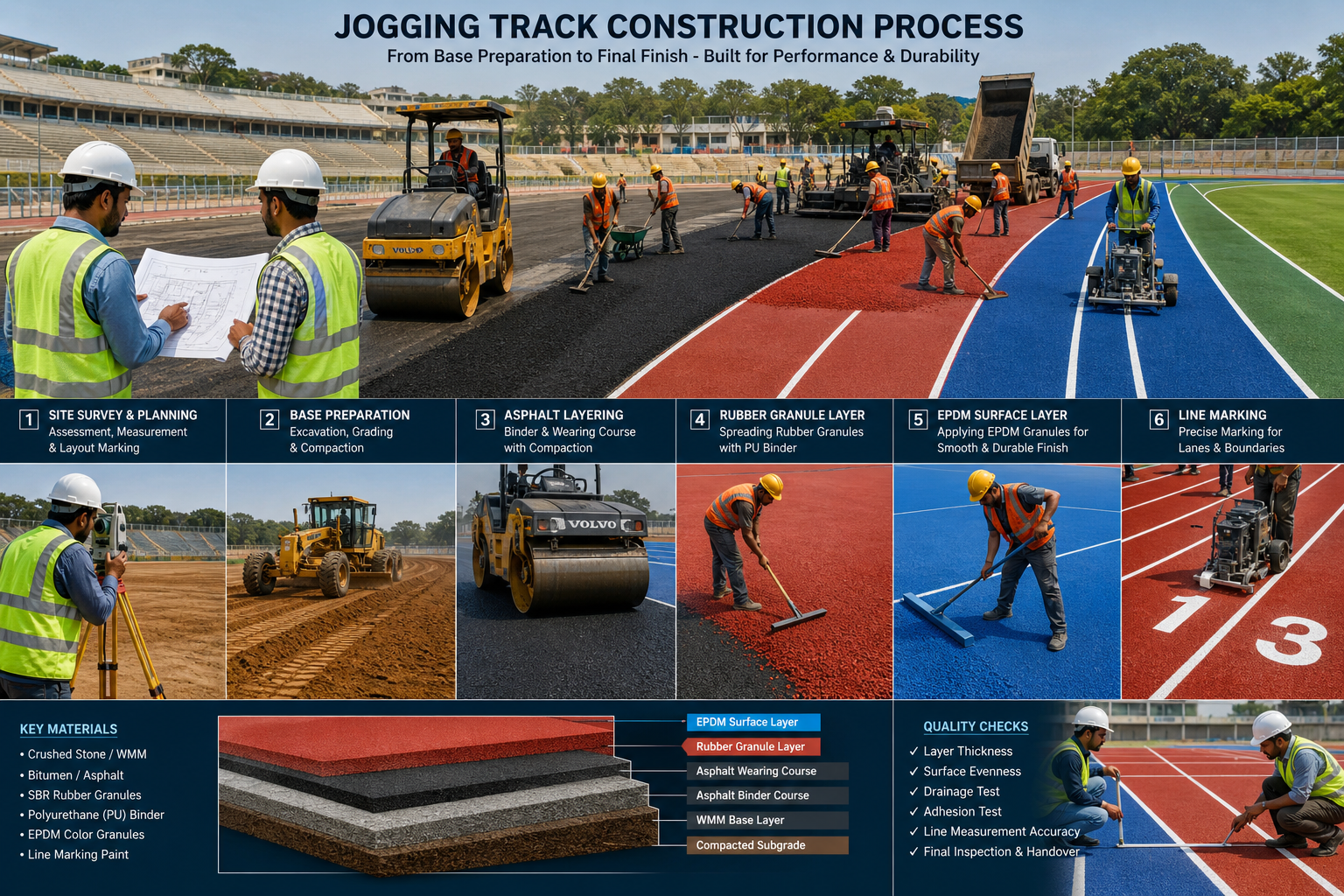
Step-by-Step Jogging Track Construction Process
Professional jogging track construction follows a planned sequence of civil engineering and sports flooring activities. The following methodology provides a general framework for developing EPDM, PU, and other synthetic jogging surfaces.
Step 1: Site Survey and Technical Assessment
The first stage is a detailed inspection of the proposed site. Engineers assess the available area, existing ground levels, soil condition, accessibility, drainage patterns, surrounding structures, utilities, vegetation, and environmental conditions.
- Site measurement
- Topographical survey
- Existing level assessment
- Soil evaluation
- Drainage assessment
- Access and logistics planning
Step 2: Jogging Track Layout and Design
After the site survey, the track alignment and layout are developed according to the available land and intended application. The design may include running lanes, walking areas, curves, access points, landscaping, drainage, lighting, seating, and other recreational elements.
- Track alignment
- Track width
- Curve design
- Cross slope
- Entry and exit points
- Drainage planning
Step 3: Site Clearing and Earthwork
The construction area is cleared of vegetation, roots, debris, unsuitable soil, loose materials, and other obstructions. Excavation, filling, grading, and leveling are then carried out to achieve the required formation level.
Step 4: Soil Preparation and Compaction
The prepared formation is compacted using suitable machinery to improve stability and reduce the risk of future settlement. Moisture content, compaction quality, and surface levels should be checked before the next construction layer is installed.
- Mechanical compaction
- Moisture control
- Level verification
- Density testing
- Formation stabilization
Step 5: Drainage System Development
A reliable drainage system is essential for outdoor jogging tracks, particularly in areas exposed to heavy seasonal rainfall. Surface gradients, side drains, catch pits, drainage pipes, and discharge arrangements should be designed according to the site.
- Surface runoff management
- Side drainage
- Catch pits
- Drainage pipes where required
- Rainwater discharge planning
Step 6: Formation Inspection
Before constructing the structural base, the formation level, compaction, slope, drainage provisions, dimensions, and surface condition are inspected. Any deficiencies should be corrected before proceeding.
Jogging Track Foundation Construction
The foundation is one of the most important components of a jogging track. A correctly designed and constructed base provides structural stability and creates a suitable platform for the synthetic sports flooring system.
Granular Sub-Base Installation
A graded granular sub-base may be installed over the prepared formation to distribute loads, improve stability, and support drainage. The aggregate should be properly graded, placed in controlled layers, moisture-conditioned where required, and mechanically compacted.
- Crushed aggregates
- Controlled layer placement
- Mechanical compaction
- Level verification
- Drainage consideration
WMM or Similar Base Layer
Depending on the engineering design, a wet mix macadam or comparable engineered base layer can be incorporated to provide additional structural strength and a uniform platform for the upper foundation.
Asphalt Base Construction
An asphalt base can provide a smooth and durable foundation for many outdoor rubber sports flooring systems. The asphalt surface should be properly compacted, leveled, and inspected before synthetic surfacing begins.
Concrete Base Construction
Reinforced concrete may be selected where a rigid structural platform is required. Proper reinforcement, joints, finishing, curing, level control, and moisture management are important before applying synthetic sports flooring.
EPDM Jogging Track Construction Procedure
EPDM rubber flooring is widely used for jogging tracks because it can provide a resilient, comfortable, slip-resistant, and visually attractive surface when correctly designed and installed.
Base Surface Preparation
The completed asphalt or concrete base must be clean, stable, sufficiently cured, and free from loose particles, dust, oil, standing water, and other contaminants. Surface levels and moisture conditions should be checked before applying the flooring system.
Primer Application
A compatible primer may be applied to improve bonding between the prepared base and subsequent sports flooring layers. Primer selection and application should follow the flooring manufacturer's technical requirements.
SBR Rubber Cushion Layer
A resilient SBR rubber layer can be installed using recycled rubber granules and a suitable polyurethane binder. This layer provides cushioning and helps reduce impact transmitted to users during walking and jogging.
EPDM Wearing Layer
The final EPDM surface is produced using EPDM rubber granules combined with a compatible polyurethane binder. The surface can be customized using different colours and patterns to achieve the desired appearance and project identity.
- UV-resistant EPDM granules
- Colour-stable surface
- Resilient construction
- Slip-resistant finish
- Seamless appearance
- Outdoor weather suitability
PU Jogging Track Construction
Polyurethane, commonly known as PU, is another synthetic sports flooring technology used for specialized running and jogging facilities. PU systems can be engineered in different configurations depending on the required cushioning, durability, performance, and site conditions.
A typical PU system may involve primer, elastic or cushion layers, polyurethane intermediate layers, and a wear-resistant finishing system. The exact composition and thickness should be determined according to the selected product system and technical specification.
Advantages of PU Jogging Track Systems
- Seamless surface appearance
- Excellent durability
- Good elastic performance
- Consistent surface finish
- Easy cleaning
- Suitable for specialist sports facilities
- Customizable surface systems
- Good abrasion resistance
- Professional appearance
- Long-term performance when properly maintained
Typical Jogging Track Construction Layers
A jogging track may consist of several structural and sports flooring layers. The exact build-up depends on the site, design requirements, soil condition, drainage strategy, selected flooring technology, and anticipated usage.
| Layer | Typical Role | Construction Consideration |
|---|---|---|
| Prepared Formation | Natural foundation | Grading and compaction |
| Granular Sub-Base | Structural support and drainage | Controlled placement and compaction |
| WMM / Engineered Base | Additional structural stability | Level and density control |
| Asphalt / Concrete Base | Sports flooring platform | Smoothness, level and curing |
| SBR Cushion Layer | Impact absorption | Uniform thickness and bonding |
| EPDM Wearing Layer | Final running surface | Uniform finish and adhesion |
The values shown above are general construction references rather than universal specifications. Actual thicknesses must be determined from project-specific engineering requirements.
Jogging Track Construction Materials
Selecting appropriate construction materials is essential for achieving reliable structural performance and a durable sports surface. The material specification should consider climate, usage, foundation conditions, drainage, expected traffic, and the selected synthetic flooring system.
Civil Construction Materials
- Approved soil and filling materials
- Crushed stone aggregates
- Granular sub-base materials
- WMM materials
- Asphalt materials
- Concrete and reinforcement steel
- Drainage pipes and fittings
- Kerbs and edge restraints
Sports Flooring Materials
- SBR rubber granules
- EPDM rubber granules
- Polyurethane binders
- Compatible primers
- PU sports flooring materials
- Protective coatings where specified
- Joint and edge treatment materials
- Sports surface marking materials
Equipment Used for Jogging Track Construction
Modern construction equipment helps achieve accurate levels, consistent compaction, efficient material placement, and high-quality sports flooring installation.
- Total station and surveying equipment
- Laser level equipment
- Excavators
- Motor graders
- Vibratory rollers
- Plate compactors
- Water tankers
- Asphalt paving equipment
- Concrete finishing equipment
- Rubber granule mixers
- PU mixing equipment
- Power trowels
- Surface screeds
- Thickness measurement tools
- Moisture testing equipment
- Quality inspection equipment
Jogging Track Drainage Requirements
Drainage is a critical consideration in outdoor jogging track construction. Rainwater should be efficiently removed from the surface and structural layers to minimize water accumulation and protect the foundation.
The drainage design should be developed according to local rainfall, site topography, soil permeability, surrounding landscape, discharge points, and project requirements. Surface slopes, drains, catch pits, channels, and underground drainage systems may be incorporated where appropriate.
Key Drainage Considerations
- Correct surface gradient
- Clear drainage channels
- Proper rainwater discharge
- Suitable catchment arrangements
- Protection against waterlogging
- Drainage pipe capacity
- Sub-base drainage
- Landscape runoff management
- Regular drain maintenance
- Inspection after heavy rainfall
Quality Control for Jogging Track Construction
Quality control should be implemented throughout the project rather than only at the final stage. Each construction layer should be inspected and approved before the next layer is installed.
Civil Work Inspection
- Site level verification
- Soil compaction checks
- Sub-base thickness checks
- Base course inspection
- Surface smoothness checks
- Drainage inspection
- Slope verification
Sports Flooring Inspection
- Material verification
- Primer application inspection
- Rubber layer thickness
- Binder mixing control
- Surface adhesion
- Colour consistency
- Final surface inspection
Safety Measures During Jogging Track Construction
Construction activities should be carried out under appropriate safety procedures to protect workers, visitors, nearby property, and equipment. The work area should remain restricted until the surface has been fully completed and is suitable for public use.
Worker Safety
- Safety helmets
- Safety footwear
- Protective gloves
- High-visibility clothing
- Eye protection where required
- Appropriate respiratory protection
- Equipment operating procedures
Site Safety
- Construction barricades
- Warning signage
- Controlled site access
- Safe material storage
- Electrical safety
- Equipment inspections
- Daily housekeeping
Common Jogging Track Construction Mistakes
Many surface problems can be traced to deficiencies in the underlying foundation or poor installation practices. Avoiding common construction mistakes is essential for long-term performance.
Foundation Mistakes
- Insufficient compaction
- Improper site grading
- Inadequate drainage
- Weak sub-base construction
- Incorrect base thickness
- Uneven surface preparation
- Insufficient curing
Flooring Mistakes
- Incorrect material proportions
- Uneven rubber layer thickness
- Poor surface preparation
- Inadequate bonding
- Installation during unsuitable conditions
- Insufficient curing time
- Skipping quality inspections
Jogging Track Maintenance Guidelines
Regular maintenance helps preserve the appearance, traction, cleanliness, drainage, and overall performance of a synthetic jogging track. Preventive inspection is generally more effective than waiting until major surface damage occurs.
Routine Maintenance
- Remove leaves and debris
- Keep the surface clean
- Wash where appropriate
- Inspect high-use areas
- Keep drains clear
- Remove standing water
- Prevent unauthorized vehicle access
Periodic Inspection
- Check surface wear
- Inspect edges and kerbs
- Examine drainage systems
- Check for localized damage
- Repair minor defects promptly
- Inspect surface bonding
- Maintain surrounding landscaping
Applications of Professional Jogging Tracks
Jogging tracks can be developed in a wide range of recreational, educational, residential, commercial, healthcare, and public infrastructure environments. The track design and flooring system can be customized according to available space and intended usage.
Parks and Public Spaces
- Municipal parks
- Public gardens
- Community parks
- Urban recreation areas
- Smart city projects
- Green spaces
Schools and Educational Campuses
- Schools
- Colleges
- Universities
- Sports academies
- Training institutes
- Educational campuses
Sports Facilities
- Sports complexes
- Stadiums
- Athletic training centres
- Fitness centres
- Sports clubs
- Training facilities
Residential Developments
- Residential societies
- Apartment complexes
- Townships
- Clubhouses
- Gated communities
- Housing projects
Healthcare and Wellness
- Hospitals
- Rehabilitation centres
- Wellness facilities
- Healthcare campuses
- Senior living facilities
- Fitness parks
Government and Institutional Projects
- Government recreation facilities
- Municipal projects
- Public sports facilities
- Institutional campuses
- Training centres
- Community infrastructure
Benefits of Professional Jogging Track Construction
Performance Benefits
- Comfortable running surface
- Improved impact absorption
- Consistent traction
- Weather-resistant construction
- Durable surface system
- Attractive appearance
Project Benefits
- Professional engineering
- Improved construction quality
- Reduced maintenance risk
- Customized design
- Long-term usability
- Complete turnkey execution
Why Choose Sports Facility India?
Sports Facility India provides professional sports flooring and jogging track construction solutions for projects throughout India. Our approach combines civil engineering, sports flooring technology, site-specific planning, quality materials, and systematic installation procedures.
Technical Expertise
Our project teams understand the civil foundation and synthetic sports flooring requirements involved in professional jogging track development.
Quality Materials
We work with EPDM granules, SBR rubber, polyurethane binders, asphalt, concrete, drainage materials, and other project-specific construction materials.
Turnkey Execution
Our services can cover site assessment, design, foundation preparation, drainage, synthetic flooring installation, finishing, inspection, and project handover.
Customized Solutions
Track dimensions, colours, surface systems, layouts, borders, and related features can be planned according to individual project requirements.
Quality Control
Construction stages are inspected to help maintain dimensional accuracy, drainage performance, surface quality, and installation consistency.
Pan-India Projects
We undertake jogging track and sports flooring projects for private, institutional, commercial, residential, and government clients across India.
Frequently Asked Questions About Jogging Track Construction
Plan Your Jogging Track Construction Project
Planning an EPDM jogging track, PU running surface, or synthetic jogging pathway? Our team can assist with site evaluation, track layout, foundation planning, drainage, sports flooring selection, installation, quality inspection, and project execution.
Whether the project is for a public park, school, university, residential society, sports complex, hospital, corporate campus, or government facility, a properly engineered construction approach can help deliver a safe, comfortable, and durable jogging environment.
Request a Free Technical Consultation Call +91-8009483311