
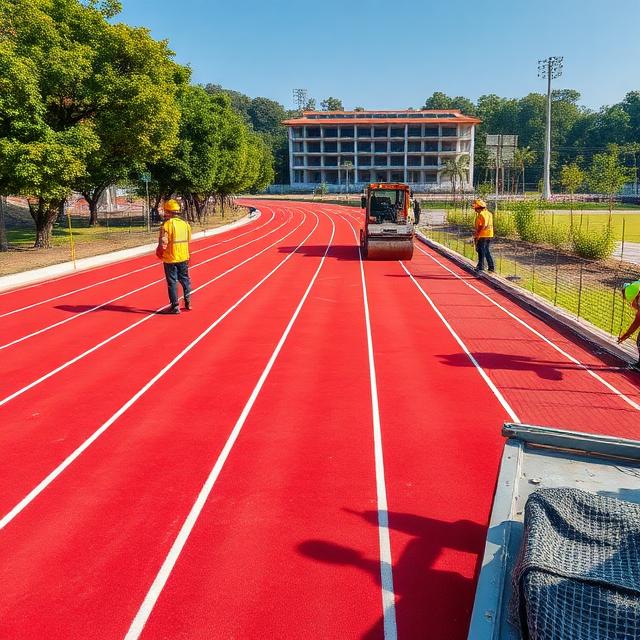
What Is Jogging Track Construction?
Jogging track construction involves developing a prepared walking and running surface using suitable civil foundation work and a specified sports flooring system. Unlike an ordinary paved pathway, a specialized jogging track can incorporate resilient surface materials designed to provide traction, comfort and impact management during regular use.
A typical project may include site clearing, earthwork, soil compaction, aggregate sub-base preparation, structural base construction and installation of the selected synthetic or rubberized surface. The exact construction layers depend on the existing ground condition, intended application, drainage requirements and flooring manufacturer's technical specifications.
Commonly considered materials include EPDM rubber granules, SBR rubber granules, polyurethane binders, primers, asphalt, concrete and graded aggregates. These materials serve different purposes within the overall construction system, from providing structural support to creating the final resilient wearing surface.
Successful jogging track development therefore requires proper planning of both the foundation and the finished flooring. When these elements are selected and installed correctly, the facility can provide a consistent surface for walking, jogging and recreational activities.
Complete Jogging Track Construction Services
Sports Facility offers integrated jogging track construction and flooring services, covering the major civil, technical and finishing requirements of a project. Each service is planned according to the site layout, intended usage and selected flooring specification.
Site Survey and Planning
We evaluate the available area, ground levels, soil conditions, drainage, site access and expected usage before preparing a suitable construction plan. This initial assessment helps identify the major requirements of the project.
Jogging Track Layout and Design
Track dimensions, width, alignment, curves, entry points, borders, surface colours and surrounding landscape features are planned according to available space and project requirements.
Foundation and Civil Construction
Ground preparation, excavation, grading, compaction, sub-base preparation and structural foundation work are carried out according to site conditions and engineering specifications.
EPDM Rubber Jogging Track
EPDM granules combined with compatible polyurethane binders can create a resilient, textured and colourful wearing surface for outdoor jogging and recreational tracks.
PU Synthetic Track Flooring
Polyurethane flooring systems provide seamless synthetic surfacing for projects requiring specific surface consistency, resilience and durability characteristics.
Drainage and Final Finishing
Drainage provisions, edge finishing, surface markings and other project-specific details are coordinated to complete the jogging track installation.
Types of Jogging Track Flooring Systems
Choosing the right jogging track flooring is an important part of the construction process. Different materials offer different surface characteristics, installation requirements and maintenance considerations. The appropriate system should be selected according to the project location, intended use, expected pedestrian traffic, environmental exposure and available budget.
1. EPDM Rubber Jogging Track Flooring
EPDM rubber flooring is widely used in outdoor recreational and fitness areas. The system generally uses coloured EPDM granules mixed with a suitable polyurethane binder and installed over a properly prepared base. It creates a resilient wearing surface that can be designed in different colours and patterns.
Suitable EPDM flooring grades can offer resistance to ultraviolet exposure and changing outdoor conditions. Surface texture and system thickness can be selected according to the intended application and manufacturer's recommendations.
- Available in multiple colour options
- Suitable grades for outdoor applications
- Textured surface for traction
- Resilient surface for walking and jogging
- Can be combined with an SBR cushion layer
- Suitable for various recreational facilities
2. SBR Rubber Cushion Layer
SBR rubber granules are commonly considered for the cushioning layer beneath an EPDM wearing surface. When combined with a compatible binder and installed according to the specified system, this layer contributes to the resilience and cushioning characteristics of the overall track.
The thickness and composition of the SBR layer can be adjusted according to the flooring design, expected usage and technical requirements.
- Provides a resilient cushioning layer
- Can improve surface comfort
- Compatible with selected EPDM systems
- Suitable for specified recreational applications
- Available in project-specific thicknesses
- Supports customized flooring system design
3. PU Synthetic Jogging Track Flooring
Polyurethane jogging track systems offer seamless synthetic surfacing for applications where a particular combination of durability, resilience and surface consistency is required. The complete PU system should be selected according to the intended use, base condition and manufacturer's installation specifications.
PU flooring can be considered for selected recreational and sports facilities that require a continuous synthetic surface with defined performance characteristics.
4. Rubberized Synthetic Jogging Track
Rubberized synthetic jogging tracks combine engineered foundation preparation with a resilient rubber surface. Depending on the selected system, they may incorporate SBR cushioning, EPDM wearing layers and suitable binding materials.
These systems can be considered for public parks, residential developments, institutional campuses, fitness zones and other recreational running areas.
Step-by-Step Jogging Track Construction Process
Professional jogging track installation involves a planned sequence of civil construction and sports flooring activities. Each stage contributes to the stability, drainage, surface quality and overall usability of the finished track. The exact construction sequence may vary according to site conditions and the selected flooring system.
1. Site Inspection and Measurement
The site is inspected for available dimensions, soil condition, existing ground levels, accessibility, drainage and other construction considerations. This information helps determine the initial project requirements.
2. Track Layout Planning
Track alignment, width, curves, entry points, borders and surrounding features are planned according to the available land and intended use.
3. Site Clearing and Earthwork
Vegetation, debris and unsuitable materials are removed. Excavation, filling, grading and leveling are performed wherever required to prepare the construction area.
4. Ground Preparation and Compaction
The prepared formation is compacted to create a stable platform and help minimize settlement-related problems in the completed track.
5. Drainage Development
Surface slopes, drainage channels, catch pits and other water-management provisions are developed according to the site layout and rainfall requirements.
6. Sub-Base Preparation
Suitable graded aggregates are placed and compacted to create the required structural and drainage platform beneath the selected track system.
7. Structural Base Construction
An asphalt, concrete or other suitable structural base may be installed according to the selected track system and engineering requirements.
8. Base Surface Preparation
The prepared base is cleaned and checked for levels, surface condition and suitability before the sports flooring system is applied.
9. Primer and Binder Application
Compatible primers and binders are applied where required to support adhesion between the foundation and the synthetic flooring layers.
10. Cushion Layer Installation
An SBR rubber or another suitable resilient layer may be installed when additional cushioning is included in the approved flooring specification.
11. EPDM or PU Wearing Surface
The final wearing surface is installed using the selected EPDM, PU or other synthetic flooring technology, following the manufacturer's recommended application process.
12. Final Inspection and Handover
The completed jogging track is inspected for surface uniformity, drainage, edges, markings, finishing and overall workmanship before handover.
Materials Used in Jogging Track Construction
Material selection plays an important role in the structural stability, comfort, appearance and service performance of a jogging track. The materials used depend on the site condition, foundation design and selected flooring specification.
- Graded aggregates
- Granular Sub-Base (GSB)
- Wet Mix Macadam (WMM)
- Asphalt and bituminous materials
- Concrete
- SBR rubber granules
- EPDM rubber granules
- Polyurethane binders
- Compatible primers
- Protective coatings where specified
- Edge restraint materials
- Sports line-marking materials
The exact combination, layer thickness and installation method should be finalized according to engineering requirements, site conditions and the technical specifications of the selected flooring manufacturer.
Benefits of Professional Jogging Track Construction
A properly planned and professionally installed jogging track can improve the functionality of a recreational facility while providing a dedicated space for everyday fitness activities. The benefits depend on the selected flooring system, construction quality and maintenance practices.
- Improved Running Comfort: Suitable resilient flooring can provide a more comfortable surface for repeated walking and jogging activities.
- Impact Management: Specified rubber flooring systems can help reduce the harshness associated with conventional hard surfaces.
- Surface Traction: Appropriately selected surface textures help provide grip during normal use.
- Outdoor Suitability: Suitable EPDM systems can be selected for exposure to sunlight and changing outdoor conditions.
- Consistent Surface Quality: Proper foundation preparation and professional installation help achieve a more uniform finished surface.
- Attractive Appearance: Different colours, borders and design combinations can improve the appearance of recreational areas.
- Customized Layout: Track dimensions, surface colours and markings can be adapted to the available space.
- Better Water Management: Suitable grading and drainage arrangements help reduce water accumulation on outdoor tracks.
- Maintenance Planning: A suitable flooring system and regular inspections can help preserve surface condition.
- Reduced Premature Wear: Appropriate foundation construction and installation practices can help minimize avoidable surface problems.
Applications of Jogging Track Construction
Jogging tracks can be developed for a wide range of public, residential, educational, commercial, institutional and sports facilities. Track dimensions, layout and flooring specifications can be customized according to the available space and expected usage.
Parks and Public Recreation Areas
- Municipal parks
- Public gardens
- Community parks
- Recreation zones
- Urban development projects
Schools and Educational Campuses
- Schools
- Colleges
- Universities
- Sports academies
- Training campuses
Sports and Fitness Facilities
- Sports complexes
- Stadiums
- Fitness centres
- Sports clubs
- Training facilities
Residential Developments
- Residential societies
- Apartment complexes
- Townships
- Gated communities
- Clubhouses
Healthcare and Wellness Facilities
- Hospitals
- Wellness centres
- Rehabilitation facilities
- Therapy gardens
- Healthcare campuses
Corporate and Institutional Facilities
- Corporate campuses
- Hotels and resorts
- Government facilities
- Institutional campuses
- Employee recreation areas
Jogging Track Design and Planning
Every jogging track project has different space requirements, ground conditions and usage objectives. A practical design should consider the available area, expected pedestrian movement, selected flooring system, drainage and the relationship between the track and surrounding facilities.
Important Design Considerations
- Available land area
- Track length and width
- Curve geometry and alignment
- Surface slope and ground levels
- Drainage requirements
- Entry and exit points
- Pedestrian circulation
- Expected daily usage
- Landscape integration
Optional Jogging Track Features
- Lane and directional markings
- Multiple surface colour combinations
- Decorative borders
- Facility logos
- Distance markers
- Fitness stations
- Seating areas
- Landscape features
- Customized track layouts
Jogging Track Construction Cost
The cost of jogging track construction depends on the overall project scope, existing ground condition, civil foundation requirements and selected sports flooring system. Since each site has different technical and installation requirements, an accurate estimate should be prepared after reviewing the project details.
| Cost Factor | How It Affects the Project |
|---|---|
| Track Area | Larger track areas generally require more foundation materials, flooring materials and installation work. |
| Existing Ground Condition | Weak or uneven ground may require additional excavation, filling, stabilization or base preparation. |
| Flooring System | EPDM, SBR cushioning, PU and other synthetic systems have different material and installation requirements. |
| Surface Thickness | The specified thickness and number of flooring layers influence material consumption and installation costs. |
| Drainage Work | New drainage channels, catch pits and water-management arrangements can add to the civil construction scope. |
| Site Accessibility | Restricted access can affect material transportation, equipment movement and project logistics. |
| Design and Markings | Customized colours, borders, logos and distance markings may influence finishing requirements. |
For an accurate quotation, the project should be evaluated based on track dimensions, existing site conditions, required civil work, selected flooring material and installation specifications. Contact Sports Facility to discuss your jogging track construction requirements and request a customized project estimate.
Quality Control in Jogging Track Construction
Quality control should be maintained throughout the construction process rather than being limited to the final inspection. Each major construction layer should be checked before the next stage begins. This helps identify potential issues with levels, compaction, drainage, adhesion and surface finishing at an early stage.
- Site level verification
- Ground preparation inspection
- Soil compaction checks
- Sub-base thickness verification
- Structural base inspection
- Drainage assessment
- Surface moisture inspection
- Rubber layer thickness checks
- Binder and adhesion inspection
- EPDM surface uniformity
- Edge finishing inspection
- Final workmanship assessment
Jogging Track Maintenance and Care
Regular maintenance helps preserve the appearance, surface condition and usability of a jogging track. Maintenance requirements vary according to the selected flooring material, installation system, daily usage and environmental exposure.
Routine Maintenance
- Remove leaves, dust and loose debris regularly.
- Clean the surface using suitable methods.
- Keep drainage channels and outlets clear.
- Prevent prolonged water accumulation.
- Inspect frequently used areas.
- Restrict unauthorized vehicle movement on the track.
Periodic Inspection
- Check the overall surface condition.
- Inspect edges and borders.
- Review drainage performance.
- Look for cracks, loose granules or localized damage.
- Inspect bonded areas and joints where applicable.
- Arrange timely repairs whenever required.
Following the flooring manufacturer's cleaning and maintenance recommendations can help maintain the intended performance and appearance of the jogging track.
Why Choose Sports Facility for Jogging Track Construction?
Sports Facility provides jogging track construction and sports flooring solutions for a variety of recreational, institutional and sports applications. Our approach focuses on project-specific planning, suitable material selection, systematic installation and attention to important construction details.
Project Planning and Assessment
Our project approach begins with evaluating site dimensions, ground conditions, drainage and intended usage to identify suitable construction requirements.
Suitable Flooring Materials
We offer flooring options that can include EPDM rubber granules, SBR cushioning, polyurethane systems and supporting construction materials according to project specifications.
Integrated Construction Support
The project scope can include site evaluation, layout planning, foundation preparation, flooring installation, drainage coordination, finishing and handover.
Customized Track Designs
Track dimensions, surface systems, colours, borders and markings can be adapted to the requirements of each project and available space.
Construction Quality Checks
Construction stages can be inspected for levels, compaction, drainage, flooring installation and finishing quality.
Project Services Across India
We undertake jogging track and sports flooring projects across India, subject to project location, scope and technical requirements.