
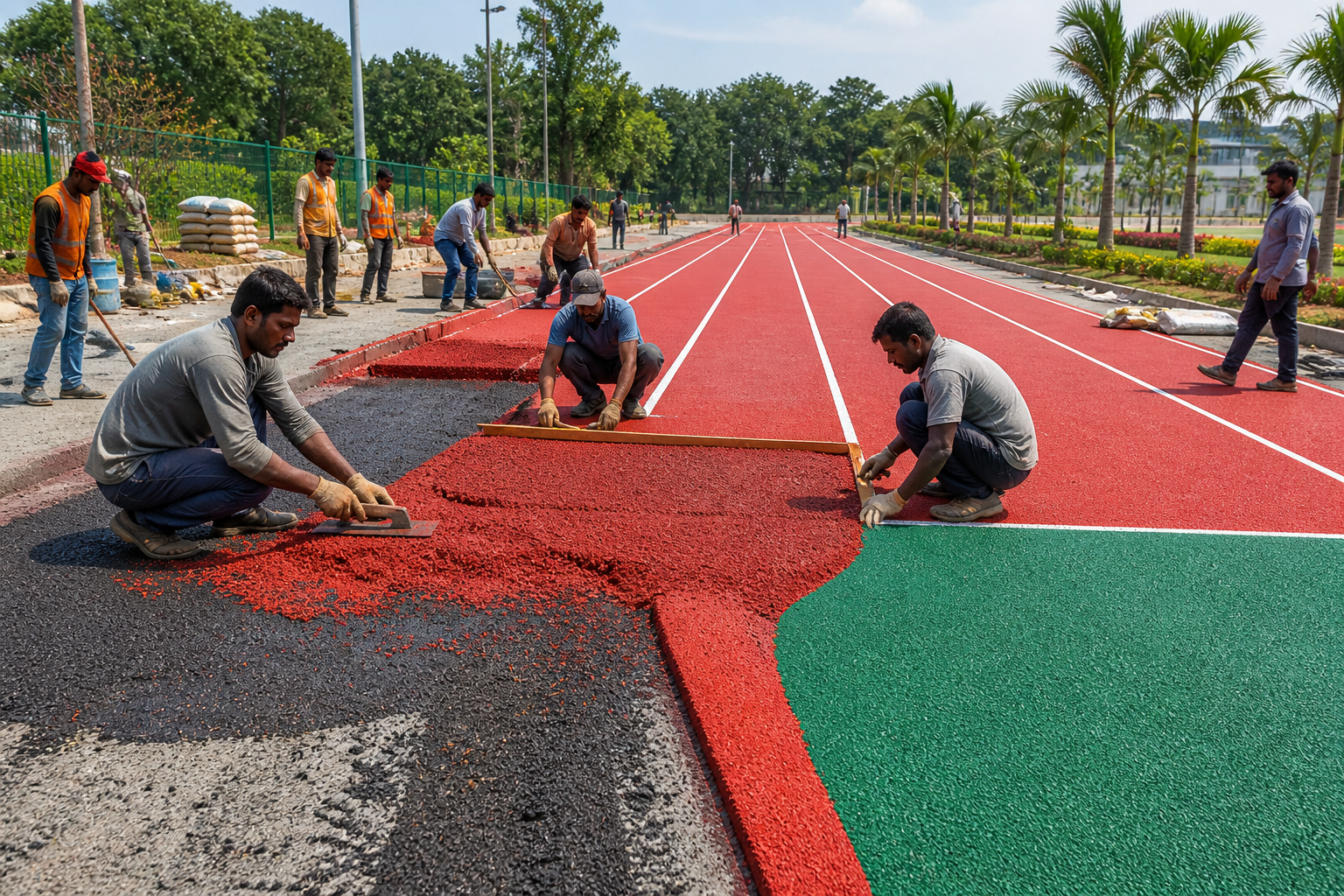
Why Is Jogging Track Flooring Important?
Jogging track flooring is more than just the visible top surface. It forms part of a complete construction system that includes the prepared foundation, sub-base, drainage arrangements, cushioning layers and final synthetic finish. Each component contributes to the usability and performance of the completed track.
Running and Walking Comfort
Resilient synthetic flooring can provide a more comfortable underfoot experience compared with conventional hard paving surfaces. The selected material and system thickness influence the feel of the finished track.
Impact Management
Cushioned rubber flooring systems can help absorb a portion of the impact generated during repeated walking, jogging and running activities.
Surface Traction
Appropriate surface textures help provide grip for everyday fitness activities. The finish should be selected according to the intended application and outdoor conditions.
Outdoor Suitability
Suitable synthetic flooring systems can be specified for exposure to sunlight, rain, moisture and changing outdoor conditions.
Visual Appeal
Different colours, decorative borders, distance markers, lane markings and logos can be incorporated into many jogging track flooring systems.
Maintenance and Durability
Proper foundation preparation, suitable materials and professional installation support the durability of the flooring. Routine cleaning, drainage care and inspections help maintain the surface over time.
Types of Jogging Track Flooring
Different jogging track flooring materials are available for recreational pathways, public parks, educational institutions and professional sports facilities. The selection depends on the expected usage, performance requirements, site conditions, maintenance needs and project budget.
1. EPDM Jogging Track Flooring
EPDM jogging track flooring is a popular synthetic rubber surfacing option for outdoor walking, jogging and recreational tracks. EPDM stands for Ethylene Propylene Diene Monomer. The material is supplied in granule form and combined with a suitable polyurethane binder to create a resilient rubber surface.
EPDM flooring is available in different colours and can be installed over an appropriately prepared base. Depending on the product specification and installation method, the finished surface can provide resilience, traction and resistance to outdoor exposure.
Features of EPDM Flooring
- Resilient synthetic rubber surface
- Impact-absorbing flooring options
- Textured surface finish
- Multiple colour combinations
- Outdoor flooring applications
- UV-resistant material options
- Suitable for recreational pathways and tracks
Common Applications
- Public parks and gardens
- Residential societies
- Schools and colleges
- Community recreation areas
- Outdoor fitness zones
- Wellness facilities
2. PU Jogging Track Flooring
Polyurethane (PU) jogging track flooring is a synthetic sports surface used where resilience, surface consistency, wear resistance and a seamless finish are important. PU flooring systems can be developed using different layers according to the project specification.
These systems are commonly considered for athletic facilities, sports academies, training centres, universities and stadium environments. The exact construction depends on the intended use and the selected PU system.
Features of PU Flooring
- Synthetic polyurethane surface
- Resilient flooring construction
- Consistent surface finish
- Wear-resistant system options
- Customizable construction layers
- Suitable for selected sports applications
3. SBR Rubber Jogging Track Flooring
SBR rubber is commonly used as a cushioning layer in multi-layer jogging track flooring systems. It can be combined with a polyurethane binder and installed beneath an EPDM wearing surface to provide additional resilience and cushioning.
The thickness and specification of the SBR layer depend on the flooring design, intended usage and requirements of the project.
Features of SBR Rubber Flooring
- Resilient rubber cushion layer
- Can be combined with EPDM granules
- Flexible multi-layer system design
- Suitable for repeated recreational use
- Available in different specifications
4. Acrylic Jogging Track Flooring
Acrylic jogging track flooring is a coated surface installed over a suitable asphalt or concrete base. It can be considered for schools, parks, recreational pathways and projects where a coloured coated finish is preferred.
Acrylic systems are available in different colours and texture options. Proper substrate preparation is important for the performance of the finished coating.
Features of Acrylic Flooring
- Durable coated surface options
- Colour customization
- Textured finish options
- Suitable for recreational applications
- Routine cleaning requirements
- Installation over suitable existing bases
5. Sandwich System Jogging Track Flooring
A sandwich system is a multi-layer synthetic sports flooring solution designed to combine cushioning and surface durability. A typical configuration may include an SBR rubber layer, polyurethane binder and EPDM finishing surface. The actual layer arrangement can vary according to the selected system.
Suitable Applications
- Sports academies
- Universities
- Athletic training centres
- Sports complexes
- High-use fitness facilities
6. Synthetic Athletics Track Flooring
Synthetic athletics track flooring is designed for dedicated athletic environments where surface consistency, traction, resilience and durability are important. Advanced polyurethane and rubber systems can be selected according to the technical requirements of the facility.
These flooring systems are generally considered for stadiums, professional sports infrastructure, training centres and dedicated athletics facilities. Specific athletic performance requirements should be confirmed during project planning.
Jogging Track Flooring Comparison
The following table provides a general comparison of common jogging track flooring systems. Actual performance depends on the product, construction method, substrate, thickness, climate and maintenance.
| Flooring System | Surface Characteristics | Typical Applications |
|---|---|---|
| EPDM Rubber | Resilient, textured and available in multiple colours | Parks, communities, schools and recreational tracks |
| PU System | Polyurethane-based synthetic surface | Sports academies, stadiums and training facilities |
| SBR + EPDM | Multi-layer cushioned rubber system | Recreational and sports tracks |
| Acrylic | Coloured coated surface | Schools, parks and recreational pathways |
| Sandwich System | Layered rubber and synthetic surface construction | Sports complexes and athletic training facilities |
Jogging Track Flooring Installation Process
Professional jogging track flooring installation requires proper planning, base preparation and application of the specified flooring materials. The construction sequence varies depending on the selected system and existing site conditions.
1. Site Survey and Evaluation
The project begins with an inspection of the site. Important considerations include track dimensions, soil condition, existing pavement, surface levels, drainage, accessibility and intended usage.
2. Track Layout Planning
The proposed track alignment, width, curves, borders, access points and flooring design are planned according to the available area and project needs.
3. Ground Preparation
Unsuitable soil, vegetation, debris and loose materials are removed. Excavation, grading, filling and compaction are carried out wherever required to prepare the site.
4. Drainage Development
Drainage channels, catch pits, outlets, surface slopes and other water-management provisions are planned according to site conditions.
5. Sub-Base Construction
Suitable aggregates are placed and compacted to create a stable structural platform beneath the jogging track flooring.
6. Asphalt or Concrete Base
Where required, an asphalt or concrete base is constructed and prepared to provide a suitable foundation for the synthetic surface.
7. Surface Preparation
The base is checked for level, cleanliness, cracks, moisture and visible defects before the selected flooring system is installed.
8. Cushion Layer Installation
For cushioned systems, SBR rubber and a compatible polyurethane binder can be installed according to the specified flooring design.
9. EPDM, PU or Acrylic Wearing Layer
The specified EPDM rubber, polyurethane, acrylic or other synthetic wearing surface is installed using the appropriate application technique.
10. Line Marking and Finishing
Once the flooring has cured as required, approved lane markings, distance indicators, borders, logos and directional details can be applied.
11. Final Quality Inspection
The completed track is inspected for surface consistency, appearance, drainage, thickness, adhesion, markings, edges and overall workmanship.
Jogging Track Flooring Construction Layers
A jogging track is normally developed as a complete layered system rather than a single flooring surface. The exact layers and thicknesses depend on the flooring technology, site conditions and engineering requirements.
Typical Foundation Layers
- Prepared and compacted subgrade
- Granular sub-base
- Drainage provisions where required
- Asphalt or concrete structural base
- Leveling and surface preparation
Typical Synthetic Flooring Layers
- Compatible primer where specified
- SBR rubber cushion layer
- Polyurethane binder
- EPDM rubber wearing surface
- Protective or finishing layer where specified
- Sports line markings
Not every jogging track uses all these layers. The final specification should be selected according to the chosen flooring system and the condition of the foundation.
Benefits of Professional Jogging Track Flooring
Resilient Surface Options
Cushioned rubber flooring systems can provide a resilient surface for regular walking, jogging and running activities.
Improved Underfoot Comfort
Selected synthetic flooring systems offer a different underfoot feel from conventional hard paving, making them suitable for various recreational applications.
Suitable Surface Traction
Appropriate flooring textures can provide grip for regular outdoor fitness activities.
Outdoor Flooring Options
Suitable materials can be specified for outdoor environments exposed to sunlight, rain and moisture.
Customizable Appearance
Different colours, borders, logos, markings and decorative designs can be incorporated into the track layout.
Long-Term Surface Management
Quality materials, suitable foundation preparation and correct installation support overall surface performance. Regular maintenance helps preserve the finished flooring.
Applications of Jogging Track Flooring
Jogging track flooring can be installed in recreational, residential, educational, institutional, commercial and professional sports environments.
Parks and Gardens
- Public parks
- Municipal gardens
- Community parks
- Urban recreation areas
- Outdoor fitness zones
Educational Institutions
- Schools
- Colleges
- Universities
- Sports academies
- Training campuses
Sports Facilities
- Sports complexes
- Stadiums
- Athletic facilities
- Training centres
- Sports clubs
Residential Projects
- Housing societies
- Townships
- Gated communities
- Apartment complexes
- Residential clubhouses
Healthcare and Wellness Facilities
- Hospitals
- Wellness centres
- Rehabilitation facilities
- Therapy gardens
- Healthcare campuses
Corporate and Institutional Projects
- Corporate campuses
- Hotels and resorts
- Government facilities
- Institutional campuses
- Employee recreation areas
Jogging Track Flooring Design and Planning
Effective track design begins with understanding how the facility will be used. A recreational walking track may require a different surface specification from an athletic training facility. Site dimensions, pedestrian circulation, drainage, landscape integration and maintenance access should be considered during planning.
Important Design Factors
- Available land area
- Track length and width
- Expected daily usage
- Track curves and alignment
- Surface slope and drainage
- Existing foundation condition
- Flooring system and thickness
- Colour and design preferences
- Maintenance requirements
- Overall project budget
Optional Track Features
- Lane markings
- Distance markers
- Directional arrows
- Facility logos
- Decorative borders
- Multiple colour combinations
- Fitness stations
- Seating areas
- Landscape integration
Drainage for Outdoor Jogging Track Flooring
Drainage is an important part of outdoor jogging track construction. Inadequate water management can lead to standing water and may affect the underlying base and flooring system.
The drainage design should consider site gradients, natural water flow, surface slopes, drainage channels, catch pits, outlets and surrounding landscaping. Appropriate water management helps protect the track and supports its usability after rainfall.
Jogging Track Flooring Cost in India
The cost of jogging track flooring varies from project to project. There is no single price applicable to every installation. The overall quotation depends on the selected flooring technology, project area, existing surface condition, foundation work, drainage requirements, thickness, customization and installation conditions.
Factors Affecting Jogging Track Flooring Price
1. Flooring Material
EPDM rubber, SBR rubber, PU, acrylic and multi-layer systems have different material and installation requirements.
2. Track Area
The total length, width and surface area determine the quantity of flooring materials and installation work required.
3. Foundation Condition
Existing ground or pavement conditions may require additional excavation, repair, preparation or stabilization.
4. Flooring Thickness
Different flooring systems use different layer thicknesses. Multi-layer and thicker systems generally require additional materials and installation work.
5. Drainage Requirements
New drainage channels, catch pits, surface slopes and outlets can affect the civil construction scope.
6. Customization
Special colours, logos, borders, lane markings and decorative designs can influence the finishing requirements.
7. Site Accessibility
Restricted site access can influence equipment movement, transportation, labour and installation logistics.
For an accurate jogging track flooring cost in India, a project assessment should be carried out before finalizing the flooring specification and quotation.
Jogging Track Flooring Maintenance
Regular maintenance helps protect the appearance, surface texture, traction and overall usability of jogging track flooring. The exact maintenance procedure depends on the flooring material and manufacturer's recommendations.
Routine Maintenance
- Remove leaves, dust and debris regularly.
- Clean the surface using suitable methods.
- Keep drainage channels and outlets clear.
- Prevent prolonged water accumulation.
- Inspect high-use areas regularly.
- Restrict unauthorized vehicle movement.
Periodic Inspection
- Check the surface for visible damage.
- Inspect edges and borders.
- Check drainage performance.
- Inspect areas showing excessive wear.
- Repair localized damage promptly.
- Check line markings and decorative finishes.
Jogging Track Resurfacing and Renovation
Existing jogging tracks may develop surface wear, cracks, fading, drainage problems or localized damage over time. Depending on the condition of the existing system, repair, resurfacing, partial replacement or complete renovation may be considered.
Jogging Track Renovation Services
- Existing surface inspection
- Localized surface repair
- Crack and base assessment
- Old surface removal where required
- Substrate preparation
- New EPDM surface installation
- PU resurfacing systems
- Line marking restoration
- Drainage improvement
- Complete track renovation
Quality Control for Jogging Track Flooring Installation
Quality checks at different stages of construction help maintain the consistency and performance of the completed sports surface. Both foundation work and the finished flooring should be inspected.
Foundation and Civil Work Checks
- Site level verification
- Subgrade inspection
- Compaction assessment
- Sub-base thickness checks
- Base surface inspection
- Drainage verification
Flooring Installation Checks
- Surface moisture checks
- Rubber layer thickness inspection
- Binder and adhesion checks
- Surface uniformity inspection
- Edge finishing assessment
- Final workmanship inspection
Why Choose Sports Facility for Jogging Track Flooring?
Sports Facility provides sports flooring and jogging track solutions with project-specific planning, material selection, installation and finishing coordination. Our services can be planned according to the intended application, available site area and project requirements.
Multiple Flooring Systems
We offer EPDM rubber, SBR cushion, PU, acrylic, sandwich and synthetic sports flooring options according to project specifications.
Project-Specific Planning
Track layouts and flooring specifications can be planned after considering site dimensions, foundation conditions, drainage and intended usage.
Installation and Finishing Support
The project scope can include base preparation, drainage development, flooring installation, line marking, finishing and handover.
Customized Track Designs
Colours, borders, markings, logos and distance indicators can be incorporated according to the project design.
Quality Inspection
Construction stages can be checked for surface preparation, drainage, flooring consistency, finishing and overall workmanship.
Project Services Across India
Sports Facility undertakes jogging track flooring and sports surfacing projects across India based on project location, size, application and technical scope.
Frequently Asked Questions About Jogging Track Flooring
1. Which flooring is suitable for a jogging track?
EPDM rubber, PU, SBR rubber cushion, acrylic and other synthetic flooring systems can be used for jogging tracks. The appropriate option depends on usage, location, base condition, climate, performance requirements and project budget.
2. What is EPDM jogging track flooring?
EPDM jogging track flooring is a synthetic rubber surface made from EPDM granules bonded with a suitable polyurethane resin. It is commonly used for outdoor walking, jogging and recreational tracks.
3. What is the cost of jogging track flooring?
Jogging track flooring cost depends on the selected flooring system, track area, foundation condition, surface thickness, drainage requirements, site accessibility, customization and installation scope.
4. Is EPDM flooring suitable for outdoor jogging tracks?
Yes. Suitable EPDM rubber flooring systems are commonly used outdoors because they can provide resilience, traction and resistance to outdoor exposure.
5. Can jogging track flooring be installed over an existing surface?
Existing surfaces can sometimes be resurfaced or overlaid. Their structural condition, level, cracks, moisture and drainage should be evaluated before installation.
6. How long does jogging track flooring last?
The service life depends on the material, installation quality, usage intensity, weather exposure, drainage and maintenance. There is no single service-life period applicable to every project.
7. Can jogging track flooring colours be customized?
Yes. Many synthetic flooring systems can be customized with different colours, borders, markings, logos, distance indicators and decorative patterns.
8. Does jogging track flooring require maintenance?
Yes. Regular cleaning, debris removal, drainage inspection, surface checks and timely repairs help maintain the appearance and performance of jogging track flooring.
9. What is the difference between EPDM and PU jogging track flooring?
EPDM flooring uses synthetic rubber granules to create a resilient and colourful surface, while PU flooring is a polyurethane-based sports surfacing system. The appropriate choice depends on the application, performance requirements, site conditions and project specification.
10. Can an old jogging track be renovated?
Yes. An existing track can be inspected to determine whether localized repairs, resurfacing, partial replacement or complete renovation is appropriate for its condition.
Professional Jogging Track Flooring Solutions in India
Sports Facility provides complete jogging track flooring solutions in India for recreational, residential, educational, institutional, commercial and professional sports facilities. Our flooring options include EPDM rubber, SBR cushion systems, polyurethane flooring, acrylic coatings, sandwich systems and synthetic athletics surfaces.
Our project services can include site inspection, track layout planning, foundation preparation, drainage development, sub-base construction, asphalt or concrete base preparation, rubber cushion installation, EPDM or PU surface installation, line marking, finishing, quality inspection, resurfacing and renovation.
Whether you are developing a new jogging track for a public park, school, residential society, sports academy, stadium, corporate campus, healthcare facility or recreational project, Sports Facility can help you select a suitable flooring system based on the intended application and site conditions.
Contact our team to discuss your project requirements, flooring options, site evaluation and customized quotation.