

What Is Running Track Construction?
Running track construction is the process of developing a specially designed athletic surface over a properly engineered foundation. It involves site inspection, soil testing, excavation, ground compaction, drainage installation, sub-base preparation, asphalt or concrete base construction, synthetic surfacing, and lane marking.
A professionally constructed running track provides a consistent surface for running, jogging, athletic training, and sports competitions. The foundation and surface system must be designed according to the intended application, local site conditions, drainage requirements, and relevant athletics specifications.
Types of Running Track Flooring Systems
Choosing the appropriate running track flooring system is one of the most important decisions during sports track development. PU, EPDM sandwich, and prefabricated systems are commonly considered for athletic facilities.
1. Polyurethane (PU) Running Track Construction
Polyurethane running tracks are widely used in athletic facilities because they can provide a consistent synthetic surface with performance characteristics suited to running and training. Different PU systems are available depending on the required specification and project application.
- Multi-layer polyurethane synthetic surface options
- Designed for controlled cushioning and energy response
- Textured and slip-resistant surface finishes
- Suitable formulations for outdoor weather exposure
- Options for training and competition-oriented facilities
- Available in different colours and system configurations
2. EPDM Sandwich Running Track Construction
EPDM sandwich running tracks generally combine an SBR rubber cushioning layer with a polyurethane binder and an EPDM granule wearing surface. This system is commonly considered for schools, colleges, sports academies, and training facilities.
- SBR rubber base layer with polyurethane binder
- EPDM granule wearing layer
- Comfortable cushioning characteristics
- Colour options for customised sports facilities
- Designed for regular outdoor use
- Maintenance requirements depend on installation and usage
3. Prefabricated Running Track Systems
Prefabricated synthetic running tracks use factory-manufactured rubber sheets or rolls installed over a properly prepared base. These systems are manufactured under controlled production conditions and installed using specified adhesives and jointing procedures.
- Factory-manufactured rubber surface materials
- Consistent product thickness and surface characteristics
- Installation using approved bonding methods
- Defined product performance specifications
- Suitable for selected professional athletic facilities
- Installation time depends on site and system requirements
Detailed Running Track Construction Process
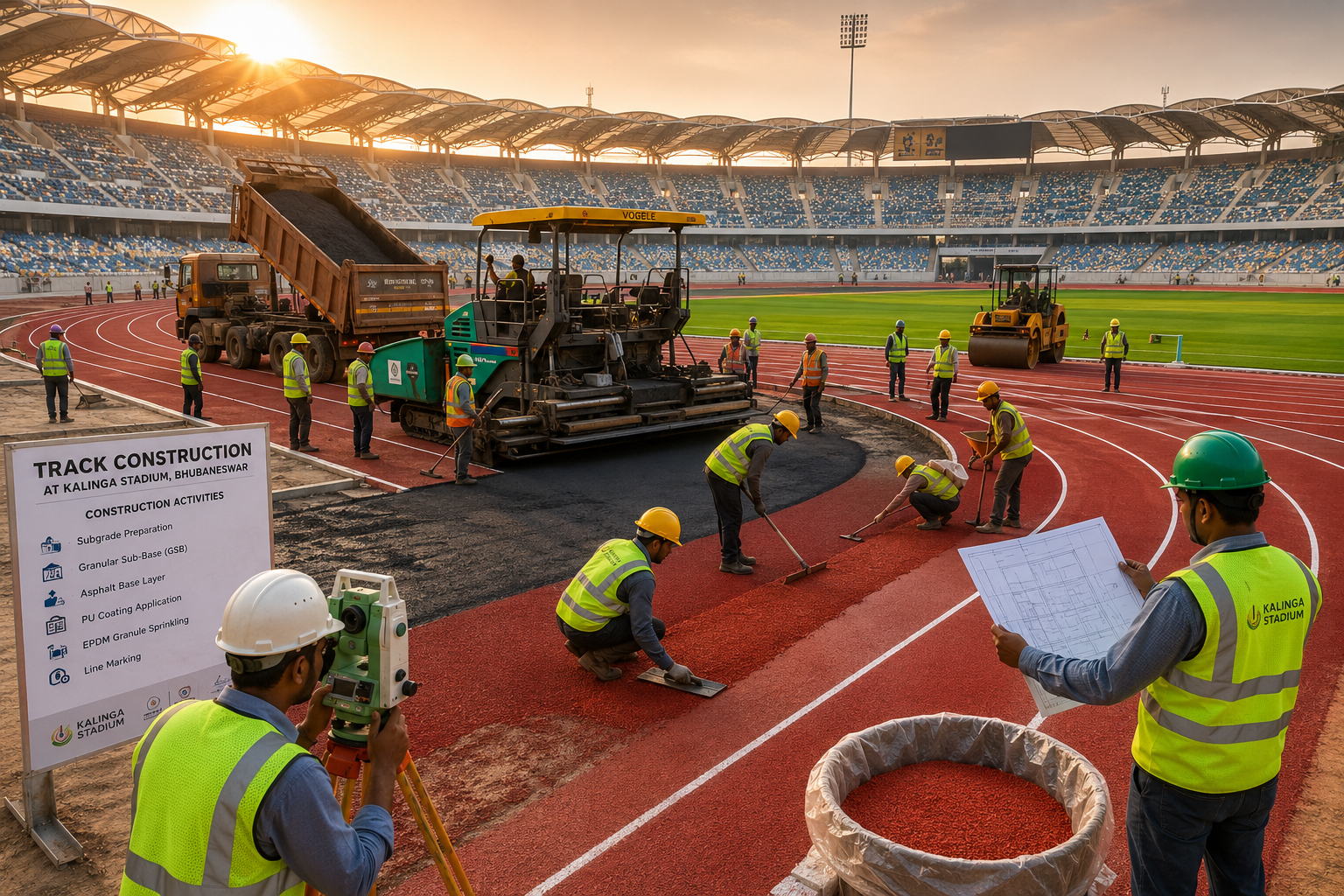
Running track installation involves several stages of civil engineering and synthetic flooring work. Every stage must be completed carefully because the quality of the foundation directly affects the performance and durability of the finished track.
1. Site Inspection and Soil Testing
The process begins with a detailed site inspection and assessment of existing ground conditions. Soil investigation helps determine the suitability of the site, ground stability, drainage requirements, excavation depth, and foundation design.
2. Excavation and Ground Preparation
The existing soil is excavated according to the approved project design. The formation level is then graded and compacted using suitable machinery to create a stable foundation for the running track structure.
3. Drainage System Installation
An effective drainage system is essential for outdoor running tracks. Drainage channels, collection points, and suitable surface gradients are planned to manage rainwater and reduce water accumulation. The drainage design depends on site levels, soil conditions, rainfall, and the overall facility layout.
4. Granular Sub-Base Construction
A properly graded granular sub-base is placed and compacted over the prepared formation. This layer provides structural support, helps distribute loads, and creates a stable platform for the upper base construction.
5. Asphalt or Concrete Base Construction
An asphalt or concrete base is constructed according to the selected track system and engineering design. The base must provide suitable levels, smoothness, stability, and drainage characteristics before synthetic surfacing begins.
6. Primer and Synthetic Surface Application
Once the base has been inspected and approved, the specified primer and synthetic materials are applied. Depending on the chosen system, the installation may include polyurethane binders, SBR rubber granules, EPDM granules, or prefabricated rubber sheets.
Application thickness, curing time, weather conditions, and installation procedures must follow the manufacturer's technical instructions and approved project specifications.
7. Lane Marking and Finishing
The final stage includes track layout verification, lane marking, event markings, finishing work, and quality inspection. Markings should be completed according to the approved track geometry and applicable athletics requirements.
Running Track Construction Specifications
Running track specifications vary according to the selected flooring system, facility design, intended use, and applicable athletics requirements. The following table provides general planning references. Final project specifications should be confirmed by the design and technical team.
| Component | General Specification or Reference |
|---|---|
| Track Length | 400 metres for a standard outdoor athletics track |
| Lane Width | Commonly 1.22 metres, subject to applicable rules |
| Surface Type | PU, EPDM sandwich, or prefabricated synthetic system |
| Base Layer | Engineered asphalt or concrete base, as designed |
| Surface Thickness | Depends on the selected synthetic flooring system |
| Shock Absorption | Must meet the selected system's specified performance requirements |
| Drainage | Designed according to site levels, rainfall, and drainage requirements |
| Lane Marking | According to approved track geometry and applicable athletics rules |
Note: A 400-metre track has specific geometric and measurement requirements. Lane widths, gradients, surface performance, and competition specifications should be verified against the current applicable athletics regulations before construction.
Benefits of Professional Running Track Construction
Professional running track construction combines suitable synthetic materials with a properly engineered foundation. A well-planned facility can support regular athletic activities while providing a consistent surface for training and sports development.
1. Athlete Comfort and Surface Performance
Suitable synthetic track systems are designed to provide controlled cushioning, grip, and surface response. These characteristics help create a comfortable running environment.
2. Weather Resistance
Outdoor synthetic systems are available with materials designed for exposure to sunlight, rain, and changing weather conditions. Actual resistance depends on the selected product and installation.
3. Long-Term Durability
Quality materials, correct base preparation, and professional installation help maintain track performance. Regular maintenance and timely repairs are also important.
4. Consistent Athletic Surface
Proper installation and accurate finishing help create a uniform running surface suitable for training, fitness activities, and the intended level of athletic use.
5. Customised Design Options
Running tracks can be planned with different surface systems, colours, lane layouts, and facility configurations according to the project requirements.
6. Easier Routine Maintenance
Synthetic running tracks can be maintained through regular cleaning, inspections, drainage checks, and timely repair of damaged areas.
Applications of Running Track Construction
Synthetic running tracks are suitable for a wide range of sports and educational facilities. The selected system should match the expected level of usage, available space, maintenance plan, and project budget.
- Sports stadiums and athletic complexes
- Schools and colleges
- Universities and educational campuses
- Sports academies and training centres
- Government sports infrastructure projects
- Professional athletic facilities
- Community sports and fitness centres
- Recreational running and jogging facilities
Factors Affecting Running Track Construction Cost
The cost of running track construction depends on several technical and site-related factors. A project estimate should be prepared after understanding the required surface system and the complete construction scope.
- Total track area and proposed layout
- Selected PU, EPDM sandwich, or prefabricated surface system
- Existing soil and ground conditions
- Excavation and ground preparation requirements
- Granular sub-base and asphalt or concrete base work
- Drainage system and stormwater arrangements
- Synthetic material quality and surface thickness
- Lane marking and additional event markings
- Transportation, labour, equipment, and project location
For an accurate estimate, the project dimensions, site condition, intended usage, and preferred flooring system should be evaluated before finalising the construction budget.
Why Choose Professional Running Track Contractors?
Selecting an experienced running track contractor is important for achieving the required construction quality and surface performance. Professional installation involves more than applying synthetic materials. It requires proper coordination between civil work, drainage engineering, base preparation, material application, and finishing.
Before selecting a contractor, review the proposed construction methodology, material specifications, project references, quality control process, installation team experience, and maintenance support. The contractor should also explain which parts of the work are included in the quotation.
Running Track Maintenance and Care
Regular maintenance helps preserve the appearance and performance of synthetic running tracks. Maintenance requirements vary according to the surface system, usage levels, local climate, and manufacturer's recommendations.
- Remove dust, leaves, and loose debris regularly.
- Keep drainage channels and outlets free from blockages.
- Inspect the surface for cracks, loose granules, or damaged joints.
- Repair damaged areas using compatible materials and methods.
- Avoid using unsuitable chemicals or aggressive cleaning equipment.
- Arrange periodic professional inspections.
Frequently Asked Questions About Running Track Construction
1. What is the standard size of a running track?
A standard outdoor athletics track has a nominal lap distance of 400 metres. Its lane layout, geometry, and measurement points must follow the applicable athletics specifications.
2. Which material is best for synthetic running tracks?
PU, EPDM sandwich, and prefabricated rubber systems are common options. The best material depends on the intended use, performance requirements, project budget, maintenance plan, and site conditions.
3. How long does running track construction take?
Construction time depends on the track area, ground conditions, civil work, drainage, weather, selected surface system, and curing requirements. The project schedule can be estimated after a site assessment and finalisation of the work scope.
4. What is the lifespan of a synthetic running track?
The lifespan depends on material quality, installation standards, usage, weather exposure, and maintenance. With suitable care and timely repairs, a quality synthetic track can provide long-term use. Actual service life varies by product and project conditions.
5. What are the main types of synthetic running tracks?
Common systems include polyurethane running tracks, EPDM sandwich tracks, and prefabricated rubber track systems. Each system has different construction methods and performance characteristics.
6. Why is drainage important in running track construction?
Proper drainage helps remove rainwater and reduce water accumulation around the track. It also helps protect the foundation and synthetic surface from problems associated with poor water management.
7. Can running tracks be constructed in schools and colleges?
Yes. Running tracks can be developed for schools, colleges, universities, and sports academies. The flooring system and layout should be selected according to available space, student usage, and project requirements.
8. Are all synthetic running tracks World Athletics certified?
No. A synthetic surface is not automatically World Athletics certified. Certification and competition approval depend on the applicable facility requirements, product system, testing, and relevant approval procedures.
9. How can I get a quotation for running track construction?
You can request a quotation by sharing the project location, proposed track dimensions, site details, intended usage, and preferred surface system. These details help determine the construction scope and project estimate.
Get Professional Running Track Construction Services
Planning to develop a synthetic running track for a school, college, stadium, sports academy, or sports complex? Sports-Facility offers running track construction solutions using PU, EPDM sandwich, and prefabricated synthetic flooring systems.
Contact our team to discuss your project requirements, track dimensions, surface selection, site preparation, and construction estimate.
Contact Us TodayRunning Track Construction – Quick Answer
Running track construction involves preparing the site, installing drainage, building a stable sub-base and asphalt or concrete foundation, applying a synthetic PU or EPDM surface, and completing accurate lane markings. The appropriate system depends on the facility's intended use, technical requirements, site conditions, and project budget.