
What Is a Sandwich System Running Track?
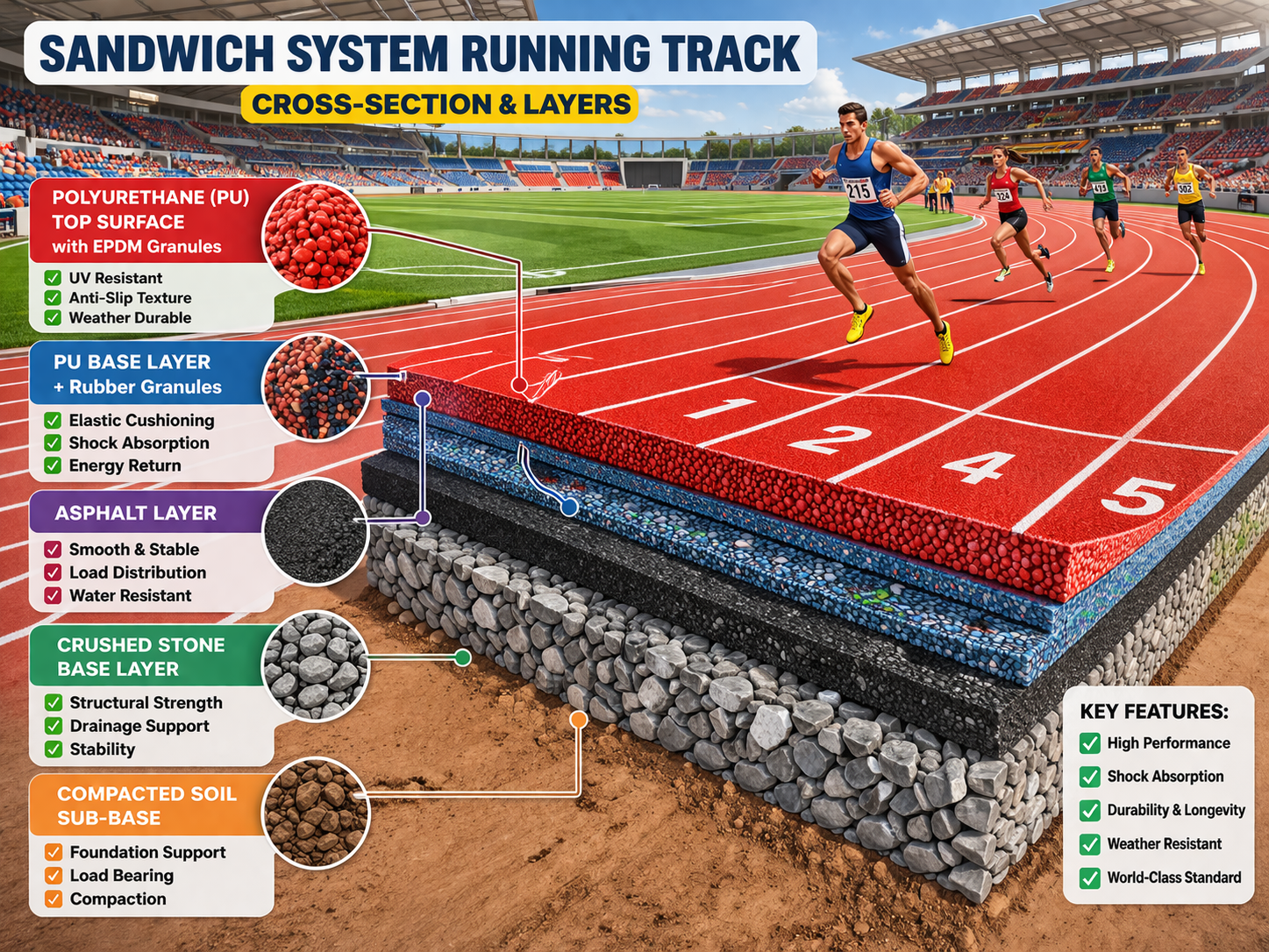
A sandwich system running track is a type of synthetic athletics surface that uses different material layers to create the finished running surface. The lower PU layer provides elasticity and cushioning, while the upper EPDM rubber layer forms the durable wearing surface.
The term “sandwich system” refers to this layered construction approach. Instead of relying on a single material, the system combines the characteristics of different components to achieve a practical balance between flexibility, surface durability, athlete comfort and overall project cost.
The exact layer configuration, thickness and materials can vary according to the project specification, substrate condition, climate, expected usage and performance objectives.
Sandwich System Running Track Structure
The performance of a synthetic running track depends not only on the visible top layer but also on the preparation and quality of the layers beneath it. A typical sandwich system may include the following components:
1. Prepared Substrate
The existing ground or structural base is properly prepared before sports surfacing begins. Leveling, compaction and correction of unsuitable areas help establish a stable platform for the track system.
2. Base or Concrete Layer
Depending on the project design, a suitable concrete or asphalt substrate may be provided beneath the synthetic system. The base should be stable, properly finished and suitable for receiving the sports surface.
3. PU Elastic Layer
The polyurethane layer provides the elastic component of the sandwich system. It contributes to cushioning and helps create a more resilient surface compared with an untreated hard pavement.
4. EPDM Rubber Layer
EPDM rubber granules are used in the upper surface layer to provide a durable wearing surface with suitable traction and resistance to outdoor exposure.
5. Surface Finishing and Line Marking
The completed track is finished according to the specified surface requirements, followed by accurate athletic line marking where required.
How Does a Sandwich Running Track Work?
The different layers of a sandwich running track perform different functions. The underlying structure provides stability, the PU layer contributes elasticity, and the EPDM surface provides the wearing and traction characteristics required for regular athletic use.
This layered approach helps create a surface that is neither as rigid as untreated concrete nor dependent on a single material for all performance requirements. When correctly designed and installed, the system can provide a practical combination of running comfort, grip and durability.
Key Features of Sandwich System Running Track
- PU Elastic Base: Provides resilience and cushioning beneath the wearing surface.
- EPDM Rubber Top Layer: Provides a durable and textured surface suitable for athletic activity.
- Shock Absorption: The elastic construction can help reduce the harsh impact associated with rigid surfaces.
- Reliable Traction: The surface texture provides suitable grip for running and athletic movements.
- Weather Exposure Resistance: Appropriate outdoor-grade materials can be selected for exposure to sunlight and rainfall.
- Seamless Appearance: Proper installation creates a continuous sports surface with a professional finish.
- Colour Customization: EPDM granules and sports coatings can be specified in suitable colour combinations.
- Practical Project Cost: The system can provide a balance between performance requirements and construction investment.
Benefits of a Sandwich System Running Track
A professionally installed sandwich system can provide several advantages for institutions and sports facilities looking for a reliable synthetic athletics surface.
Performance Benefits
- Consistent running surface
- Suitable traction for athletic movement
- Elastic surface characteristics
- Comfortable running experience
- Suitable for regular training
Practical Benefits
- Durable surface construction
- Suitable for outdoor applications
- Professional appearance
- Custom colour options
- Manageable maintenance requirements
Applications of Sandwich System Running Track
Sandwich running track systems can be used for a variety of institutional, recreational and athletic facilities.
- School athletic grounds
- College sports grounds
- University campuses
- Sports academies
- Athletic training centres
- Sports stadiums
- Professional sports complexes
- Public sports facilities
- Community recreation facilities
- Jogging and fitness areas
Sandwich System Running Track vs Other Synthetic Track Systems
Different synthetic track systems are suitable for different project objectives. The best option depends on the expected level of use, performance requirements, budget, maintenance plan and site conditions.
| Track System | Typical Application | Surface Characteristics | Relative Investment |
|---|---|---|---|
| Full PU Track | High-performance athletic facilities | Highly engineered synthetic system | High |
| Sandwich System Track | Schools, academies and sports complexes | PU elastic layer with EPDM wearing layer | Medium to High |
| EPDM Surface System | Jogging and recreational areas | Rubber-based resilient surface | Medium |
| Basic Hard Surface | General-purpose areas | Rigid surface | Lower initial investment |
Actual performance, durability and cost depend on the complete specification, substrate, installation quality and maintenance program. Therefore, track systems should be compared on technical specifications rather than price alone.
Sandwich System Running Track Construction Process
Professional installation requires more than applying a synthetic coating. The quality of the substrate, drainage, leveling and individual surface layers can significantly influence the finished track.
Step 1: Site Survey and Planning
The site is evaluated for available space, existing ground conditions, levels, drainage, access and intended usage. The track layout and construction requirements are then planned according to the project.
Step 2: Ground and Substrate Preparation
The foundation is prepared by removing unsuitable materials, correcting levels and compacting the required areas. An appropriate structural base is established before synthetic surfacing begins.
Step 3: Drainage Planning
Outdoor tracks require effective water management. Surface gradients and drainage arrangements are planned to reduce water accumulation and protect the synthetic surface.
Step 4: Base Preparation
The concrete or asphalt substrate is prepared to provide a suitable surface for the synthetic system. Surface defects are corrected before applying the PU components.
Step 5: PU Layer Installation
The polyurethane elastic layer is installed according to the approved system specification. Application thickness and curing requirements are controlled during installation.
Step 6: EPDM Layer Installation
EPDM rubber granules are incorporated into the upper surface system to create the required wearing layer, texture and finish.
Step 7: Surface Finishing
The surface is inspected and finished to achieve a consistent appearance and appropriate texture across the running area.
Step 8: Athletic Line Marking
Track and lane markings are measured and applied accurately according to the approved layout and intended athletics use.
Step 9: Final Quality Inspection
The completed surface is checked for appearance, consistency, adhesion, drainage, finishing quality and other project-specific requirements before handover.
Materials Used in Sandwich System Running Track Construction
The exact materials depend on the selected track specification. Common components may include:
- Polyurethane (PU) binders and components
- EPDM rubber granules
- Concrete or asphalt substrate
- Primer systems
- Elastic base materials
- Colour pigments
- Protective finishing materials
- Line marking coatings
- Joint and edge treatment materials
- Drainage components
Important Factors When Designing a Sandwich Running Track
Track Dimensions and Layout
The available site area and intended athletic activities determine the track layout. Lane arrangements, curves, straight sections and surrounding circulation areas should be considered during planning.
Substrate Quality
A stable and properly prepared base is essential. Synthetic materials cannot compensate for major structural defects in the underlying substrate.
Drainage
Outdoor running tracks should include suitable drainage planning to reduce standing water and prolonged moisture exposure.
Surface Texture
The surface texture should provide appropriate traction while maintaining comfortable running characteristics.
Climate and Environmental Exposure
Sunlight, rainfall, temperature variation and local environmental conditions should be considered when selecting materials for an outdoor track.
Expected Usage
A school track, training academy and high-use stadium may have different requirements. Surface selection should therefore reflect expected traffic and athletic activity.
How to Choose the Right Sandwich System Running Track
- Identify the intended use: Determine whether the facility is primarily for school athletics, training, recreation or organized competition.
- Evaluate the site: Check soil, substrate, drainage, levels and available space before finalizing the design.
- Select suitable materials: Use appropriate PU components and EPDM granules according to the project specification.
- Consider maintenance: Select a system that matches the facility's cleaning and maintenance capabilities.
- Compare technical specifications: Evaluate thickness, surface construction, substrate preparation and installation methodology.
- Work with an experienced contractor: Professional installation is important for achieving a consistent synthetic track surface.
Sandwich System Running Track Maintenance
Regular maintenance helps preserve the appearance and performance of a synthetic running track. The maintenance schedule should be adapted to the surface system, climate and frequency of use.
- Remove dust, leaves and debris regularly.
- Keep drainage channels and outlets clear.
- Clean the surface using suitable cleaning methods.
- Inspect the surface periodically for visible damage.
- Repair localized defects promptly.
- Avoid unauthorized vehicle movement on the track.
- Do not drag heavy equipment across the synthetic surface.
- Inspect line markings and surface joints periodically.
- Follow the manufacturer's maintenance recommendations.
Sandwich System Running Track Construction Cost
The Sandwich System Running Track cost depends on several factors, so a universal per-square-foot price cannot accurately represent every project. Track dimensions, substrate condition, civil work, PU and EPDM specifications, drainage, line marking and site accessibility all influence the final investment.
| Cost Factor | Potential Impact |
|---|---|
| Track Size | High |
| Ground Preparation | High |
| Concrete / Asphalt Base | High |
| PU System | High |
| EPDM Granules | Medium to High |
| Drainage | Medium |
| Line Marking | Low to Medium |
| Site Accessibility | Medium |
A professional site assessment is recommended before requesting a final quotation. This helps ensure that the proposed cost reflects the actual construction scope and material requirements.
Why Choose Sports Facility India for Sandwich System Running Track Construction?
Sports Facility India provides sports infrastructure and synthetic flooring solutions for educational institutions, sports academies, stadiums, sports complexes and other athletic facilities. Our approach focuses on proper planning, suitable material selection and quality-oriented installation.
For sandwich system running tracks, the project can be coordinated from initial site assessment through base preparation, PU and EPDM surface installation, line marking and final inspection. This integrated approach helps maintain consistency across the major stages of construction.
Our Strengths
- Project-specific track planning
- PU and EPDM synthetic surfaces
- Professional substrate preparation
- Drainage planning
- Customized surface colours
- Precision line marking
- Quality-focused installation
- Technical project guidance
Facilities We Serve
- Schools
- Colleges
- Universities
- Sports academies
- Athletic stadiums
- Sports complexes
- Training centres
- Public sports facilities
Frequently Asked Questions About Sandwich System Running Track
What is a sandwich system running track?
A sandwich system running track is a synthetic athletics surface made using multiple layers, typically combining a PU elastic layer with an EPDM rubber wearing layer. The layered construction is designed to provide a balance of resilience, traction and durability.
What are the main layers of a sandwich running track?
A typical system may include a prepared substrate, structural base, PU elastic layer, EPDM rubber surface layer and final line markings. The exact configuration depends on the project specification.
Where is a sandwich system running track used?
It can be used at schools, colleges, universities, sports academies, athletic training facilities, stadiums and sports complexes.
Is a sandwich system running track suitable for outdoor use?
Yes. Sandwich systems can be designed for outdoor applications using materials selected for the site's environmental exposure. Proper drainage and substrate preparation are also important.
What is the difference between a sandwich system and a full PU track?
A sandwich system generally combines a PU elastic layer with an EPDM wearing layer, while a full PU system uses polyurethane throughout the specified synthetic surface structure. The appropriate system depends on the performance requirements and project specification.
Is EPDM used in sandwich running tracks?
Yes. EPDM rubber granules are commonly used as part of the upper wearing layer in sandwich synthetic track systems.
How long does a sandwich system running track last?
Service life depends on the complete system specification, installation quality, climate, usage intensity and maintenance. Rather than relying on a fixed lifespan, the track should be maintained according to the manufacturer's recommendations and inspected periodically.
Does a sandwich system running track require maintenance?
Yes. Routine cleaning, drainage maintenance, inspection and timely repair of surface defects help preserve the track's condition and performance.
How much does sandwich system running track construction cost?
The cost depends on track size, substrate preparation, PU and EPDM specifications, drainage, civil work, line marking and site conditions. A site assessment is recommended for an accurate project quotation.
Can the colour of a sandwich running track be customized?
Yes. EPDM granules and compatible surface materials are available in different colour options, allowing the finished track to be customized according to the project design.
Professional Sandwich System Running Track Construction
Looking for a professional Sandwich System Running Track contractor? Sports Facility India provides PU and EPDM synthetic track solutions for schools, colleges, sports academies, stadiums and sports complexes across India.
From site planning and substrate preparation to synthetic surface installation and final line marking, our team can help develop a running track according to your facility's requirements.
Get Free Consultation