
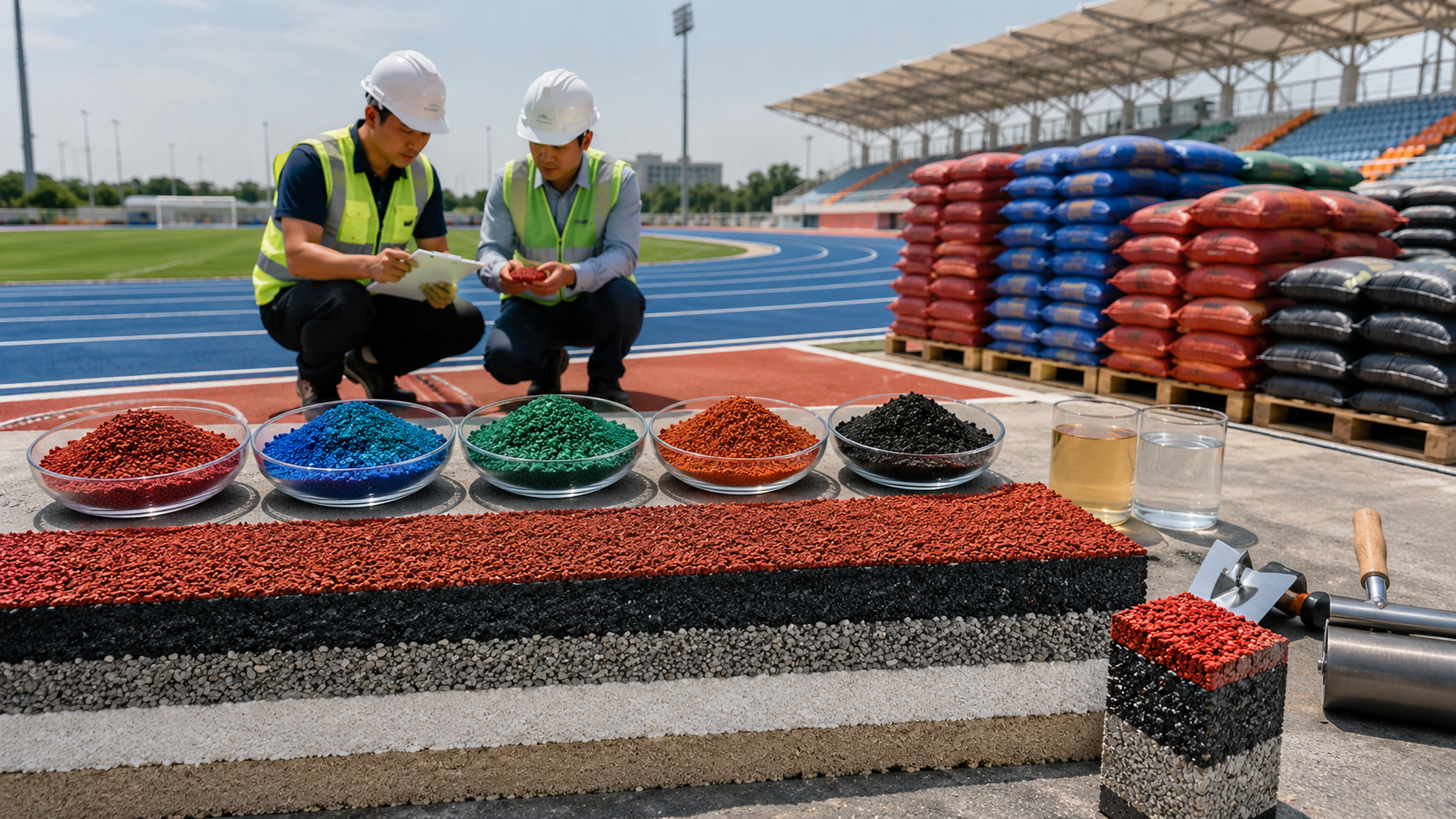
Synthetic Jogging Track Materials
Synthetic jogging track materials are specially engineered surfacing solutions designed to provide superior comfort, durability, safety, and long-term performance for jogging tracks, running tracks, athletic facilities, parks, schools, sports complexes, and recreational areas. Modern synthetic track materials offer excellent shock absorption, anti-slip properties, weather resistance, and low maintenance, making them the preferred choice for both professional athletes and everyday fitness enthusiasts.
High-quality synthetic jogging track materials are manufactured using advanced polyurethane binders, EPDM rubber granules, SBR rubber layers, and athletic-grade surfacing systems. These materials create resilient and comfortable running surfaces that withstand heavy foot traffic while maintaining consistent performance throughout their lifespan.
Types of Synthetic Jogging Track Materials
EPDM Rubber Granules
Best for: Parks, gardens, residential societies, schools, and walking tracks.
- UV-resistant colored rubber granules
- Excellent cushioning and comfort
- Anti-slip surface texture
- Long-lasting outdoor performance
Polyurethane (PU) Track Materials
Best for: Athletic tracks, stadiums, and professional sports facilities.
- High-performance sports surfacing material
- Superior shock absorption and resilience
- Excellent traction and durability
- Suitable for intensive athletic use
SBR Rubber Base Layer Materials
Best for: Cushion layers and economical jogging tracks.
- Cost-effective foundation layer
- Impact-resistant performance
- Supports EPDM top layers
- Enhanced cushioning properties
Porous Synthetic Track Materials
Best for: Outdoor jogging paths and rain-prone areas.
- Excellent drainage capabilities
- Reduces water accumulation
- Maintains safe traction during wet conditions
- Ideal for parks and public spaces
Key Components of Synthetic Jogging Track Materials
| Material | Purpose | Main Benefit |
|---|---|---|
| EPDM Granules | Top Surface Layer | UV resistance and cushioning |
| PU Binder | Material Bonding | Strength and durability |
| SBR Rubber | Base Cushion Layer | Shock absorption |
| Primer System | Surface Adhesion | Long-term bonding performance |
Benefits of Synthetic Jogging Track Materials
- Excellent shock absorption and joint protection
- Anti-slip running surface for enhanced safety
- Weather-resistant and UV-stable materials
- Long service life with minimal maintenance
- Comfortable surface for walking, jogging, and running
- Available in multiple colors and thickness options
- Suitable for professional and recreational applications
- Environmentally friendly and durable sports surfacing solution
Applications of Synthetic Jogging Track Materials
- Public parks and recreational pathways
- Residential society jogging tracks
- School and college athletic facilities
- Sports academies and training centers
- Stadium running tracks
- Corporate campuses and wellness zones
- Fitness parks and outdoor gyms
- Government sports infrastructure projects
Why Choose Premium Synthetic Jogging Track Materials?
Premium synthetic jogging track materials are designed to deliver exceptional athletic performance, comfort, and durability. Unlike conventional concrete or asphalt pathways, synthetic running surfaces reduce impact stress on joints and muscles while providing superior traction and energy return. This makes them ideal for both professional athletes and daily fitness users.
Whether used in parks, schools, sports complexes, or stadiums, quality synthetic track materials provide a safe and aesthetically appealing solution that maintains performance under varying weather conditions and heavy daily use.
Frequently Asked Questions
What are synthetic jogging track materials made of?
Synthetic jogging tracks are commonly made using EPDM rubber granules, polyurethane binders, SBR rubber layers, primers, and athletic-grade surfacing systems.
Which material is best for jogging tracks?
EPDM rubber and polyurethane track systems are considered the most durable and comfortable materials for jogging tracks.
Are synthetic jogging track materials weather resistant?
Yes. High-quality EPDM and PU materials are designed to resist UV exposure, rain, temperature fluctuations, and heavy outdoor use.
How long do synthetic jogging track materials last?
Depending on usage and maintenance, premium synthetic jogging track materials can last between 8 and 15 years.
Can synthetic track materials be customized?
Yes. They are available in various colors, thicknesses, and performance specifications to suit different project requirements.
Get Premium Synthetic Jogging Track Materials
We supply high-quality synthetic jogging track materials including EPDM rubber granules, PU binders, SBR rubber layers, and professional athletic track surfacing systems. Our materials are engineered for durability, safety, comfort, and long-term performance in sports and recreational environments.
Request a Free Quote