
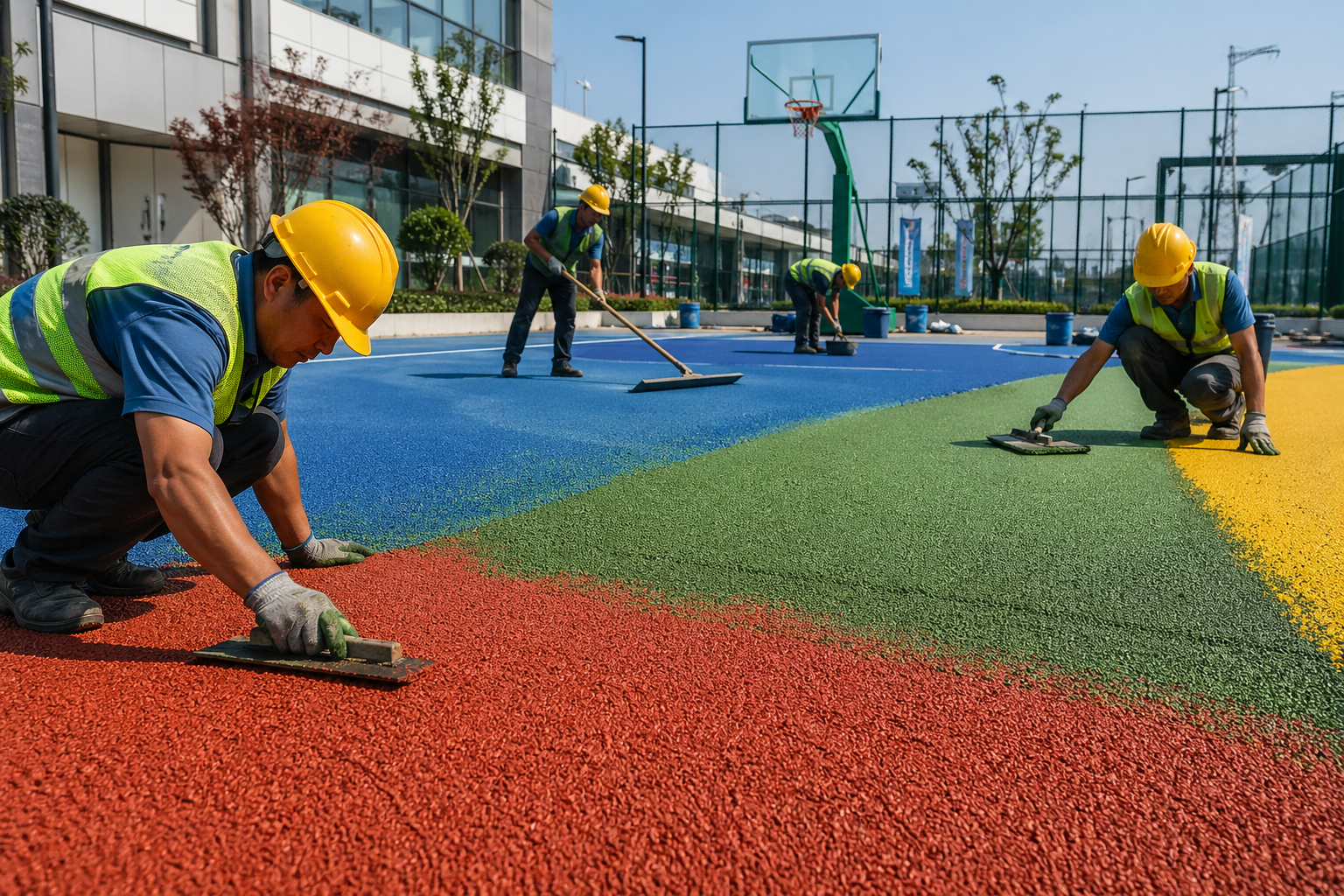
Quick Answer: What Is EPDM Flooring Court Installation?
EPDM flooring court installation is the process of creating a flexible, resilient rubber surface using EPDM granules, compatible polyurethane binders and a properly prepared substrate. Depending on the application, the flooring system may include an SBR rubber cushioning layer beneath the coloured EPDM wearing surface. It is commonly used in playgrounds, jogging tracks, outdoor fitness areas, recreational spaces and selected sports facilities where a durable and comfortable rubber surface is required.
Professional EPDM Flooring Court Installation Services in India
Creating a safe, comfortable and visually appealing recreational space requires the right flooring system. EPDM rubber flooring has become a popular choice for outdoor and indoor recreational applications because of its flexibility, colour options, weather-resistant properties and resilient surface characteristics. It provides an alternative to conventional hard paving in areas where user comfort and surface cushioning are important.
Sports Facility India offers professional EPDM Flooring Court Installation solutions for playgrounds, schools, parks, jogging tracks, outdoor gyms, recreational courts and selected sports infrastructure projects. We help clients identify suitable flooring systems based on the intended application, site conditions, surface requirements and project specifications.
Our EPDM flooring solutions use suitable rubber granules and compatible polyurethane binders to create a seamless, resilient surface. Depending on the project, the construction can include a single-layer EPDM system or a multi-layer arrangement with an SBR rubber base and coloured EPDM top layer.
From initial site evaluation and substrate preparation to material application, surface finishing and final inspection, our installation approach focuses on delivering a flooring system suited to the actual requirements of each facility.
What Is EPDM Rubber Flooring?
EPDM stands for Ethylene Propylene Diene Monomer, a synthetic rubber material known for its flexibility and resistance to outdoor environmental exposure. EPDM rubber granules are widely used in recreational surfacing systems because they can be combined with suitable binders to create durable, coloured and resilient surfaces.
During EPDM flooring installation, selected rubber granules are mixed with a compatible polyurethane binder and laid over a properly prepared substrate. Once the material is installed and cured, it forms a continuous rubber surface with a consistent texture and appearance.
For applications requiring additional cushioning, an SBR rubber granule layer may be installed beneath the EPDM wearing surface. The thickness and composition of the complete system depend on the intended use, impact attenuation requirements, site conditions and technical specifications.
Benefits of EPDM Flooring Court Installation
EPDM flooring is suitable for various recreational environments because it combines surface resilience, design flexibility and practical outdoor usability. The following benefits make it a preferred option for many playground and activity-area projects.
1. Resilient Rubber Surface
EPDM rubber creates a flexible surface that can improve underfoot comfort compared with many conventional hard paving materials.
2. Impact Attenuation Options
Properly designed multi-layer EPDM systems can provide impact attenuation for suitable applications. Playground systems should be selected according to tested performance and equipment fall height.
3. Outdoor Weather Resistance
Quality EPDM materials are designed for outdoor exposure and can offer resistance to sunlight, moisture and changing environmental conditions.
4. Slip-Resistant Surface Options
The texture of a properly specified rubber surface can provide useful traction for walking, recreational movement and selected fitness activities.
5. Custom Colours and Designs
EPDM granules are available in different colours, allowing customised patterns, pathways, borders, activity zones and decorative flooring layouts.
6. Practical Maintenance
Regular cleaning, suitable drainage and periodic inspection help maintain the appearance and functionality of EPDM rubber flooring.
Types of EPDM Flooring Systems
EPDM flooring can be constructed in different configurations depending on the application, cushioning requirements, substrate condition and project budget. Choosing the correct system helps achieve the required surface characteristics and long-term usability.
Single-Layer EPDM Flooring
Single-layer EPDM flooring uses a coloured rubber wearing layer installed over a suitable prepared base. It may be considered for selected walkways, decorative spaces and recreational areas where the specified cushioning requirements can be met by the system.
- Continuous rubber surface
- Custom colour combinations
- Suitable for selected low-impact applications
Dual-Layer SBR and EPDM Flooring
This system generally consists of an SBR rubber cushioning layer beneath a coloured EPDM top layer. It is commonly considered for playgrounds and recreational areas where additional cushioning is required.
- Separate cushioning and wearing layers
- Flexible system thickness options
- Suitable for specified playground applications
Decorative EPDM Rubber Flooring
Decorative EPDM flooring uses coloured granules to create customised designs, patterns, borders and activity layouts. It is frequently considered for schools, parks and public recreational spaces.
- Multiple colour choices
- Custom patterns and graphics
- Attractive recreational surfaces
EPDM Jogging Track and Fitness Flooring
EPDM rubber surfacing can be designed for jogging tracks, walking paths and outdoor fitness zones where a resilient surface is preferred.
- Comfortable walking surface options
- Suitable texture specifications
- Flexible layout and colour planning
Applications of EPDM Flooring Installation
EPDM rubber flooring is used in a wide range of recreational, educational and outdoor activity environments. The appropriate flooring construction should be selected according to the type of activity, expected traffic, impact requirements and site conditions.
- Children's playground flooring
- School and kindergarten activity areas
- Public parks and community recreation spaces
- Jogging and walking tracks
- Outdoor gym and fitness zones
- Residential society play areas
- Sports academy activity zones
- Recreational courts and activity spaces
- Commercial recreation facilities
- Corporate outdoor activity areas
- Hotel and resort recreation zones
- Selected multipurpose outdoor spaces
EPDM flooring is not automatically suitable for every competitive sports court. Facilities such as tennis, basketball and badminton courts require sport-specific surface systems designed for the relevant ball response, traction and playing characteristics.
Our EPDM Flooring Court Installation Process
Correct installation is essential for achieving a consistent and durable EPDM rubber surface. Each project begins with an assessment of the site and intended application before the flooring system and installation method are finalised.
1. Site Inspection and Project Assessment
The project area is evaluated for dimensions, intended usage, existing surface conditions, accessibility, drainage and installation requirements. This assessment helps determine the appropriate flooring construction.
2. Substrate Inspection
The concrete, asphalt or other approved base is checked for stability, levelness, cracks, moisture and surface defects. Any unsuitable conditions are identified before installation.
3. Base Preparation and Levelling
The substrate is cleaned and prepared according to the flooring system requirements. Necessary repairs and levelling work are completed, while suitable slopes and drainage provisions are considered for outdoor installations.
4. Primer Application
Where specified by the system manufacturer, a compatible primer is applied to the prepared base to support adhesion between the substrate and rubber flooring layers.
5. SBR Rubber Cushioning Layer
For selected multi-layer systems, SBR rubber granules are mixed with a suitable binder and installed as the cushioning base. The thickness is determined by the project design and performance requirements.
6. EPDM Wearing Layer Application
Coloured EPDM granules are mixed with a compatible polyurethane binder and applied over the prepared base or cushioning layer. Material proportions and application thickness follow the approved system specifications.
7. Surface Levelling and Finishing
The installed rubber layer is levelled and finished to achieve a consistent texture, appearance and surface thickness. Custom patterns and colour layouts are completed according to the approved design.
8. Curing and Final Inspection
The flooring is allowed to cure according to the binder manufacturer's recommendations and site conditions. A final inspection checks the finish, workmanship, surface consistency and agreed project specifications before handover.
Materials Used in EPDM Flooring Construction
The quality and compatibility of flooring materials have a direct influence on installation performance. A suitable EPDM flooring system may include the following components.
EPDM Rubber Granules
Coloured EPDM granules form the exposed wearing surface. Material selection depends on the required colour, application and flooring specifications.
SBR Rubber Granules
SBR granules may be used in the base cushioning layer of multi-layer flooring systems where the design calls for additional resilience.
Polyurethane Binder
A compatible polyurethane binder holds the rubber granules together and helps form a stable flooring layer. Binder selection and mixing must follow system specifications.
Primer and Supporting Materials
Depending on the substrate and flooring system, compatible primers and other specified materials may be used to support adhesion and installation quality.
Comparison of Different EPDM Flooring Systems
The following table outlines common EPDM flooring configurations and their typical applications. Actual cushioning and impact performance must be established through the complete system specification and relevant test results.
| Flooring System | Typical Application | Construction | Design Flexibility |
|---|---|---|---|
| Single-Layer EPDM | Selected recreational areas and walkways | EPDM wearing layer over a suitable base | High |
| Dual-Layer SBR + EPDM | Playgrounds and recreational areas | SBR cushioning layer with EPDM top layer | High |
| Decorative EPDM | Schools, parks and public spaces | Coloured rubber surface with customised patterns | Very High |
| EPDM Track Flooring | Jogging and walking tracks | Application-specific resilient rubber system | High |
How to Choose the Right EPDM Flooring System
Choosing the right EPDM flooring system requires more than selecting a colour or surface thickness. The flooring must be suitable for its intended use and compatible with the existing site conditions. Consider these important factors before starting construction.
- Intended Application: Identify whether the area will be used for playground activities, walking, jogging, fitness or general recreation.
- Impact Attenuation: For playgrounds, select a tested complete flooring system according to equipment fall height and applicable safety requirements.
- Flooring Thickness: Determine the required thickness based on the system design, substrate and performance specifications.
- Substrate Quality: Ensure the base is stable, clean, suitably level and prepared according to the flooring manufacturer's recommendations.
- Drainage Requirements: Plan suitable slopes and drainage to reduce standing water and moisture-related problems.
- Material Specifications: Check EPDM granule quality, binder compatibility and the technical details of the complete flooring system.
- Colour and Design: Choose colours and patterns that suit the facility layout, surrounding environment and intended users.
- Maintenance Planning: Consider routine cleaning, inspection and repair requirements when selecting the flooring system.
EPDM Flooring Court Installation Cost
The cost of EPDM flooring court installation depends on the construction method, project area, material specifications and condition of the existing surface. A single fixed rate cannot accurately represent every installation because playgrounds, jogging tracks, walkways and recreational areas may require different flooring configurations.
Factors That Affect EPDM Flooring Installation Cost
- Total project area and site dimensions
- Single-layer or multi-layer flooring construction
- Required EPDM and SBR layer thickness
- Quality and colour of EPDM rubber granules
- Polyurethane binder specifications and consumption
- Existing concrete or asphalt base condition
- Surface cleaning, repair and levelling work
- Drainage and slope correction requirements
- Custom graphics, patterns, borders and logos
- Transportation and material handling
- Site accessibility and installation complexity
For an accurate EPDM flooring quotation, share the project location, approximate dimensions, intended application, existing base details and preferred flooring design. A site assessment can help establish the appropriate system and scope of work.
Quality Control During EPDM Flooring Installation
Consistent workmanship and correct material application are important for the performance of EPDM rubber flooring. Quality checks should be carried out throughout the construction process, not only after the surface has been completed.
- Inspect the substrate before starting installation.
- Use compatible rubber granules and polyurethane binders.
- Follow the specified material mixing proportions.
- Maintain the required layer thickness and surface consistency.
- Check drainage and surface slope for outdoor installations.
- Follow the recommended curing conditions.
- Inspect the finished surface for visible defects and uneven areas.
- Verify project-specific performance requirements where applicable.
EPDM Flooring Maintenance Guide
Regular maintenance helps preserve the appearance, cleanliness and usability of EPDM rubber flooring. The maintenance routine depends on the flooring system, surrounding environment and intensity of daily use.
- Remove leaves, dust and loose debris regularly.
- Clean the surface using suitable methods recommended for the system.
- Keep drainage outlets and channels free from obstruction.
- Inspect the flooring periodically for visible cracks or damage.
- Avoid harsh chemicals and abrasive cleaning equipment.
- Prevent prolonged accumulation of mud and organic material.
- Arrange professional repairs for damaged or separated sections.
- Follow the flooring manufacturer's maintenance instructions.
Why Choose Sports Facility India for EPDM Flooring Court Installation?
Sports Facility India provides sports flooring and recreational infrastructure solutions for educational institutions, residential developments, commercial facilities and public recreation projects. We focus on understanding each project's requirements before recommending a suitable flooring construction.
Project-Specific Flooring Recommendations
We help identify suitable flooring options based on the intended activity, site conditions and required surface characteristics.
Material Selection Guidance
We consider EPDM granules, SBR cushioning materials, compatible binders and system specifications when planning flooring projects.
Customised Colour and Design Options
Plan attractive recreational surfaces with selected colours, patterns, borders and activity-area layouts.
Installation Planning and Support
Our project approach includes site assessment, base preparation coordination, flooring application and finishing requirements.
Transparent Project Scope
We discuss material specifications, installation scope and important cost factors before preparing a project proposal.
Sports Infrastructure Solutions
Our wider sports facility services support clients planning recreational spaces and sports infrastructure projects.
Industries and Projects We Serve
EPDM flooring can support a variety of recreational and institutional projects. Sports Facility India assists clients planning suitable rubber flooring installations for different types of facilities.
- Schools, colleges and universities
- Sports academies and training centres
- Government and municipal recreation projects
- Public parks and community spaces
- Residential societies and townships
- Builders and real estate developers
- Hotels, resorts and hospitality facilities
- Fitness centres and outdoor gyms
- Corporate campuses and office recreation areas
- Children's activity and learning centres
- Commercial recreation facilities
- Private playground and landscaping projects
Frequently Asked Questions About EPDM Flooring Court Installation
1. What is EPDM flooring court installation?
EPDM flooring court installation is the process of creating a resilient rubber surface using EPDM granules, compatible polyurethane binders and a properly prepared substrate. It is commonly used for playgrounds, jogging tracks, recreational areas and outdoor fitness spaces.
2. Where is EPDM rubber flooring commonly used?
EPDM rubber flooring is commonly used in children's playgrounds, schools, public parks, jogging tracks, walking paths, outdoor gyms, residential recreation areas and selected commercial recreational facilities.
3. Is EPDM flooring suitable for outdoor applications?
Yes. Quality EPDM materials are designed for outdoor exposure and can offer resistance to sunlight and moisture. Proper substrate preparation, drainage and installation are important for maintaining surface performance.
4. What is the difference between single-layer and dual-layer EPDM flooring?
Single-layer EPDM flooring uses an EPDM wearing surface over a suitable base. Dual-layer systems generally combine an SBR rubber cushioning layer with a coloured EPDM top layer. The appropriate construction depends on the intended use and performance requirements.
5. Is EPDM flooring suitable for children's playgrounds?
Yes. EPDM flooring can be used in playgrounds when the complete flooring system is designed for the required impact attenuation. The thickness and tested performance must be suitable for the playground equipment's critical fall height and applicable safety requirements.
6. Can EPDM flooring be installed in different colours?
Yes. EPDM granules are available in different colours, allowing customised patterns, borders, pathways, graphics and decorative layouts according to project requirements.
7. Can EPDM flooring be installed over concrete?
Yes. EPDM flooring can be installed over a suitable concrete substrate. The base should be stable, clean, appropriately levelled and prepared according to the requirements of the selected flooring system.
8. What materials are used for EPDM flooring installation?
Common materials include EPDM rubber granules and compatible polyurethane binder. Multi-layer systems may also use SBR rubber granules for the cushioning layer. Primer and other supporting materials may be required depending on the system.
9. How much does EPDM flooring court installation cost?
The cost depends on the total area, flooring thickness, material specifications, number of layers, base preparation, drainage work, colour selection and installation complexity. A project assessment is recommended for an accurate quotation.
10. How long does EPDM rubber flooring last?
The service life depends on material quality, installation workmanship, thickness, weather exposure, usage and maintenance. Regular cleaning and timely repairs can help preserve the flooring's condition.
11. How is EPDM flooring maintained?
EPDM flooring should be cleaned regularly to remove dust, leaves and debris. Drainage should be kept clear, and the surface should be inspected periodically for damage. Use suitable cleaning methods recommended for the flooring system.
12. Does Sports Facility India provide EPDM flooring installation services?
Sports Facility India provides EPDM flooring consultation and installation solutions for suitable sports and recreational projects. Services can include site assessment, flooring system selection, preparation coordination, installation and finishing support.
People Also Ask About EPDM Flooring
- What is EPDM rubber flooring?
- How is EPDM flooring installed?
- How much does EPDM flooring cost per square foot?
- Is EPDM flooring suitable for playgrounds?
- What is the difference between SBR and EPDM rubber flooring?
- What thickness is required for EPDM playground flooring?
- Can EPDM flooring be installed over concrete?
- Is EPDM flooring suitable for jogging tracks?
- How do you clean and maintain EPDM flooring?
- What factors affect the lifespan of EPDM rubber flooring?
Explore Our Related Sports Flooring and Construction Services
Explore other sports flooring and construction solutions from Sports Facility India for planning complete recreational and sports infrastructure projects.
Looking for Professional EPDM Flooring Court Installation?
Planning a playground, jogging track, outdoor gym, school activity area or recreational flooring project? Sports Facility India can help you explore suitable EPDM rubber flooring options based on your site conditions, application and design requirements. Contact our team to discuss your project and request a customised installation proposal.
✔ Project-Specific EPDM Flooring Solutions
✔ Single-Layer and Multi-Layer System Options
✔ Material and Thickness Guidance
✔ Custom Colours and Surface Designs
✔ Site Preparation and Installation Support
✔ Sports and Recreational Flooring Services