What Is Synthetic Sports Flooring Construction?
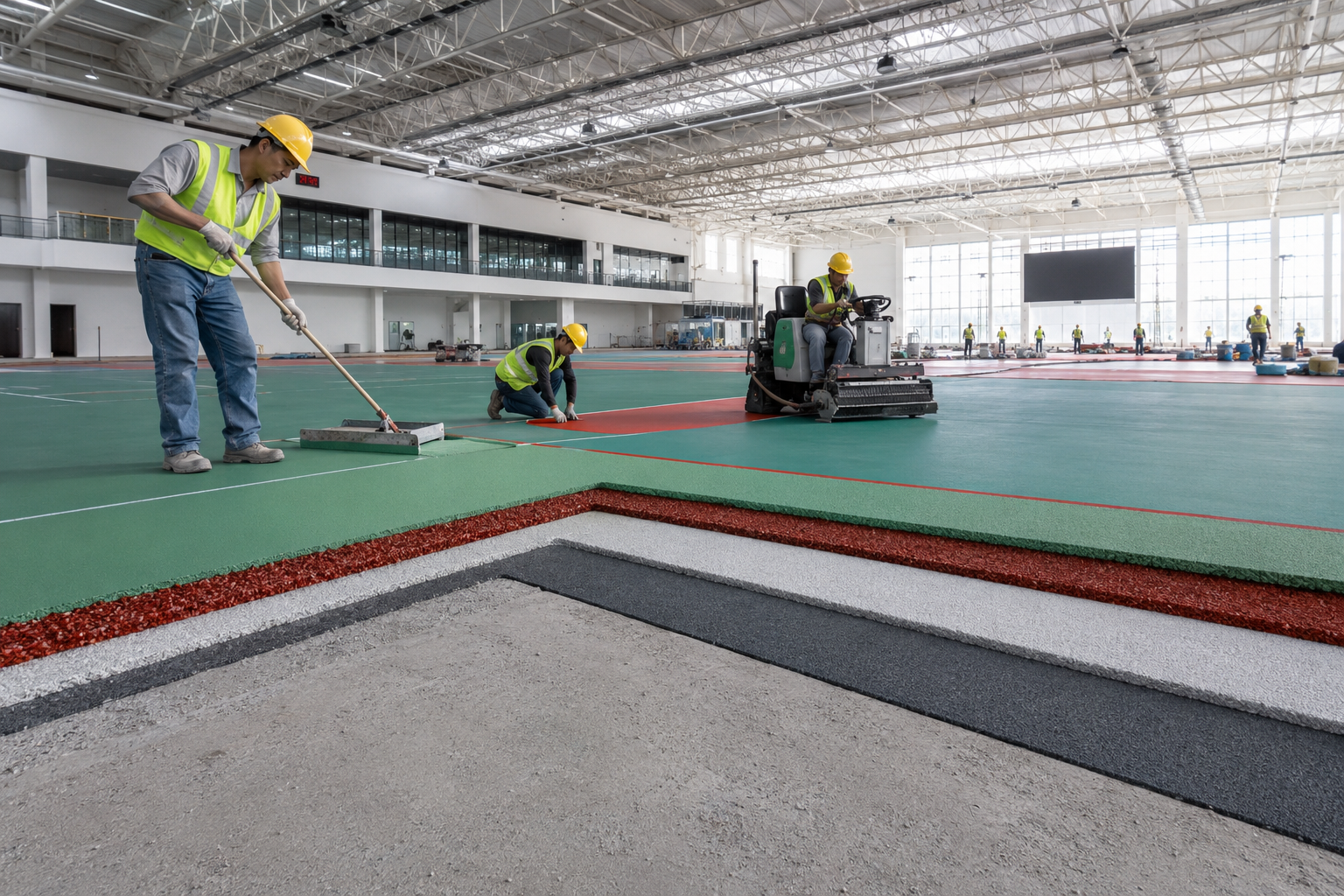
Synthetic sports flooring construction involves preparing a suitable foundation and installing a purpose-designed sports surface using materials such as acrylic coatings, polyurethane systems, EPDM rubber, PVC sports flooring, or modular sports tiles. Each material has different performance characteristics and is selected according to the intended sport and installation environment.
The construction process generally includes site inspection, engineering planning, sub-base development, concrete or asphalt base preparation, surface correction, flooring installation, game-line marking, and final quality checks. The exact method varies according to the selected flooring system and the condition of the existing surface.
Properly designed synthetic sports surfaces can support recreational activities, physical education, regular training, and selected competitive sports applications. Material selection, installation quality, drainage, and ongoing maintenance all contribute to the long-term performance of the finished court.
Key Features of Synthetic Sports Flooring
- Sports-specific surface design
- Suitable traction and player stability
- Optional cushioning, depending on the system
- Consistent playing characteristics
- Indoor and outdoor flooring options
- Weather-resistant options for outdoor courts
- Color and court-marking customization
- Durable materials for regular sports use
- Maintenance requirements tailored to the surface
- Solutions for single-sport and multi-purpose facilities
Benefits of Synthetic Sports Flooring
Synthetic sports flooring provides a practical alternative to unfinished concrete and other general-purpose surfaces. When the correct system is selected and installed over a suitable base, it can improve the usability, appearance, and maintenance efficiency of a sports facility.
1. Sports-Specific Playing Performance
Different synthetic flooring systems are developed for different sporting requirements. The right surface can provide appropriate grip, ball response, and movement characteristics for the intended activity.
2. Improved Playing Comfort
Certain cushioned polyurethane, PVC, and rubber flooring systems offer impact absorption that can improve underfoot comfort. The level of cushioning depends on the flooring construction and product specification.
3. Durable Surface Construction
Quality sports flooring materials are designed to withstand regular foot traffic and sporting activity. Proper installation, suitable drainage, and timely repairs help protect the surface from premature deterioration.
4. Indoor and Outdoor Applications
Synthetic flooring is available for indoor sports halls as well as outdoor courts. Acrylic coatings and selected modular systems are commonly considered for outdoor use, while PU and PVC systems are frequently specified for indoor facilities.
5. Customized Colors and Court Markings
Flooring colors, game lines, logos, and selected branding elements can be incorporated into the design to create a professional appearance and support the requirements of different sports.
6. Practical Maintenance
Many synthetic sports surfaces can be maintained through regular cleaning, periodic inspections, and prompt repairs. Maintenance procedures should follow the flooring manufacturer's recommendations.
Types of Synthetic Sports Flooring Systems
Choosing the right sports flooring system requires consideration of the sport, location, usage intensity, subfloor, budget, and maintenance requirements. Sports Facility India offers flooring solutions for a variety of sports infrastructure applications.
Acrylic Sports Flooring
Acrylic sports flooring is a popular option for outdoor courts. It is installed as a multi-layer coating system over a properly prepared asphalt or concrete base. Textured finishes and sports-specific coatings help provide suitable traction and ball response.
Suitable applications: Tennis courts, basketball courts, pickleball courts, and selected multi-purpose outdoor courts.
Polyurethane (PU) Sports Flooring
Polyurethane sports flooring is used in selected indoor and outdoor sports applications according to the system specification. Indoor PU systems can provide a seamless finish and varying levels of resilience and cushioning, depending on their construction.
Suitable applications: Indoor sports halls, basketball courts, volleyball courts, and multi-purpose athletic facilities.
EPDM Rubber Sports Flooring
EPDM flooring uses synthetic rubber granules in a bound or coated system. It is particularly useful for recreational surfaces where cushioning, impact absorption, and outdoor durability are important design considerations.
Suitable applications: Jogging tracks, children's play areas, fitness zones, and recreational activity areas.
PVC Sports Flooring
PVC sports flooring is generally supplied in rolls or sheet-based systems for indoor installation. Depending on the product, it may include wear layers and resilient backing designed to support sports activities and simplify routine cleaning.
Suitable applications: Indoor badminton courts, school gymnasiums, sports halls, and selected multi-purpose indoor facilities.
Modular Interlocking Sports Tiles
Modular sports tiles consist of individual interlocking components that create a playing surface over an appropriate base. Selected designs provide drainage openings, and individual tiles can often be replaced if damaged.
Suitable applications: Community courts, school playgrounds, selected rooftop facilities, and recreational outdoor courts.
Our Synthetic Sports Flooring Construction Process
A reliable sports flooring installation begins with a properly engineered base and continues through careful material application and quality inspection. Our project workflow is adapted to the requirements of each site and the selected flooring system.
Step 1: Consultation and Site Inspection
We assess the project location, intended sport, available area, existing surface condition, drainage, access, and expected usage. This information helps establish the project scope and identify potential construction requirements.
Step 2: Sports Court Design and Planning
The court layout, playing dimensions, safety clearances, surface specifications, colors, and game markings are planned according to the intended application and relevant sports requirements.
Step 3: Ground Preparation and Earthwork
For new outdoor projects, the site may require clearing, excavation, grading, and compaction. Appropriate preparation helps create a stable foundation and reduces the risk of future settlement.
Step 4: Sub-Base Development
A suitable sub-base is constructed using specified materials and compaction procedures. The design is determined by ground conditions, drainage requirements, expected loads, and the type of sports facility.
Step 5: Concrete or Asphalt Base Construction
Depending on the project, a concrete slab or asphalt base is installed to provide the required support. Levels, surface regularity, drainage, joints, and curing requirements are checked before the flooring installation begins.
Step 6: Surface Preparation
The base is cleaned and inspected for cracks, uneven areas, contamination, moisture, and other defects. Necessary repairs and preparation work are completed in accordance with the selected flooring manufacturer's requirements.
Step 7: Primer and Base Layers
Where specified, suitable primers and base layers are applied to support adhesion and the performance of the flooring system. Product compatibility and recommended application conditions are checked before proceeding.
Step 8: Synthetic Flooring Installation
The selected acrylic, PU, EPDM, PVC, or modular flooring system is installed using the appropriate materials, tools, and application procedures. Layer thickness, curing times, temperature, and moisture conditions are managed according to the system specifications.
Step 9: Court Line Marking
Game lines are measured and marked according to the intended sport. Compatible marking materials and accurate layouts help ensure visibility and a professional finish.
Step 10: Quality Inspection and Handover
The finished installation is checked for surface appearance, visible defects, line accuracy, adhesion where applicable, and workmanship. Maintenance guidance is provided as part of the project handover.
Technical Specifications and Construction Considerations
Synthetic sports flooring does not have a single universal specification. The appropriate system is determined by the intended sport, competition level, indoor or outdoor location, expected traffic, and manufacturer requirements.
- Base condition: The foundation must be stable and appropriately prepared.
- Surface level: Surface regularity should meet the requirements of the selected sports flooring system.
- Drainage: Outdoor courts need suitable drainage design to manage rainwater and prevent prolonged standing water.
- Traction: Surface texture should suit the intended sport and manufacturer specifications.
- Cushioning: Shock absorption varies by material, thickness, and system construction.
- Weather resistance: Outdoor materials should be selected for the expected sunlight, temperature, and moisture exposure.
- Court dimensions: Game markings and clearances should follow the applicable sports regulations.
- Installation conditions: Temperature, moisture, curing, and application conditions should be controlled as required.
- Maintenance: Cleaning and inspection schedules should be suitable for the flooring type and level of use.
For competition-level projects, the flooring system and court layout should be checked against the requirements of the relevant sports governing body. Certification and compliance should only be claimed where the specific product and installation have been verified.
Applications of Synthetic Sports Flooring Construction
Synthetic sports flooring can be specified for a wide range of recreational, educational, and professional sports environments. The system should always be matched to the intended activity and site conditions.
- Basketball court construction
- Tennis court construction
- Badminton court flooring
- Pickleball court construction
- Volleyball court flooring
- Futsal and selected multi-purpose courts
- Indoor sports halls and gymnasiums
- School and college sports facilities
- University campuses
- Sports academies and training centers
- Residential societies and community courts
- Hotels, resorts, and recreational developments
- Corporate sports facilities
- Public sports complexes and government projects
- Jogging tracks and children's play areas
Synthetic Sports Flooring Construction Cost in India
The cost of synthetic sports flooring construction in India depends on the selected material, total area, base condition, site location, and scope of work. A surface-only installation will generally involve different costs from a complete turnkey project that includes earthwork, drainage, civil construction, flooring, fencing, and lighting.
Factors That Affect Sports Flooring Prices
- Type and quality of flooring material
- Thickness and number of flooring layers
- Total court area and number of courts
- New construction or renovation work
- Existing concrete or asphalt base condition
- Excavation, earthwork, and sub-base requirements
- Drainage and slope correction
- Surface repairs and preparation
- Court colors, line marking, and branding
- Fencing, lighting, and sports equipment
- Transportation, labor, and project location
For an accurate estimate, the project should be evaluated according to the required surface system and construction scope. Contact Sports Facility India to discuss your court dimensions, location, preferred flooring, and project requirements.
Synthetic Sports Flooring Maintenance Guide
Regular maintenance helps preserve the appearance, functionality, and service life of synthetic sports flooring. Maintenance procedures vary according to whether the surface is acrylic, PU, EPDM, PVC, or modular tile.
- Remove dust, leaves, and loose debris regularly.
- Clean the surface with compatible cleaning products.
- Avoid harsh chemicals that may damage the flooring finish.
- Inspect the court for cracks, loose tiles, worn coatings, or damaged joints.
- Keep outdoor drainage channels and outlets clear.
- Avoid dragging heavy equipment over the playing surface.
- Repair damaged areas promptly to limit further deterioration.
- Check court markings periodically and renew them when necessary.
- Follow the manufacturer's recommendations for deep cleaning and resurfacing.
Why Choose Sports Facility India for Synthetic Sports Flooring?
Sports Facility India provides sports flooring and construction solutions tailored to the needs of educational institutions, sports organizations, commercial developments, and recreational facilities. We focus on selecting suitable materials, preparing the site correctly, and coordinating installation to meet the intended use of each sports surface.
- Customized solutions for different sports and facilities
- Multiple synthetic flooring system options
- Project planning and site assessment
- Base preparation and civil construction coordination
- Professional flooring installation
- Sports court layout and line marking
- Options for indoor and outdoor projects
- Color and selected branding customization
- Project-specific pricing and scope planning
- Maintenance and resurfacing guidance
- Turnkey sports infrastructure solutions, where required
Our objective is to help clients develop functional, attractive, and durable sports facilities with flooring systems selected according to their practical and performance requirements.
Frequently Asked Questions About Synthetic Sports Flooring
1. What is synthetic sports flooring?
Synthetic sports flooring is a purpose-designed playing surface made from materials such as acrylic, polyurethane, rubber, PVC, or modular sports tiles. The appropriate system depends on the sport, location, and expected usage.
2. Which synthetic sports flooring is best for outdoor courts?
Acrylic sports flooring is a common choice for outdoor tennis, basketball, and pickleball courts. Selected modular tile systems are also suitable for certain outdoor applications. The best option depends on the base, climate, drainage, and playing requirements.
3. Which flooring is suitable for indoor sports facilities?
PU and PVC sports flooring are widely considered for indoor sports halls. The correct system depends on the sport, required cushioning, subfloor, maintenance expectations, and manufacturer specifications.
4. What is the cost of synthetic sports flooring in India?
The cost varies according to the flooring material, project area, base preparation, installation requirements, location, and additional work such as drainage, fencing, and lighting. A project-specific quotation is recommended.
5. How long does synthetic sports flooring last?
Service life varies according to the material, installation quality, weather exposure, frequency of use, and maintenance. The manufacturer's guidance and periodic site inspections help determine appropriate maintenance and resurfacing intervals.
6. Can synthetic flooring be installed over existing concrete?
Yes, in suitable conditions. The concrete must be structurally sound and adequately prepared. Moisture, cracks, surface level, contamination, and product compatibility should be assessed before installation.
7. Is synthetic sports flooring suitable for schools?
Yes. Appropriate synthetic flooring systems can be used for school playgrounds, basketball courts, tennis courts, gymnasiums, and multi-purpose sports areas. The selection should reflect student usage and site conditions.
8. Can one synthetic court accommodate multiple sports?
Yes. A suitable multi-purpose court can accommodate several sports with clearly planned and differentiated line markings. The surface must be compatible with each intended activity.
9. Is synthetic sports flooring weather resistant?
Certain acrylic coatings, EPDM systems, and outdoor modular tiles are designed for outdoor exposure. Product selection, drainage, installation conditions, and maintenance are important for weather performance.
10. Can an old sports court be renovated?
Yes. Existing courts may be repaired, resurfaced, or upgraded after evaluating the condition of the base and drainage. The appropriate renovation method depends on the type and extent of damage.
11. What maintenance does synthetic sports flooring require?
Maintenance usually includes routine cleaning, inspections, prompt repairs, and checking drainage on outdoor courts. The precise procedure depends on the installed flooring system.
12. Do you provide complete sports flooring construction services?
Sports Facility India offers sports flooring solutions that can be planned around the project scope, including site preparation, base construction, flooring installation, court marking, and associated sports infrastructure where required.
People Also Ask About Sports Flooring
What is the difference between acrylic and PU sports flooring?
Acrylic flooring is commonly selected for outdoor hard courts, while PU systems are frequently used where a seamless surface and specified resilience are required. Their suitability depends on the product design and intended sport.
Can synthetic sports flooring be used for basketball and tennis?
Yes. Acrylic sports flooring is widely used for outdoor basketball and tennis courts. Other flooring systems may be appropriate depending on whether the facility is indoors or outdoors.
Does synthetic sports flooring require a concrete base?
Many coating systems require a properly prepared concrete or asphalt base. Modular tiles and other specialized systems may use different approved substrates. The base requirements should be confirmed for the selected product.
How can I get a quotation for sports flooring construction?
Share your project location, court dimensions, preferred sports, existing base condition, and required facilities. These details help establish the scope and prepare a more accurate estimate.
Related Sports Flooring and Construction Services
Basketball Court Flooring
Sports flooring solutions for outdoor acrylic basketball courts and selected indoor basketball facilities.
Explore Basketball Court FlooringBadminton Court Flooring
PVC, synthetic, and other suitable badminton flooring options for schools, academies, and indoor sports halls.
Explore Badminton Court FlooringTennis Court Construction
Outdoor tennis court construction, acrylic surface installation, and court marking solutions.
Explore Tennis Court ConstructionPickleball Court Construction
Court layout, surface installation, and game marking solutions for recreational and competitive pickleball facilities.
Explore Pickleball Court ConstructionVolleyball Court Flooring
Sports surface solutions for volleyball courts, school facilities, and multi-purpose indoor sports halls.
Explore Volleyball Court FlooringRunning Track Construction
Rubber and polyurethane track surface options for sports academies, educational institutions, and athletic facilities.
Explore Running Track ConstructionPlan Your Synthetic Sports Flooring Project Today
Looking for a reliable synthetic sports flooring construction company in India? Sports Facility India can help you plan a suitable flooring solution for your school, college, sports academy, residential complex, commercial facility, or sports infrastructure project.
Discuss your court dimensions, preferred flooring material, site conditions, and budget with our team to determine the appropriate construction approach for your project.
Synthetic Sports Flooring Construction Services Across India
Sports Facility India serves sports infrastructure projects across India, subject to project requirements and service availability. Our solutions are suitable for educational institutions, sports academies, clubs, commercial facilities, residential developments, and public sports infrastructure.
From selecting a suitable flooring material to planning installation and court markings, our team focuses on project-specific requirements to help create durable, functional, and attractive sports surfaces.